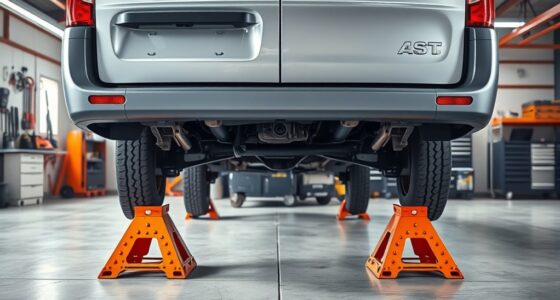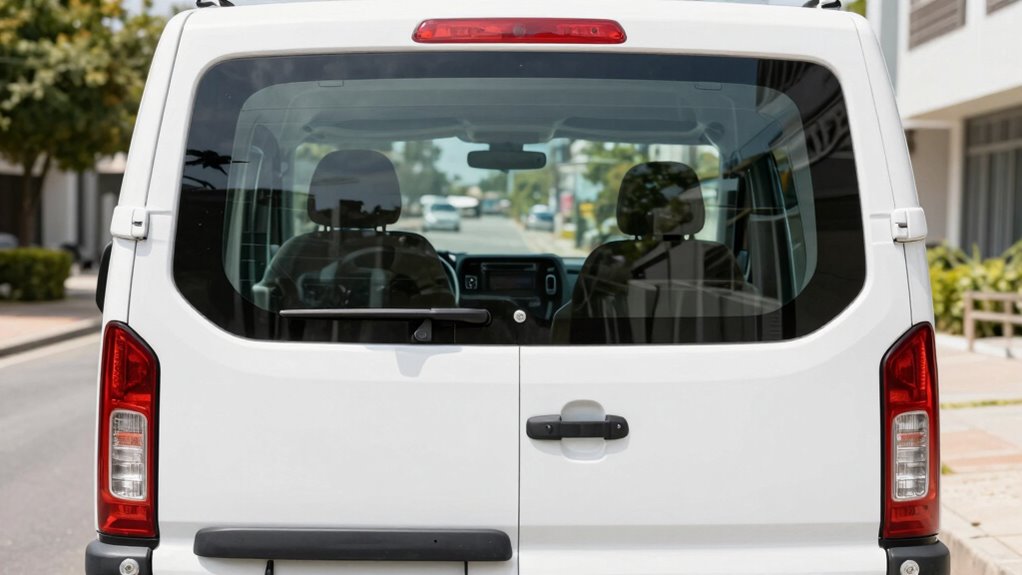

Rear visibility discipline is essential when driving big vans because they have large blind spots that can hide pedestrians, cyclists, and smaller vehicles. Properly adjusting and checking your mirrors guarantees you can see what’s behind and beside you, reducing the risk of collisions. Regularly maintaining mirrors and physically checking blind spots before changing lanes help you stay aware of hazards. Stay disciplined with visibility habits, and you’ll greatly improve safety for everyone on the road. Keep going to discover effective ways to master this important skill.
Key Takeaways
- Large vans have significant blind spots that require disciplined rear visibility practices to prevent accidents.
- Proper mirror adjustment enhances overall awareness, reducing the risk of collisions with pedestrians or smaller vehicles.
- Maintaining consistent rear visibility routines helps drivers detect hazards early and respond appropriately.
- Clean and well-maintained mirrors ensure clear views, critical for safe maneuvering of big vans.
- Blind spot discipline promotes safer lane changes and turns, safeguarding all road users around large vehicles.
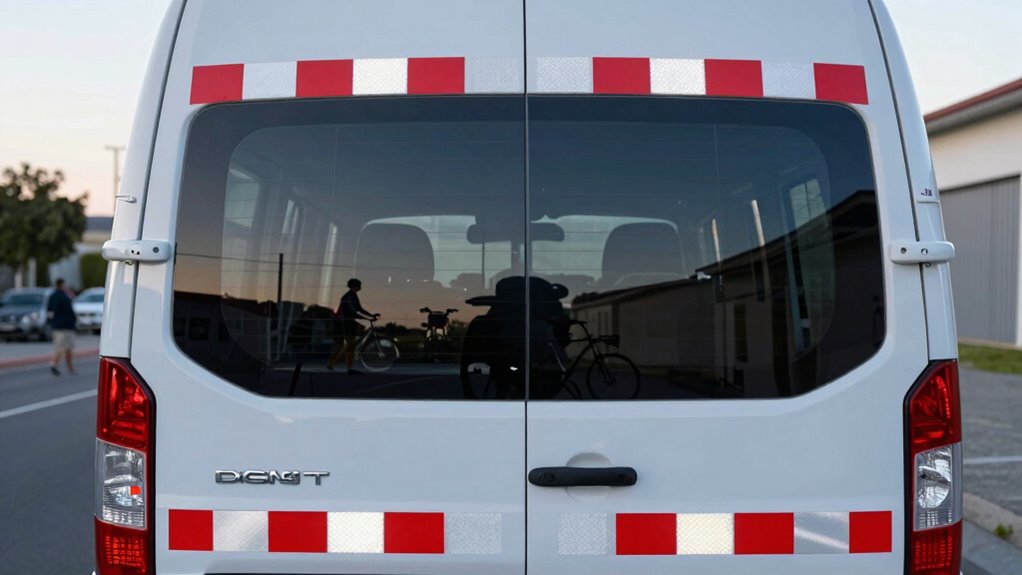
Have you ever considered how vital rear visibility is when driving large vans? It’s more than just seeing behind you; it’s about ensuring safety for everyone on the road. Big vans have significant blind spots that can hide pedestrians, cyclists, or smaller vehicles, making it crucial to develop strong blind spot awareness. When you’re behind the wheel of a large vehicle, your ability to recognize these hidden zones can prevent accidents and save lives. That’s why understanding how to improve your rear visibility discipline isn’t just a good practice—it’s a necessity.
Rear visibility is crucial for safety, especially in large vans with significant blind spots.
One of the most effective ways to enhance your rear visibility is through proper mirror adjustment techniques. Many drivers overlook this simple step, but it’s essential in reducing blind spots. You should position your side mirrors so they show as much of the adjacent lanes as possible without creating overlapping views. This adjustment gives you a broader field of vision, allowing you to spot other vehicles or obstacles in your blind spots without having to lean or turn excessively. Your rear-view mirror should be centered to give a clear view directly behind your van, but don’t rely solely on it. Adjust the side mirrors first, then fine-tune the rear-view mirror. This sequence ensures comprehensive coverage.
In addition, developing blind spot awareness involves constantly scanning your surroundings. Don’t rely solely on mirrors; turn your head to physically check blind spots before changing lanes or making turns. This habit helps you confirm that no one is lurking in your blind spots, especially in tricky situations like merging onto highways or navigating tight spaces. Remember, mirrors are tools to assist your vision, but they shouldn’t replace direct observation. Incorporating proper mirror adjustment into your routine is crucial because it directly influences your ability to see potential hazards. Regularly practicing these techniques can help reinforce good habits and improve overall safety.
Maintaining good rear visibility discipline also involves keeping your mirrors clean and properly functioning. Dirt, snow, or fog can distort your view, so make it a routine to clean your mirrors regularly and replace any damaged or malfunctioning components. Investing in wide-angle or convex mirrors can further improve your field of view, giving you a better perspective of the area around your van. Understanding how blind spots form and how to minimize them is a key part of rear visibility discipline that every big van driver should master. Being aware of how blind spots develop can help you anticipate and mitigate potential hazards effectively. Additionally, familiarizing yourself with the design features of your vehicle can give you insights into areas that are inherently more difficult to see.
Ultimately, prioritizing blind spot awareness and practicing effective mirror adjustment techniques keep you alert and prepared. Big vans demand extra vigilance because their size inherently limits what you can see directly. By consistently applying these practices, you reduce the risk of accidents, protect pedestrians and other drivers, and contribute to safer roads for everyone. Rear visibility discipline isn’t just about following rules; it’s about actively making safety your top priority every time you get behind the wheel.

Driver Side Mirror Compatible with 2008-2015 Chevrolet Express & GMC Savana 1500, 2008-2021 Express & Savana 2500 3500, Manual Folding, Dual Glass, Textured Black – OEM 20838065, GM1320395
DIRECT OEM REPLACEMENT: Matches OEM part 20838065, GM1320395, ensuring an exact fit and optimal functionality for the left…
As an affiliate, we earn on qualifying purchases.
As an affiliate, we earn on qualifying purchases.
Frequently Asked Questions
How Often Should Rear Visibility Checks Be Performed?
You should perform rear visibility checks before every trip and periodically during driving. Incorporate mirror adjustment techniques to optimize blind spot awareness, ensuring you see all angles behind you. Regularly checking your mirrors, especially when changing lanes or reversing, helps prevent accidents. Staying vigilant and practicing consistent rear visibility checks keeps you safe and aware of your surroundings, reducing blind spot risks and improving overall driving safety in big vans.
What Are Common Obstacles Blocking Rear Visibility?
Imagine a bustling marketplace blocking your view—common obstacles like large side panels, cluttered cargo, or improperly adjusted mirrors can obscure your rear vision. These hinder your blind spot management, making it harder to see behind the van. Regular mirror adjustments help clear this visual clutter, ensuring you catch everything in your path. Stay vigilant and keep your mirrors well-positioned to maintain a clear, unobstructed view for safe driving.
Are There Legal Requirements for Rear Visibility in Big Vans?
Yes, there are legal requirements for rear visibility in big vans. You need to guarantee compliance with safety regulations, which often specify minimum mirror sizes, proper placement, and unobstructed views. Failing to meet these standards can lead to penalties and increased accident risks. Staying updated on legal compliance helps you operate your van safely, protecting yourself and others on the road. Regularly check your vehicle’s mirrors and visibility features to meet these essential safety regulations.
How Does Rear Visibility Affect Insurance Claims?
Think of your van’s rear visibility as your shield in insurance claims. When you install a rear camera, it symbolizes clarity and accountability, helping you document incidents clearly. Improved blind spot awareness reduces accidents, making claims smoother and less costly. If an incident occurs, these tools prove your caution and responsibility. Ultimately, your commitment to rear visibility safeguards your reputation and finances, making insurance claims less complicated and more favorable.
What Training Is Recommended for Drivers to Improve Rear Visibility?
You should undergo training that emphasizes recognizing and reducing blind spots, including hands-on exercises with sensor technology. Practice using mirrors effectively and learn how to interpret sensor alerts to enhance rear visibility. Regularly update your skills with refresher courses, and familiarize yourself with new sensor tech features. This training helps you better spot obstacles, prevent accidents, and guarantee safer maneuvering in big vans.

Ampper 2 Pack 3" Blind Spot Mirrors for Trucks, Van, SUV, Large Vehicle – Aluminum Frame Glass Convex Rear View Blind Spot Mirrors
Pls Note: 3" Blind spot mirrors are designed for large vehicles, trucks, suv, etc. It will be large…
As an affiliate, we earn on qualifying purchases.
As an affiliate, we earn on qualifying purchases.
Conclusion
Prioritizing rear visibility in big vans isn’t just about safety—it’s about preventing accidents before they happen. Did you know that nearly 40% of all van-related crashes involve blind spots? By staying disciplined with your rear visibility checks, you considerably reduce that risk. Remember, a quick glance and proper adjustments can save lives and protect your cargo. Keep your focus on clear visibility; it’s a simple step that makes a big difference on the road.

Car Rear View Mirror with Suction Cup, Anti Glare Wide Angle HD Auto Inside Rearview Mirror, 360 Degrees Adjustable Reduce Blind Spots, Universal for Vehicle, Marine, Boat, Truck, SUV, Van
As an affiliate, we earn on qualifying purchases.
As an affiliate, we earn on qualifying purchases.

funest 126‘’ Squeegee for Window Cleaning, 2-in-1 Window Cleaner Tool with Extension Pole, Rotatable Head for Indoor and Outdoor Glass Shower Glass Mirror Car RV Window Cleaning Kit
[High-Efficiency Window Cleaning Kit] The Funest 2-in-1 window cleaner tool comes with an extra-large 126” squeegee, 4 microfiber…
As an affiliate, we earn on qualifying purchases.
As an affiliate, we earn on qualifying purchases.