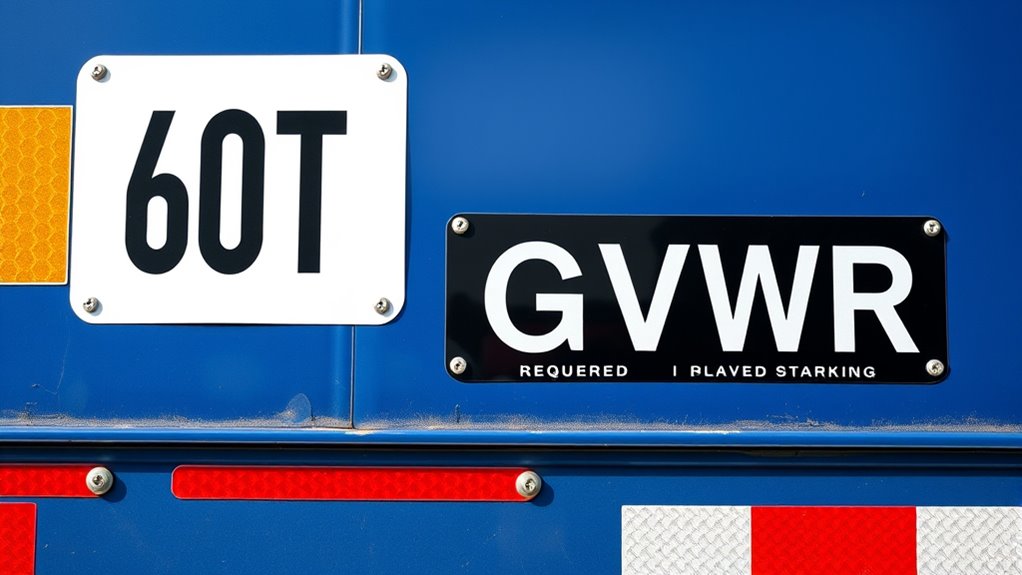

To stay compliant and guarantee safety on US roads, you need to display your DOT number prominently on your vehicle, especially for commercial trucks, along with accurate GVWR stickers inside the driver’s door frame or firewall. Other required markings, like tire load ratings and axle capacities, also play a crucial role. Keeping these labels visible, current, and well-maintained helps you avoid fines and guarantees smooth inspections. If you want to learn more about these important markings, keep exploring this topic.
Open a free Amazon Business account
Business pricing, bulk buying and tax-exempt orders.
As an affiliate, we earn on qualifying purchases.
Key Takeaways
- DOT numbers are unique identifiers assigned by FMCSA, required on commercial vehicles for compliance and safety tracking.
- GVWR stickers display the maximum weight capacity of a vehicle, crucial for load management and safety adherence.
- Required markings include DOT numbers, GVWR labels, tire load ratings, and axle weight limits, all vital for inspections.
- Proper display and maintenance of markings ensure legal operation, prevent penalties, and facilitate quick vehicle identification.
- Regularly inspecting and updating markings maintains compliance, safety standards, and helps avoid fines or vehicle impoundment.
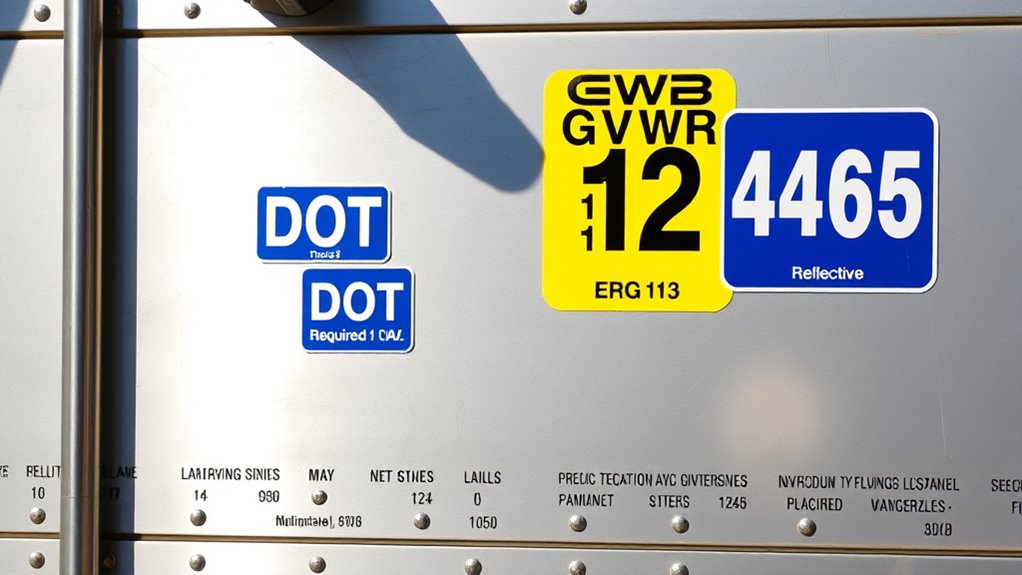
Understanding DOT numbers, GVWR stickers, and other required markings is essential for lawful and safe vehicle operation. These markings aren’t just regulatory requirements; they serve as vital identifiers that ensure your vehicle complies with federal safety standards. When you’re on the road, knowing these markings helps you verify that your vehicle is properly registered and safe to operate. It also allows law enforcement and roadside inspectors to quickly access crucial information about your vehicle’s weight capacities and registration status. Ignoring or misreading these markings can lead to fines, penalties, or even vehicle impoundment, so it’s important to familiarize yourself with what they mean and where to find them.
Your DOT number is a unique identifier assigned to your commercial vehicle by the Federal Motor Carrier Safety Administration (FMCSA). It’s a requirement for most commercial vehicles engaged in interstate commerce, and you’ll find it displayed on the vehicle’s side in a clearly visible manner. The DOT number tracks your vehicle’s safety records, inspection history, and compliance with federal regulations. Proper display of this number is critical for compliance and quick identification during roadside checks.
When you see this number, it confirms that your vehicle is registered and authorized to operate legally across state lines. It’s crucial to keep this number visible and legible at all times, especially during roadside inspections or when dealing with law enforcement. Failure to display your DOT number can result in citations or even suspension of your operating authority.
GVWR stickers, which stand for Gross Vehicle Weight Rating, provide information about the maximum safe weight your vehicle can carry, including passengers, cargo, and the vehicle’s own weight. You’ll typically find this sticker inside the driver’s door frame or on the firewall. It’s vital to understand your GVWR because exceeding it can compromise vehicle safety, cause mechanical failures, and violate federal regulations.
Knowing your GVWR helps you plan your loads properly, preventing overloading that could lead to accidents or damage. It also ensures you stay within legal limits, avoiding penalties during inspections.
Other required markings include tire load ratings, axle weight limits, and identification numbers, each serving a specific purpose in maintaining safety and compliance. These markings should be clear, legible, and in good condition so that all relevant parties can easily confirm your vehicle’s specifications.
Regularly inspecting these markings is a good practice, especially if your vehicle undergoes modifications or repairs. Keeping all these markings visible and accurate not only helps you operate within legal boundaries but also promotes safe and responsible vehicle management, protecting you and others on the road.
Frequently Asked Questions
Who Is Responsible for Ensuring Compliance With DOT Markings?
You’re responsible for ensuring compliance with DOT markings. It’s up to you to make sure your vehicle displays the correct DOT number, GVWR stickers, and other required markings clearly and accurately.
Regularly check that all markings are legible and up-to-date, especially before inspections or trips. Staying proactive helps you avoid fines, penalties, or delays, and keeps your vehicle compliant with federal regulations.
Can I Customize My GVWR Sticker Design?
Imagine you want to personalize your GVWR sticker to match your business branding. Yes, you can customize your GVWR sticker design, but it must still include all required information like weight limits and be legible.
Check with your state’s regulations or your local DOT authority first to make certain your design complies. This way, you maintain safety standards while adding a personal touch to your vehicle markings.
How Often Do DOT Regulations for Markings Change?
DOT regulations for markings typically don’t change very often, but it’s essential to stay updated because updates can happen. You should regularly check the Federal Motor Carrier Safety Administration (FMCSA) website or subscribe to their alerts.
Changes might occur annually or every few years, depending on safety and industry needs. Staying informed guarantees your vehicle remains compliant, helping you avoid fines or delays during inspections.
Are There Penalties for Missing or Incorrect DOT Markings?
Yes, there are penalties for missing or incorrect DOT markings. If you fail to display the required markings properly, authorities can issue fines, citations, or even shut down your operation until corrections are made.
These penalties aim to guarantee compliance and safety on the roads. It’s essential that you regularly check your markings for accuracy and visibility to avoid costly violations and keep your vehicle legally compliant.
Do All Commercial Vehicles Require a DOT Number?
Not all commercial vehicles require a DOT number. If your vehicle is used for interstate commerce and weighs over 10,001 pounds, you must obtain a DOT number.
However, if you’re only operating within a single state and your vehicle weighs less than this threshold, you typically don’t need a DOT number.
Always check federal and state regulations to guarantee compliance based on your specific vehicle’s use and weight.
Conclusion
Knowing about DOT numbers, GVWR stickers, and required markings helps you stay compliant and safe on the road. Did you know that over 80% of commercial vehicles are inspected annually, often due to missing or incorrect markings? Staying informed guarantees your vehicle meets all regulations, avoiding fines and delays. Keep your vehicle properly marked and registered—it’s a simple step that protects your business and keeps you on the road longer.
NFL season / tailgating Picks
team gear
As an affiliate, we earn on qualifying purchases.