
To avoid blowing your budget on a Ford Transit conversion, you need to account for hidden costs like higher-quality insulation, essential upgrades, and installation expenses. Don’t overestimate your power needs or skip planning for tools and labor costs, which can add up fast. Stay flexible, prioritize essential upgrades, and create a contingency fund. If you keep these tips in mind, you’ll better control expenses and make smarter choices throughout your build journey.
Listen free for 30 days with Audible
Thousands of audiobooks and originals — cancel anytime.
As an affiliate, we earn on qualifying purchases.
Key Takeaways
- Avoid overestimating power needs to prevent unnecessary high-capacity and costly solar and electrical systems.
- Carefully select insulation materials balancing initial costs and long-term energy savings.
- Budget for hidden costs like tools, labor, and upgrades to prevent budget overruns.
- Prioritize essential upgrades and establish a contingency fund for unexpected expenses.
- Start with modest systems, planning for future upgrades to control costs and maintain flexibility.
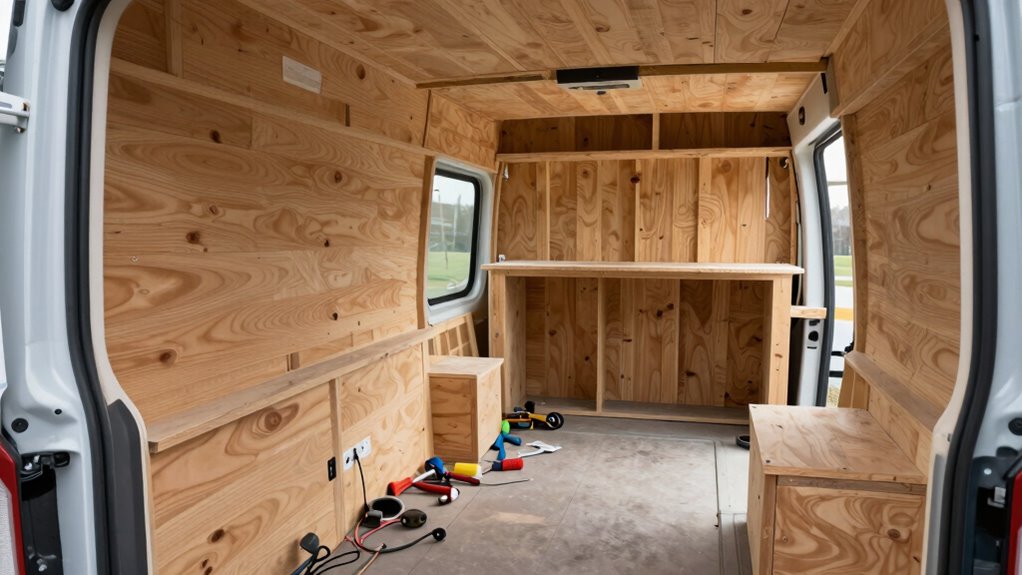
Converting a Ford Transit into a camper or mobile workspace often seems like a cost-effective project, but many enthusiasts quickly discover that expenses can spiral beyond initial estimates. One of the biggest surprises is underestimating the costs of essential upgrades like solar power systems and insulation materials. While these additions improve comfort and energy independence, they can also blow your budget if you’re not careful. Solar power, in particular, offers a clean, renewable energy source, but the upfront costs for panels, batteries, and inverters can add up fast. You might find yourself tempted to install the most powerful setup right away, but that’s a quick way to overspend. Instead, you should plan your energy needs carefully, starting with a modest system that can be expanded later. This way, you spread out expenses and avoid draining your budget on equipment you might not fully utilize initially.
Insulation materials are another hidden expense that many overlook. Proper insulation is vital to maintaining a comfortable interior, especially if you plan to travel through different climates. However, insulation options vary widely in price and effectiveness. Basic foam board or reflective foil insulation might seem affordable at first, but they often don’t provide enough thermal regulation for year-round comfort. More advanced materials like spray foam or sheep’s wool offer better insulation but come with higher costs and installation challenges. You need to balance your comfort needs with your budget, understanding that skimping on insulation can lead to higher heating or cooling bills later on, negating your initial savings. Additionally, understanding the thermal properties of insulation materials can help you make more informed choices for your specific climate and budget constraints. Considering the long-term savings of better insulation can also guide your decision-making process.
As you move forward with your conversion, remember that each upgrade—whether it’s solar power or insulation—comes with its own set of hidden costs, including tools, labor, and additional accessories. You might also discover that some components require upgrades to other parts of your build, leading to a domino effect of expenses. To avoid falling into the budget trap, set clear priorities. Start with the essentials, research costs thoroughly, and build a contingency fund for unexpected expenses. Additionally, understanding tea culture can be a relaxing way to take breaks during your project, making the process more enjoyable and less stressful. Incorporating cost estimation strategies from the start can help you stay on track and prevent overspending. By doing so, you guarantee your project remains financially viable without sacrificing comfort or functionality. Converting your Transit should be an exciting adventure, not a financial headache, and careful planning makes all the difference.
Ford Transit camper conversion insulation
As an affiliate, we earn on qualifying purchases.
As an affiliate, we earn on qualifying purchases.
Frequently Asked Questions
How Can I Estimate Hidden Costs During a Ford Transit Conversion?
To estimate hidden costs during your Ford Transit conversion, start by planning for interior insulation and electrical wiring, which often cost more than expected. Research quality materials and include extra budget for unexpected issues like uneven surfaces or wiring upgrades. Get detailed quotes from suppliers and contractors, and add a buffer of at least 10-15% for unforeseen expenses. This proactive approach helps you avoid surprises and stay within your overall budget.
What Are Common Budget Pitfalls Specific to Ford Transit Models?
You might overspend on interior insulation or electrical wiring without planning ahead. Imagine installing premium insulation, only to find you need extra wiring for advanced systems later, skyrocketing costs. Common budget pitfalls for Ford Transit models include underestimating the complexity of electrical wiring and insulation needs, leading to unexpected expenses. To avoid this, create detailed plans and set aside extra funds for these essential components, ensuring your conversion stays within budget.
How Do I Prioritize Essential Upgrades Within My Budget?
You should prioritize essential upgrades like interior insulation first, as it improves comfort and energy efficiency. Next, consider installing a solar panel to reduce energy costs long-term. Budget wisely by focusing on these key upgrades before expanding to less critical features. This approach guarantees you maximize your investment, avoid unnecessary expenses, and create a comfortable, energy-efficient space without falling into the budget trap.
Are There Cost-Effective Alternatives for High-Priced Conversion Features?
Think of your conversion like building a house of cards—small, inexpensive changes can support the whole. Yes, there are cost-effective alternatives for high-priced features. Use alternative materials like plywood instead of expensive veneers, and DIY hacks for installing fixtures. These tweaks save money without sacrificing quality. You’ll find creative, budget-friendly solutions that make your van feel just as functional and cozy, proving you don’t need to break the bank to create your dream space.
What Financing Options Are Available for Large Van Conversions?
You can finance large van conversions through personal loans, credit unions, or specialized RV loans that cover interior insulation and electrical upgrades. Some lenders offer flexible terms for DIY projects, allowing you to spread out costs over time. Consider using a line of credit for ongoing expenses, and always compare interest rates and repayment plans to find the most affordable option for your van conversion journey.
solar power system for van conversion
As an affiliate, we earn on qualifying purchases.
As an affiliate, we earn on qualifying purchases.
Conclusion
To avoid the Ford Transit conversion budget trap, stay disciplined with your planning and prioritize essential upgrades. Did you know that over 60% of conversions go over budget due to unforeseen costs? By setting a realistic budget and tracking expenses carefully, you’ll prevent surprises that could derail your project. Remember, a well-planned conversion not only saves money but also makes sure your van becomes the comfortable, functional vehicle you envisioned—without breaking the bank.
As an affiliate, we earn on qualifying purchases.
van conversion tools and equipment
As an affiliate, we earn on qualifying purchases.
As an affiliate, we earn on qualifying purchases.
Back to school Picks
back to school
As an affiliate, we earn on qualifying purchases.