You need better power planning in your remote work van because a reliable energy system keeps you connected and productive wherever you go. Relying on just a solar panel or large battery isn’t enough; ideal setup, real-time monitoring, and proper management are key to avoiding power shortages. Weather, shading, and equipment demands can quickly drain your resources if not planned carefully. Stay ahead by understanding these factors—more tips await you for maintaining a seamless power supply.
Key Takeaways
- Reliable power ensures continuous connectivity and productivity during remote work from diverse locations.
- Proper planning prevents power shortages that can disrupt daily activities and long-term adventures.
- Optimizing solar efficiency and battery capacity maximizes energy storage and reduces dependence on external sources.
- Small adjustments and real-time monitoring significantly enhance power system performance over time.
- A resilient, well-designed power system supports seamless remote work and remote living in remote or scenic environments.
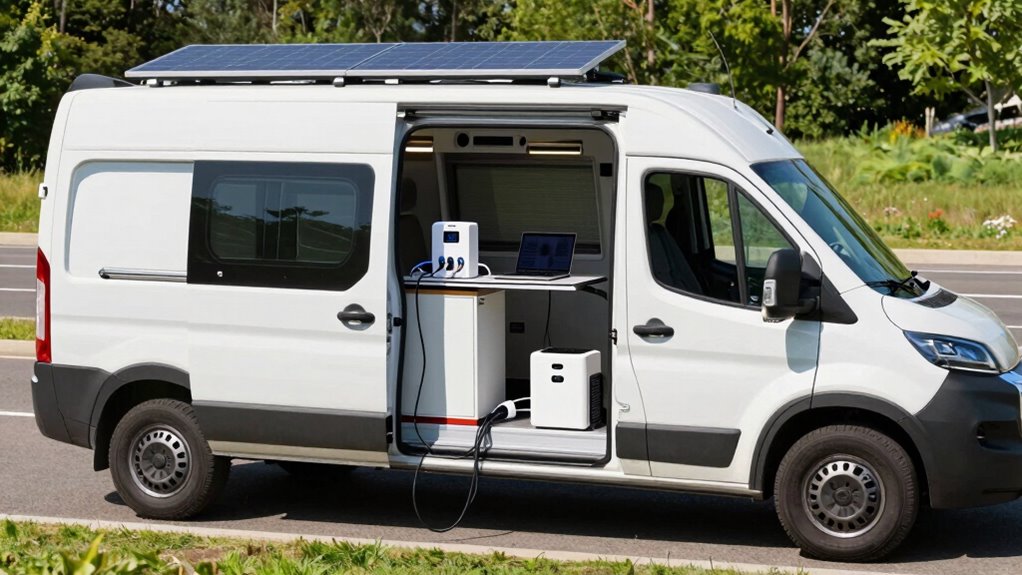
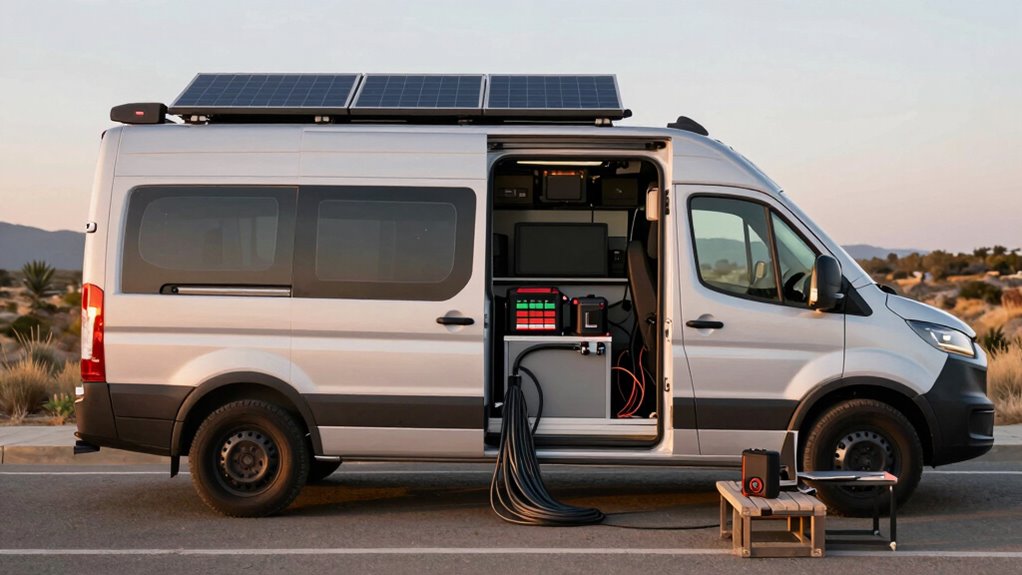
As remote work becomes more popular, planning for reliable power on the go is essential. Whether you’re parked at a scenic overlook or tucked into a quiet campsite, staying connected and productive depends on your power setup. Many assume that just having a solar panel or a large battery is enough, but that’s not the case. To truly keep your van powered, you need to understand how solar panel efficiency impacts your energy intake and how to optimize your battery capacity for maximum runtime. These factors are critical in preventing power shortages that could disrupt your work and daily life.
Solar panel efficiency isn’t static; it varies depending on the panel’s quality, angle, and environmental conditions. When selecting panels, you want ones with high efficiency ratings to maximize sunlight conversion into usable electricity. In practical terms, a more efficient solar panel produces more power in less space, which is especially valuable in a van where space is limited. You also need to consider the angle of placement—aiming your panels toward the sun during peak hours ensures you’re capturing the maximum amount of energy. Over time, these small optimizations can substantially boost your power supply, reducing reliance on backup batteries or generator runs. Additionally, understanding how environmental factors like temperature and shading affect solar panel efficiency can help you select better equipment and optimize your system’s performance. Implementing solar monitoring systems can provide real-time data on your panels’ output, helping you make informed adjustments for better efficiency. Regularly inspecting and cleaning your solar panels can further enhance their performance, ensuring you get the most out of your investment.
Battery capacity optimization is equally crucial. It’s tempting to go for the largest battery possible, but that can be inefficient and unnecessary if you don’t match it to your actual energy consumption. Start by calculating your daily power needs based on your devices, appliances, and any heating or cooling systems. From there, select a battery capacity that comfortably covers your typical usage plus a margin for cloudy days or unexpected demands. Properly managing your battery’s state of charge and avoiding deep discharges extend its lifespan and ensure you have reliable power when needed most. Incorporating smart monitoring systems to keep track of your battery’s health and usage patterns allows you to make adjustments proactively. Additionally, understanding the role of battery capacity optimization can help you match your energy storage to your actual needs and avoid waste. Being aware of your energy consumption habits can help you make smarter choices about how and when to use power, further enhancing system efficiency. Regularly reviewing your energy consumption data enables you to refine your power setup over time, ensuring efficiency and longevity.
Combining high solar panel efficiency with smart battery capacity optimization creates a resilient power system. It means you can generate enough energy during sunny days and store it efficiently for nights or overcast periods. This synergy reduces your dependence on external power sources, making your remote work setup more autonomous and dependable. When you plan your van’s power system with these principles in mind, you’ll find yourself more prepared for long-term adventures and remote work scenarios. Ultimately, good power planning isn’t just about having enough energy; it’s about using it wisely to keep your work flowing seamlessly, no matter where your journey takes you.
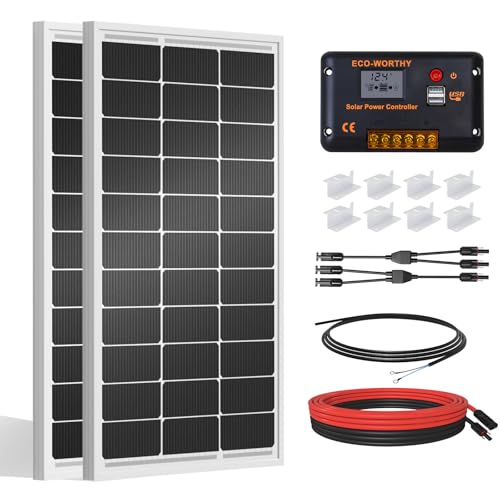
ECO-WORTHY 200 Watts 12 Volt/24 Volt Solar Panel Kit with High Efficiency Monocrystalline Solar Panel and 30A PWM Charge Controller for RV, Camper, Vehicle, Caravan and Other Off Grid Applications
- Wide Application: Suitable for RV, camper, marine, and more
- High Efficiency Cells: Up to 21.5% efficiency with monocrystalline cells
- Durable Construction: Corrosion-resistant aluminum frame for longevity
As an affiliate, we earn on qualifying purchases.
As an affiliate, we earn on qualifying purchases.
Frequently Asked Questions
How Long Can a Remote Work Van Operate on a Single Power Source?
A remote work van can operate for about 8 to 12 hours on a single power source, depending on its battery capacity and power consumption. If you have a high-capacity battery and efficient appliances, you’ll enjoy longer working hours. To guarantee smooth operation, consider a reliable power backup system. Proper power planning is essential so your work isn’t interrupted, especially when off-grid for extended periods.
What Are the Most Reliable Power Sources for Extended Van Trips?
Did you know that lithium-ion batteries, common in remote work vans, offer up to 100 kWh capacity? For extended trips, the most reliable power sources include high-capacity batteries paired with solar panels, which provide sustainable charging methods. These options guarantee your battery capacity stays topped off, even off-grid. Combining efficient batteries with versatile charging methods like solar, alternators, or portable generators keeps your van powered longer and more reliably.
How Does Weather Impact Van Power Systems and Planning?
Weather patterns markedly impact your van’s power system, causing fluctuations that can disrupt your energy supply. Cold weather can reduce battery efficiency, while heat may strain cooling systems. Rain or snow can affect solar panel performance, decreasing energy intake. To prevent power fluctuations, you should plan for weather variability by including backup power sources and monitoring weather forecasts closely, ensuring your van remains powered regardless of changing conditions.
Can Solar Panels Fully Power All Van Electronics?
Solar panels can’t fully power all van electronics on their own, especially if your battery capacity isn’t sufficient or if solar efficiency drops due to weather. While they considerably reduce reliance on external power, you’ll likely need a backup system, like a generator or larger batteries. Proper power planning involves balancing solar input with your energy needs, ensuring your van stays powered, even during cloudy days or high energy use.
What Safety Measures Are Essential for Van Power Systems?
You should prioritize battery safety by using quality, certified components and avoiding overcharging. Install proper fuses and circuit breakers to protect against power surges that could damage your system or cause fires. Regularly inspect wiring and connections, and follow manufacturer guidelines for maintenance. These safety measures guarantee your van’s power system remains reliable and safe, giving you peace of mind during your remote work adventures.
12V deep cycle battery for van life
As an affiliate, we earn on qualifying purchases.
As an affiliate, we earn on qualifying purchases.
Conclusion
So, don’t dismiss the importance of solid power planning in your remote work van. It might seem like a hassle now, but trust me, a well-thought-out setup keeps your work uninterrupted and your adventures stress-free. Even if you think you only need basic power, upgrades or backup plans can save you from unexpected outages. With good planning, you’ll enjoy both productivity and freedom—no matter where your work takes you.
As an affiliate, we earn on qualifying purchases.
As an affiliate, we earn on qualifying purchases.