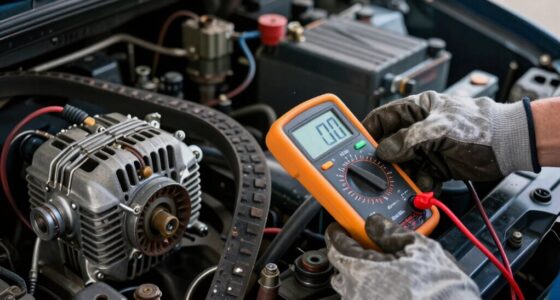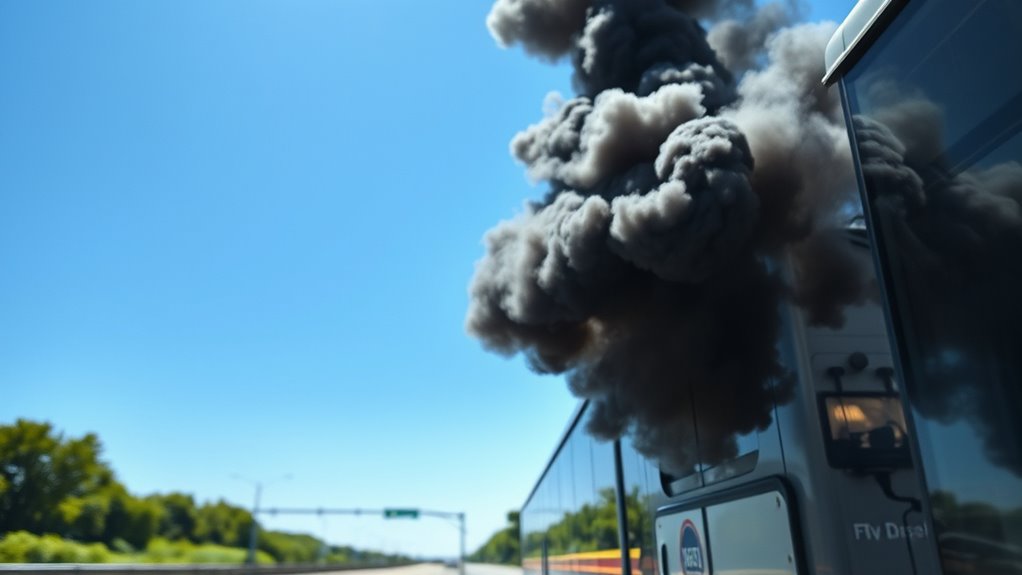
If you see black smoke coming from your diesel Transit, start by inspecting the fuel system for clogged injectors or filters, as over-fueling causes incomplete combustion. Check your air intake and turbocharger for restrictions or malfunctions that reduce airflow. Test sensors like the mass airflow sensor for accuracy, and examine the exhaust system for blockages or EGR issues. Addressing these components can resolve the problem—continue looking into each step for a detailed diagnosis.

Get garage and car supplies delivered free — and shop member deals
- Fast, free delivery on millions of items
- Access to Prime Big Deal Days deals on October 6–7
- Prime Video, Amazon Music and more included
Key Takeaways
- Inspect fuel injectors and filters for clogs or leaks causing over-rich mixture.
- Check air filters and turbocharger operation to ensure proper airflow and combustion.
- Test sensors like the mass airflow sensor for accurate readings affecting fuel delivery.
- Conduct compression tests to identify internal engine issues such as worn piston rings or valve seals.
- Use OBD-II diagnostic tools to scan for trouble codes and assess exhaust system integrity.
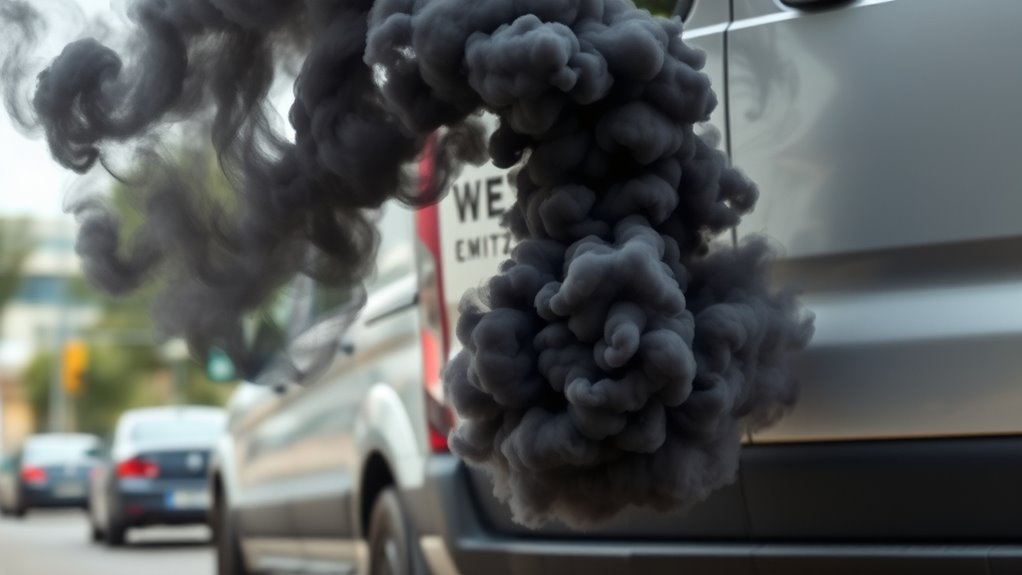
If you notice black smoke emanating from your diesel transit vehicle, it’s a clear sign that something isn’t functioning properly. Black smoke typically indicates incomplete combustion, which can stem from various issues within your engine or exhaust system. Recognizing these signs early can save you from costly repairs and help maintain the efficiency of your vehicle.
Black smoke from your diesel vehicle signals engine issues and incomplete combustion—address promptly to maintain efficiency and avoid costly repairs.
The first step in diagnosing the problem involves paying close attention to when the smoke appears. Does it happen during acceleration, steady cruising, or deceleration? This detail can narrow down potential causes. For example, black smoke during acceleration often points to problems with the fuel mixture or air intake, while smoke during steady driving might suggest an engine component that’s failing under load.
Next, you should check your vehicle’s fuel system. Incomplete combustion often results from excess fuel or insufficient air entering the engine. Inspect your fuel injectors for clogs or leaks, as dirty or malfunctioning injectors can cause an over-rich mixture that produces black smoke. Also, examine the fuel filters; a clogged filter restricts proper fuel flow, leading to improper combustion.
If your vehicle uses a turbocharger, ensure it’s functioning correctly. A malfunctioning turbo can lead to inadequate air intake, causing excess fuel to burn and produce smoke.
Another critical area to inspect is the air intake system. Dirty or clogged air filters reduce airflow, forcing the engine to work with a richer fuel mixture. Replacing a dirty air filter is a simple and cost-effective step that can resolve black smoke issues caused by restricted airflow.
If the air intake system looks clean but the problem persists, examine the sensors that monitor airflow, such as the mass airflow sensor. Faulty sensors may send incorrect data to the engine control unit (ECU), resulting in improper fuel delivery and black smoke.
You should also consider the state of your engine’s combustion chamber and exhaust system. Worn piston rings or valve seals can lead to incomplete combustion, which causes black smoke. Conducting a compression test can help identify such issues.
Additionally, check the exhaust system for blockages or damage that might hinder proper expulsion of combustion gases. If your vehicle is equipped with an EGR (exhaust gas recirculation) system, ensure it’s functioning correctly, as a faulty EGR valve can disrupt combustion and increase smoke output.
Furthermore, integrating advanced diagnostic tools, like the use of OBD-II scanners, can help quickly identify specific engine issues related to black smoke production. Using an OBD-II scanner can reveal specific engine trouble codes related to fuel or air delivery problems. Addressing these issues promptly will help restore your diesel transit vehicle to _best_ performance and reduce the emission of black smoke.
diesel fuel injectors cleaning kit
As an affiliate, we earn on qualifying purchases.
As an affiliate, we earn on qualifying purchases.
Frequently Asked Questions
Can Black Smoke Indicate Engine Oil Leaks?
Black smoke doesn’t typically indicate engine oil leaks. Instead, it usually signals incomplete combustion, excess fuel, or a clogged air filter.
If you notice black smoke, check your fuel system, air intake, and turbocharger for issues.
Oil leaks often cause blue or white smoke.
Focus on diagnosing fuel and air supply problems first, then inspect for oil leaks if other symptoms accompany smoke.
Is Black Smoke Always a Sign of Turbocharger Issues?
Black smoke isn’t always a sign of turbocharger issues; it can indicate other problems like a clogged air filter or fuel injection issues. Think of it as a red flag, signaling your engine needs attention.
You should check the turbocharger, but also inspect the air intake system, fuel system, and exhaust for blockages or leaks. Proper diagnosis guarantees you don’t jump the gun and miss the real cause behind the smoke.
How Does Fuel Quality Affect Black Smoke Production?
Poor fuel quality can markedly increase black smoke production in your diesel transit. When you use low-quality fuel, it often contains contaminants or improper additives that hinder combustion efficiency.
This causes your engine to burn excess fuel, leading to incomplete combustion and black smoke emissions. To reduce smoke, always opt for high-quality, clean diesel fuel, and consider using fuel additives that improve combustion and keep your engine running smoothly.
Can Driving Habits Cause Black Smoke in Diesel Transit?
Yes, your driving habits can cause black smoke in your diesel transit. Aggressive acceleration, high speeds, and sudden stops put extra strain on your engine, leading to incomplete combustion.
Overloading the vehicle or frequently idling also contribute to black smoke. To reduce it, drive smoothly, accelerate gradually, and avoid excessive idling.
Regular maintenance and proper driving techniques help keep your engine running clean and prevent black smoke production.
Are There Permanent Fixes for Persistent Black Smoke?
Yes, there are permanent fixes for persistent black smoke. Studies show that up to 80% of black smoke issues are resolved with proper repairs.
You should consider replacing clogged injectors, fixing turbocharger problems, or updating your engine’s software.
Regular maintenance, like using high-quality fuel and cleaning components, also helps.
As an affiliate, we earn on qualifying purchases.
Conclusion
So, next time you see black smoke billowing from your diesel transit, consider the common culprit—overfueling or clogged injectors. While some say turbocharger issues cause it, evidence shows they’re less likely the source. Instead, inspecting your fuel system and air filters often reveals the real problem. Don’t ignore these signs; diagnosing early can save you costly repairs later. Trust your instincts and verify the theory—black smoke isn’t just a visual; it’s a warning.
OBD-II scanner for diesel engines
As an affiliate, we earn on qualifying purchases.
As an affiliate, we earn on qualifying purchases.
As an affiliate, we earn on qualifying purchases.
Halloween Picks
halloween
As an affiliate, we earn on qualifying purchases.