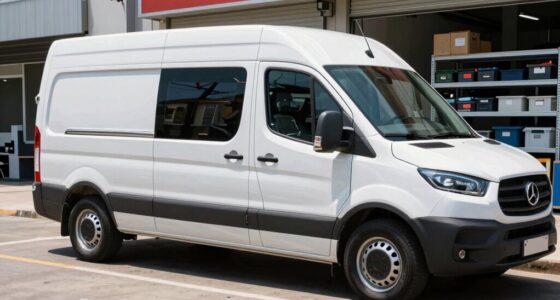
When expanding your fleet, choosing between new and used vans depends on your budget and operational needs. New vans offer reliable performance, advanced features, and warranty coverage, reducing upfront costs and maintenance worries. Used vans cost less initially but may lead to higher maintenance expenses over time. Weigh these factors carefully, considering long-term savings and efficiency, to make a cost-effective choice. If you want to find out which option best fits your goals, explore more insights below.

Get business pricing on garage and car supplies
- Business-only prices and quantity discounts
- Tax-exempt purchasing
- Multiple users, one account, clear invoices
Key Takeaways
- Leasing new vans offers lower upfront costs and warranty coverage, reducing initial investment and early maintenance expenses.
- Used vans have lower purchase prices but may incur higher long-term maintenance costs and less advanced technology.
- New vans provide reliability, safety features, and operational efficiency, minimizing breakdowns and boosting productivity.
- Leasing allows fleet upgrades to stay current with technology and regulations, extending vehicle lifespan and reducing depreciation impacts.
- Balancing initial costs, expected usage, and long-term maintenance helps determine the most cost-effective fleet expansion option.

Expanding your fleet often involves choosing between new and used vans, and making the right decision can considerably impact your business. One of the first considerations is your available budget and how you plan to finance your fleet. Leasing options can be more flexible for new vans, allowing you to spread out costs over time without large upfront payments. Leasing also often includes manufacturer warranties, which can lower your maintenance costs initially, giving you predictable expenses and reducing unexpected repairs. Conversely, used vans typically come with a lower purchase price, which can be appealing if you want to minimize upfront investment. However, used vehicles may lack the latest features and fuel efficiencies, and you’ll want to factor in potential maintenance costs that can add up over time. Additionally, understanding the vehicle lifespan and depreciation patterns can help you make more informed choices about your fleet investments.
When evaluating leasing options, think about your fleet’s usage patterns. If your vans are heavily used or driven long distances, leasing a new vehicle might be advantageous because it ensures you’re operating a reliable, under-warranty vehicle that’s less likely to break down. This reliability can help keep maintenance costs predictable and manageable. This consideration is especially important given the reliability of newer models and their impact on operational costs. On the other hand, if your usage is lighter or more predictable, used vans might serve your needs well and provide cost savings upfront. Just remember, with used vehicles, you’re more likely to encounter higher maintenance costs down the line, especially as vehicles age. Regular inspections and maintenance become critical to avoid costly repairs that can take a bite out of your budget. Additionally, considering vehicle features can influence long-term operational efficiency and driver satisfaction. Investing in newer models with advanced technology can also lead to better safety features and driver comfort, further supporting your operational goals.
Furthermore, understanding the available technology in newer models can give your fleet a competitive edge and improve overall productivity. Another factor to consider is your company’s long-term goals. Leasing new vans can provide the opportunity to upgrade more frequently, keeping your fleet modern and compliant with evolving regulations. This can enhance your company’s reputation and potentially reduce insurance costs. Used vans, while cheaper initially, may need more frequent repairs and could have a shorter remaining lifespan, which might lead to additional expenses sooner than you expect. You should also think about resale value—new vans typically depreciate faster in the first few years but can retain value better if well-maintained, whereas used vans have already experienced significant depreciation.
Ultimately, the decision hinges on balancing your financial capacity, operational needs, and long-term plans. If you prioritize lower initial costs and are comfortable managing higher potential maintenance expenses, used vans could be the way to go. But if you aim for reliability, lower maintenance costs, and the latest features, leasing new vans makes more sense. By carefully weighing leasing options and maintenance costs, you can make a fleet expansion choice that’s both cost-effective and aligns with your business goals.
As an affiliate, we earn on qualifying purchases.
Frequently Asked Questions
How Does Warranty Coverage Differ Between New and Used Vans?
You’ll find that new vans typically come with extensive manufacturer coverage and an extended warranty, giving you peace of mind and fewer repair costs early on. Used vans may have limited warranty options or none at all, so you might need to contemplate purchasing an extended warranty separately. This difference impacts your ongoing maintenance costs and overall fleet budget, making new vans a more predictable choice for warranty coverage.
What Financing Options Are Available for Used Vans?
Are you worried about financing your used vans? You have flexible options like leasing, which often requires less upfront cost, or traditional loans with varying loan terms to suit your budget. Leasing options may include maintenance and upgrade benefits, while loans allow ownership. Can you afford to miss out on these opportunities? Explore these financing choices to make expanding your fleet more affordable and manageable today.
How Do Maintenance Costs Compare Over the Vehicle Lifespan?
Over the vehicle lifespan, maintenance costs for used vans tend to be higher due to wear and tear, leading to more frequent repairs and part replacements. New vans, however, generally have lower maintenance costs initially because they’re under warranty and built with newer components. As you consider fleet expansion, keep in mind that while used vans may save upfront, ongoing maintenance costs could offset those savings over the vehicle lifespan.
Are There Specific Brands More Reliable for Used Vans?
Think of your used van search like steering through a well-stocked library; some brands have a reputation for reliability, making your choice easier. Toyota and Ford stand out for their consistent performance and extensive model availability, ensuring you get quality and variety. Focus on brands with strong reputation, proven durability, and readily available parts, so you can confidently select a used van that supports your fleet expansion without unexpected surprises.
What Factors Influence Resale Value of Used Versus New Vans?
You should consider factors like the resale market and depreciation rates when evaluating a van’s value. New vans typically depreciate faster initially but hold higher resale value later, while used vans often have lower depreciation, making them more budget-friendly upfront. Your decision depends on how long you plan to keep the vehicle, its condition, and brand reputation, all of which influence the resale value and overall cost-effectiveness.
As an affiliate, we earn on qualifying purchases.
Conclusion
So, whether you choose shiny new vans or trusty used ones, remember, your fleet’s success hinges on your wallet’s mood. Go brand new if you love the thrill of depreciation and surprise repairs, or opt for used if you’re all about that budget-friendly charm—and the occasional mystery squeak. Either way, just make sure your vans don’t run away with your profits. Happy fleet expanding—may your choices be as clever as your budget!
van safety features and technology
As an affiliate, we earn on qualifying purchases.
As an affiliate, we earn on qualifying purchases.
As an affiliate, we earn on qualifying purchases.
Halloween Picks
halloween
As an affiliate, we earn on qualifying purchases.