When importing a Ford Transit from overseas, you need to research local customs regulations, import laws, and vehicle specifications. Check for specific models available abroad, emission standards, and compatibility with your country’s requirements. Shipping options like container or roll-on/roll-off affect costs and protection. Prepare your vehicle properly, organize all documentation, and understand customs procedures and taxes. If you keep exploring, you’ll discover key tips to make your import smoother and more cost-effective.
Key Takeaways
- Research the destination country’s import laws, tariffs, and emission standards specific to Ford Transit models.
- Obtain necessary documentation such as proof of ownership, import permits, and emission compliance certificates.
- Decide between shipping methods like container or RoRo, considering cost, protection, and weather exposure.
- Prepare the vehicle by removing personal items, documenting condition, and ensuring it meets local emission standards.
- After arrival, handle customs clearance, pay duties, and complete local registration and licensing requirements.
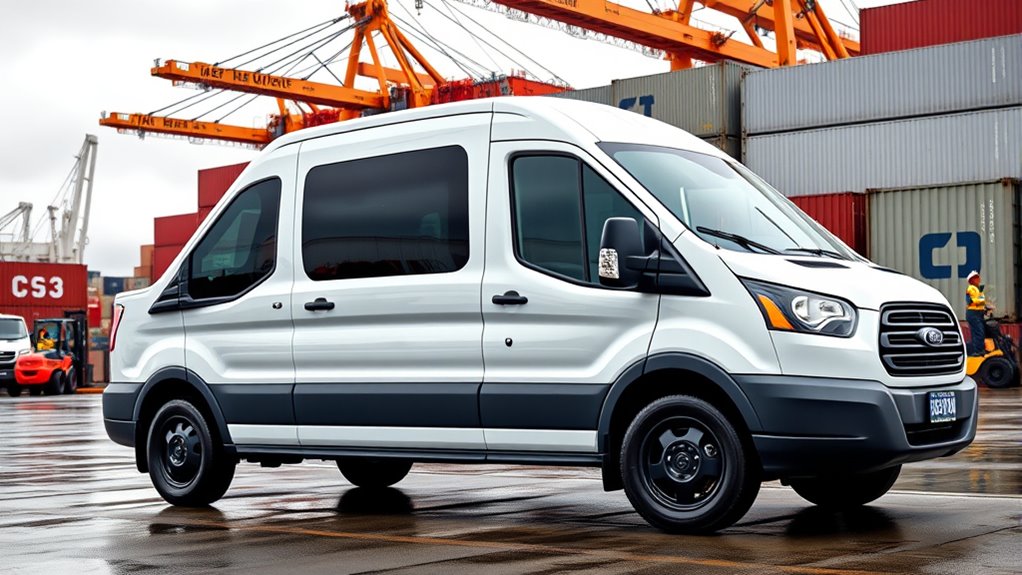
Importing a Ford Transit can be be a straightforward process if you understand the necessary steps and requirements. One of the first things to consider is familiarity with customs regulations, which can vary significantly depending on your country. Before you even start the shipping process, you should research your local import laws, tariffs, and any restrictions that might apply to foreign vehicle models. Customs regulations often dictate documentation needed, such as proof of ownership, import permits, and emission compliance certificates. Being well-prepared ensures the process goes smoothly and helps you avoid unexpected delays or fines. Additionally, understanding these regulations allows you to accurately estimate the costs involved so you won’t be caught off guard by hidden fees or paperwork issues.
Speaking of costs, shipping expenses are a key factor in your overall budget. Shipping costs depend on several variables, including the distance from the country of origin, the size and weight of the vehicle, and the shipping method you choose—whether container shipping or roll-on/roll-off (RoRo). Container shipping offers added protection but tends to be more expensive, while RoRo can be more affordable but exposes the vehicle to potential weather-related damage. It’s wise to get quotes from multiple freight carriers and compare their rates and services. Keep in mind that additional charges may apply, such as port handling fees, customs duties, taxes, and insurance. Calculating these costs in advance helps you avoid surprises once the vehicle arrives. Being aware of import regulations can also help you plan and prevent delays during the customs clearance process. Furthermore, verifying that your vehicle complies with emission standards is essential to ensure it meets environmental requirements and avoids additional modifications or penalties.
Once you select a reputable shipping company, you’ll need to prepare your Ford Transit for transport. This includes removing personal belongings, disabling alarm systems, and documenting the vehicle’s condition with photos. It is also important to check the vehicle’s condition before shipping to identify any pre-existing damages and document its state for insurance purposes. When the Transit arrives at your port, you’ll need to clear it through customs, which involves submitting the required paperwork, paying applicable duties, and passing any inspections. Being organized and prompt with your documentation can reduce processing time. After customs clearance, you’ll handle local registration and licensing, which may involve additional inspections or modifications to meet national standards. Also, consider the importance of proper vehicle documentation to ensure a smooth import process. Checking the emission compliance certificates can also be crucial to meet environmental standards required by your country.

EAGRI Car Trunk Organizer for Ford Transit Connect 2 (II) I 2014-2022, Organizers and Storage Bag Organization Container Box Multipurpose Portable Interior Accessories,Black Grey
Applicable Models: Car Trunk Organizer for Ford Transit Connect 2 (II) I 2014-2022
As an affiliate, we earn on qualifying purchases.
As an affiliate, we earn on qualifying purchases.
Frequently Asked Questions
Are There Any Specific Import Restrictions for Ford Transit Models?
You should know that there are specific import restrictions for Ford Transit models, mainly related to vehicle compliance and safety standards. You’ll need to verify the overseas model meets local emissions, safety, and import restrictions before bringing it in. Check with customs and import regulations to avoid delays. Import restrictions aim to protect your country’s standards and ensure your vehicle complies with local laws, making the process smoother.
How Do Import Tariffs Affect the Overall Cost?
Import tariffs, including import duties, substantially impact your overall cost when importing a Ford Transit. Higher tariffs increase the total expense, making the vehicle pricier. Shipping costs also add to the final price, especially with overseas models. You should factor in both import duties and shipping fees to get an accurate estimate of your total expenses. Planning ahead ensures you’re prepared for these costs and avoids surprises during the import process.
What Are the Warranty Considerations for Overseas Models?
Like a knight’s armor in a medieval tale, warranty coverage for overseas Ford Transit models can be tricky. You might find limited warranty coverage and service availability outside your home country, making repairs more challenging. Before importing, check if the manufacturer offers international warranty support or if you’ll need to rely on local authorized service centers. Knowing this helps you avoid unexpected costs and keeps your van running smoothly.
Can I Customize Features on an Imported Ford Transit?
Yes, you can customize features on an imported Ford Transit, but keep in mind that vehicle modifications and feature adjustments might be limited by the model’s original specifications and local regulations. Before making any changes, verify whether the modifications are legal in your country and if they void your warranty. It’s best to consult with a professional who understands both the vehicle’s design and local compliance standards.
How Long Does the Import Process Typically Take?
The import process usually takes between 4 to 8 weeks, depending on customs documentation and shipping logistics. You handle customs paperwork and coordinate with shipping providers, which can accelerate things if done promptly. Delays may occur at customs, so staying organized and in contact with your importer helps guarantee a smoother, quicker process. Expect some variation based on your specific location and the import regulations.

1 Pack Waterproof Vehicle Accident Report Kit in Vinyl Pouch 6.9 * 9.3inch Car Accident Kit Driver's Vehicle Inspection Report Helps Drivers Collect Organize and Report Vehicle Accident Information
All-in-One Vehicle Accident Report Kit for Drivers – This complete car accident kit includes everything a driver needs…
As an affiliate, we earn on qualifying purchases.
As an affiliate, we earn on qualifying purchases.
Conclusion
Importing a Ford Transit can seem overwhelming at first, but with the right research and preparation, it’s a manageable process. Don’t let concerns about compatibility or warranty issues hold you back; many overseas models meet strict standards and can be covered by local service plans. Ultimately, importing gives you access to a wider range of options and potentially better deals. With careful planning, you’ll enjoy the benefits without the hassle.

ECHO AUTOMILES Catalytic Converter Compatible with Subaru Outback 2015-2019 2.5L, Legacy 2015-2019 2.5L H4 EPA Compliant, Interchanges with OE 44620AC581 and 44620AC621
【Vehicle Fitment】This Catalytic Converter is Perfectly Compatible with Subaru Outback 2015 2016 2017 2018 2019, Subaru Legacy 2015…
As an affiliate, we earn on qualifying purchases.
As an affiliate, we earn on qualifying purchases.
![INNOSURE Tempered Glass Screen Protector for Ford E-Transit (2022/2023/2024/2025), Transit (2023/2024/2025) SYNC4 Infotainment 12 Inch Touchscreen [9H] [Anti Fingerprint] (HD Clear)](https://m.media-amazon.com/images/I/41FAHqVieGL._SL500_.jpg)
INNOSURE Tempered Glass Screen Protector for Ford E-Transit (2022/2023/2024/2025), Transit (2023/2024/2025) SYNC4 Infotainment 12 Inch Touchscreen [9H] [Anti Fingerprint] (HD Clear)
Designed for Ford E-Transit (2022-2024) Cutaway / Chassis Cab / Cargo Van, (2025) T-350 Cargo Van / Cargo…
As an affiliate, we earn on qualifying purchases.
As an affiliate, we earn on qualifying purchases.