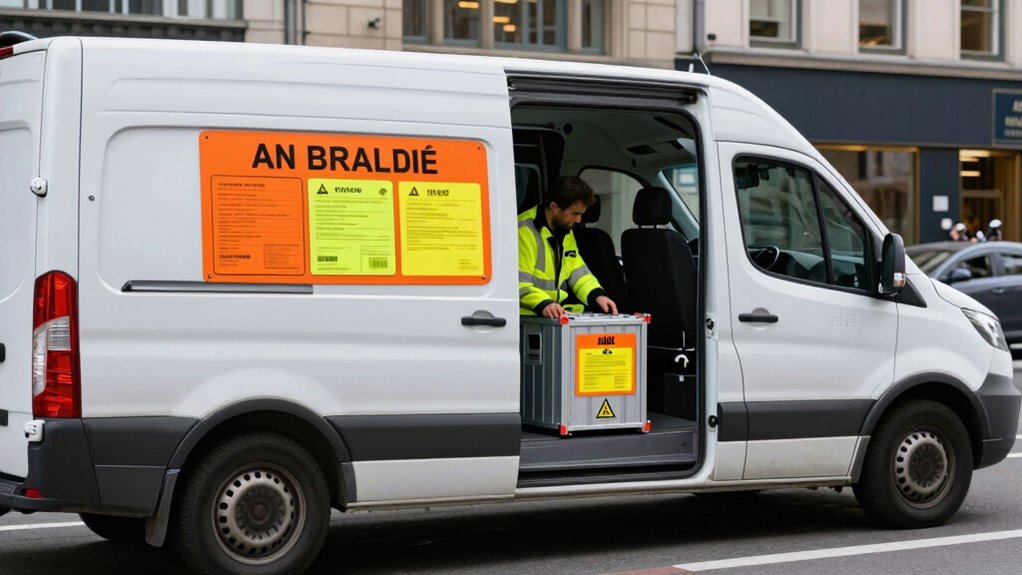

If you’re a van driver transporting hazardous materials that meet specific federal criteria, you need a HAZMAT endorsement on your license. This applies when the cargo is classified as dangerous and exceeds certain weight or quantity limits set by regulations. Complying with these rules helps keep everyone safe and prevents legal issues. If you want to understand exactly which situations require the endorsement and how to stay compliant, there’s more to learn below.

Get business pricing on garage and car supplies
- Business-only prices and quantity discounts
- Tax-exempt purchasing
- Multiple users, one account, clear invoices
Key Takeaways
- Van drivers must obtain a HAZMAT endorsement if transporting hazardous materials that require placarding or specific handling.
- The endorsement is required when carrying hazardous cargo across state lines, regardless of the vehicle type.
- Drivers need HAZMAT certification if their cargo falls under regulated dangerous goods categories per DOT or FMCSA guidelines.
- If transporting hazardous materials that are classified as hazardous waste or require special labeling, an endorsement is necessary.
- The requirement applies to commercial van drivers engaged in delivering hazardous materials for business purposes.
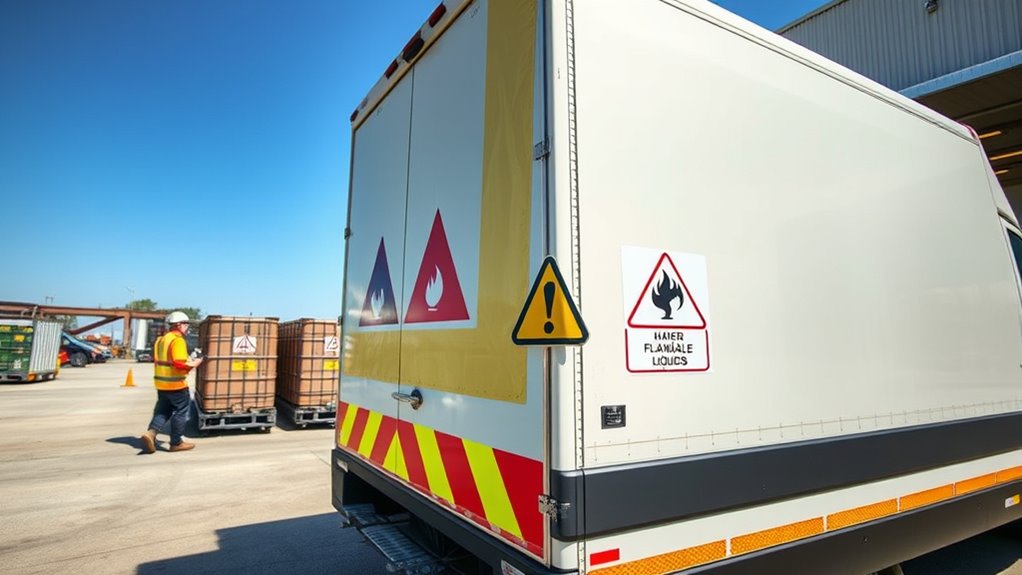
Have you ever wondered what it takes to safely transport hazardous materials? If you’re a van driver considering handling hazardous cargo, understanding the requirements is essential. One of the key elements is obtaining a HAZMAT endorsement on your commercial driver’s license. This endorsement isn’t just a formality; it’s a critical safety measure designed to protect everyone on the road. When you’re moving dangerous goods, you need to be familiar with packaging regulations that specify how hazardous materials must be packed to prevent leaks, spills, or other accidents. These regulations outline the proper containers, labeling, and handling procedures to guarantee that the cargo remains secure during transit. Ignoring packaging standards can lead to dangerous situations, including chemical spills or explosions, which is why compliance is non-negotiable. As a van driver, your role involves more than just driving; it’s about understanding these regulations and making certain your cargo is compliant before hitting the road. Proper hazardous materials handling also involves staying informed about regulatory updates, which are essential for maintaining compliance and safety standards in an evolving landscape. Beyond packaging, emergency response knowledge is equally important. In the event of an accident or spill, you’re often the first responder. That’s why the HAZMAT endorsement requires you to be trained in emergency response procedures. This training equips you with the skills to recognize hazardous materials, assess risks, and take immediate actions to mitigate harm. Knowing how to contain a spill, communicate with emergency responders, and evacuate if necessary can make a difference between a minor incident and a catastrophe. Your training also covers the use of safety equipment and how to read placards and labels, so you can quickly identify the hazards involved. Maintaining this knowledge is essential because hazardous cargo can pose significant health and safety risks if mishandled. The goal is to make certain that, even if something goes wrong, you’re prepared to respond effectively and minimize damage to people, property, and the environment. Additionally, understanding the importance of high-quality projectors can help create safer and more efficient transportation and handling environments, ensuring clear visibility and communication during emergencies. Proper hazards also involve ensuring that safety protocols are consistently followed and that your training is up to date.
Frequently Asked Questions
Are HAZMAT Endorsements Valid Across All States?
Hazmat endorsements aren’t automatically valid across all states due to varying state reciprocity agreements. You need to check each state’s endorsement validity rules because some states recognize out-of-state endorsements, while others require you to obtain a new one locally. It’s essential to verify specific state requirements before hauling hazardous materials to guarantee compliance and avoid penalties. Always stay updated on reciprocity agreements to ensure your endorsement remains valid wherever you drive.
How Often Do I Need to Renew My HAZMAT Certification?
You need to renew your hazmat certification every five years to maintain its validity. The renewal requirements include retaking the background check, completing a training course, and passing the written exam. Staying on top of these renewals guarantees your certification remains valid and compliant with federal regulations. Make sure to check with your state’s specific guidelines, as they may have additional renewal steps or deadlines to follow.
Can I Drive a HAZMAT Vehicle With a Regular CDL?
Absolutely, you can’t drive a hazardous materials vehicle with just a regular CDL. Hazmat regulations clearly specify endorsement requirements for transporting hazardous cargo safely. You need to pass a specialized test, obtain a Hazmat endorsement, and meet background checks. This guarantees you’re fully qualified and compliant. Without the endorsement, you’re risking violations, fines, and safety hazards. So, always secure your Hazmat endorsement before hauling hazardous materials.
What Are the Penalties for Transporting Hazardous Materials Without Endorsements?
If you transport hazardous materials without the proper endorsements, you risk serious penalties, including hefty fines and potential jail time. Safety regulations mandate that you must have a HAZMAT endorsement on your CDL to guarantee proper handling and safety. The penalty severity increases with the level of violation, emphasizing the importance of complying with all regulations. Always verify your endorsements before hauling hazardous cargo to avoid legal and safety issues.
Do All Van Drivers Need a HAZMAT Endorsement for Cargo?
As a van driver, you only need a HAZMAT endorsement if you’re transporting hazardous materials that require placarding according to cargo safety regulations. Not all cargo or van drivers fall under this requirement—it’s specific to hazardous materials. Always check the cargo safety regulations to determine if your load needs special handling and endorsements. If unsure, consult your state or federal guidelines to make sure you’re compliant and avoid penalties.
Conclusion
Guiding the world of hazardous cargo is like walking a tightrope—you need the right gear to stay balanced. When you haul hazardous materials, hazmat endorsements are your safety net, catching you before a fall. They’re your passport to handling danger with confidence, turning a potential storm into a calm voyage. So, don’t leave your safety to chance; secure that endorsement and keep your journey safe, no matter how turbulent the road gets.
Halloween Picks
halloween
As an affiliate, we earn on qualifying purchases.