Ford introduced the Transit in North America to replace the aging Econoline, aiming to meet modern business demands. The Transit offers better fuel efficiency, advanced safety features, customizable cargo space, and a more comfortable driver experience. It’s designed to handle larger loads and keep up with evolving technology. If you want to discover how this switch impacts fleet management and operational efficiency, there’s much more to explore.
Key Takeaways
- Ford phased out the Econoline to adopt a more modern, efficient, and versatile replacement suited to current business needs.
- The Transit offers increased cargo capacity and customizable configurations, meeting evolving operational demands.
- Modern safety and driver-assist features improve fleet safety and driver comfort compared to the older Econoline.
- Advanced technology and fuel-efficient systems reduce maintenance costs and enhance overall vehicle performance.
- Introducing the Transit aligns Ford’s offerings with market trends and strengthens its competitive position in commercial van segments.
Replacing the Econoline
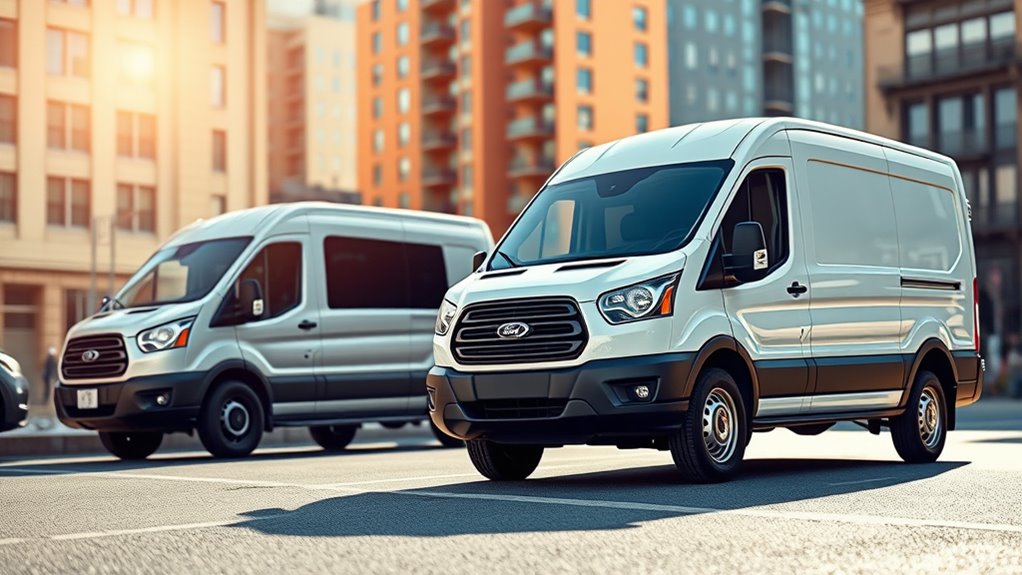
As the Ford Econoline reaches the end of its production run, many businesses and fleet managers are exploring suitable replacements that offer better performance, modern features, and improved efficiency. The Econoline has long been a staple for commercial fleets, but shifting demands and advancements in vehicle technology mean it’s time to contemplate newer options. One of the most compelling replacements is the Ford Transit, which Ford brought to North America to fill the gap left by the Econoline. This vehicle offers significant improvements in cargo capacity and comfort features, making it an attractive choice for businesses looking to upgrade their fleet.
The Ford Transit delivers impressive cargo capacity, allowing you to maximize your operational efficiency. Its versatile interior, with configurable shelving and bulkhead options, lets you tailor the space to your specific needs. Whether you’re transporting tools, equipment, or packages, the Transit’s cargo area is designed to handle larger loads while maintaining a compact footprint. The vehicle’s high roof options and extended length configurations provide even more room for larger items or increased volume, giving you the flexibility to expand your service offerings without needing multiple vehicles. Additionally, the Transit’s modular design makes customization easier, ensuring the vehicle adapts to your evolving business needs. This adaptable design also supports easier installation of optional safety and utility features, enhancing overall functionality.
Beyond cargo capacity, comfort features are a key upgrade you’ll notice with the Transit. Ford has integrated modern amenities that enhance driver experience and reduce fatigue on long trips. Features such as ergonomic seating, adjustable driver’s seats, and advanced climate control systems ensure comfort on every journey. The cabin layout is intuitive, with easy-to-reach controls and a user-friendly infotainment system that keeps you connected and entertained. These features help you maintain productivity and safety, whether you’re running short routes or conducting extended deliveries. The ergonomic design of the Transit cabin is aimed at reducing driver fatigue and improving overall safety during long hours behind the wheel.
The Transit offers ergonomic seating, advanced climate control, and an intuitive cabin layout for enhanced driver comfort.
The transition to the Ford Transit also brings technological advancements that weren’t available in the Econoline. With driver-assist features like adaptive cruise control, lane-keeping assist, and collision mitigation, you gain peace of mind on the road. The modern infotainment system offers integrated navigation and smartphone connectivity, which streamlines your daily operations. These innovations contribute to a safer, more efficient work environment, ultimately saving you time and reducing operational costs. Incorporating these driver-assist features further enhances safety and operational efficiency for your fleet.
Additionally, the Transit’s design incorporates advanced vehicle technology, which contributes to better fuel efficiency and lower maintenance costs over time. In essence, replacing the Econoline with the Ford Transit means stepping into a vehicle that’s better suited to meet today’s business demands. The Transit’s increased cargo capacity, combined with its comfort and technology features, ensures you stay competitive and productive. As more businesses recognize these benefits, it’s clear why Ford made the strategic decision to introduce the Transit to North America, providing a modern, capable alternative to the aging Econoline.

FetonAuto 4PCS Transit Interior Carbin Courtesy Load Space Area Roof Top Cargo Van LED Lights with Wire Harness Accessories for 2014-2024 Ford Transit 150 250 350 HD Connect, White 6000K
𝐅𝐎𝐑 𝐓𝐑𝐀𝐍𝐒𝐈𝐓 𝐕𝐀𝐍 Design for Ford Transit's interior lighting with load space area roof top cargo lights, for…
As an affiliate, we earn on qualifying purchases.
As an affiliate, we earn on qualifying purchases.
Frequently Asked Questions
What Are the Main Differences Between the Econoline and Transit?
You’ll notice the main differences between the Econoline and Transit in van size and seating configuration. The Transit offers a variety of sizes, from compact to larger models, with flexible seating options to suit your needs. In contrast, the Econoline has a more uniform size and fewer customization choices. The Transit’s modern design and versatile interior make it better suited for different cargo and passenger needs.
How Does the Transit Improve on Fuel Efficiency?
The Transit improves your fuel efficiency by offering advanced engine efficiency and better fuel economy. Its modern, turbocharged engines optimize power output while using less fuel, helping you save on gas costs. You’ll notice a significant boost in miles per gallon compared to older models, making your drives more economical. With these improvements, the Transit helps you reduce emissions and overall fuel consumption without sacrificing performance or reliability.
Will the Transit Be Available in Electric or Hybrid Versions?
You’ll be pleased to know that Ford plans to offer electric options and hybrid variants of the Transit. This aligns with industry trends and Ford’s commitment to sustainability. While specific models are yet to be announced, it’s highly likely these eco-friendly versions will arrive soon, giving you more choices to reduce emissions without sacrificing performance or utility. Keep an eye out, as Ford’s expanding their electric and hybrid lineup to meet your needs.
What Are the Safety Features Included in the Transit?
You’ll find advanced safety features in the Ford Transit, including pedestrian detection and autonomous driving capabilities. These features help prevent accidents by alerting you to nearby pedestrians and enabling semi-autonomous driving assistance. The Transit’s safety system also includes collision warning, lane-keeping assist, and adaptive cruise control, ensuring you stay safer on the road. Ford’s focus on safety aims to give you peace of mind during every trip.
How Does the Transit Compare in Cargo Capacity to the Econoline?
Think of the Ford Transit as a cargo beast with more room to spare. It offers considerably more cargo space and a higher payload capacity than the Econoline, making it ideal for heavy-duty tasks. With its versatile interior and efficient design, you can carry larger loads effortlessly. The Transit’s increased cargo capacity ensures you get the job done quicker and more efficiently, giving you the edge over the older Econoline model.

Rdxcv Car Seat Cushion, Ergonomic Memory Foam Auto Booster Seat Pad with Nonslip Bottom, Comfortable Vehicle Cushion for Short People Driving Fit for Sedan Truck SUV, Car Accessories (Black)
Practical Function: This car seat cushion covers existing imperfections on your car seat and enhances its overall look….
As an affiliate, we earn on qualifying purchases.
As an affiliate, we earn on qualifying purchases.
Conclusion
As you step into the future of work vans, the Transit emerges like a new dawn, ready to carry your ambitions forward. Ford’s decision to replace the Econoline isn’t just a shift in lineup—it’s a leap into innovation, a vessel built to navigate tomorrow’s roads. With this new chapter, your journey becomes smoother, stronger, and more resilient, proving that sometimes, to stay relevant, you have to sail into uncharted waters and embrace the winds of change.

MELIPRON Van Partition Bulkhead Fit for Ford Transit 150 250 350 Mid Roof with Door Handle, Acrylic Custom Window Board
Safety Insurance: Van bulkhead is made of heavy-duty gauge steel with exceptional strength and resistance to impact, fire,…
As an affiliate, we earn on qualifying purchases.
As an affiliate, we earn on qualifying purchases.

Magimaker A/C Heater Climate Control Module CK4Z-19980-A Compatible with Ford Transit 150 250 350 350HD 2015 2016 2017 2018 2019 Replace CK4Z-19980-B,HVAC Control Module Switch
[Compatible Model]:A/C Heater Climate Control Module Compatible with Ford Transit 150 250 350 350HD 2015 2016 2017 2018…
As an affiliate, we earn on qualifying purchases.
As an affiliate, we earn on qualifying purchases.