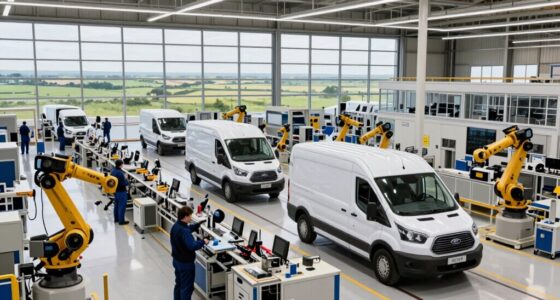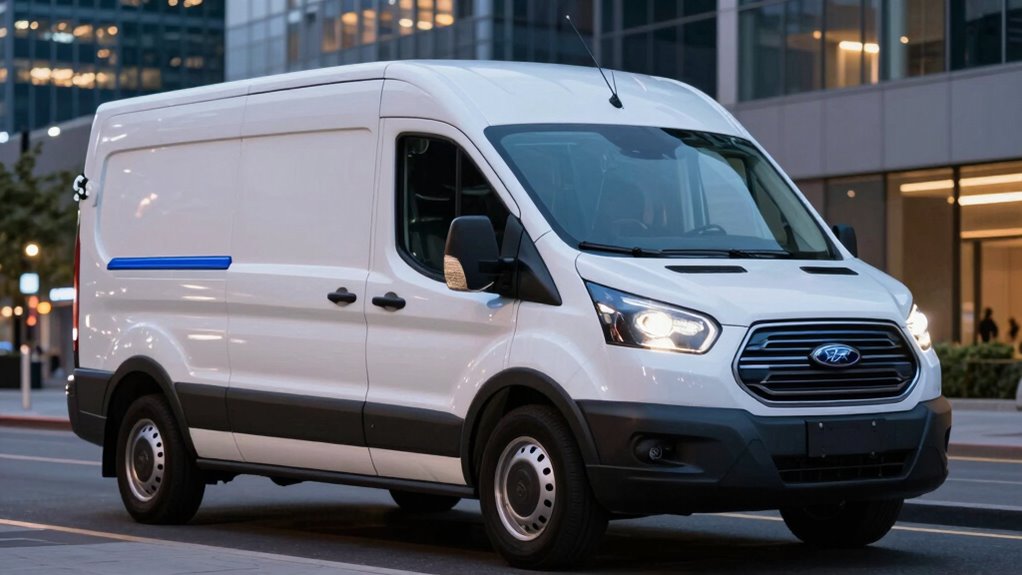

Ford began experimenting with electric Transits in small-scale pilot programs, recognizing their potential early on. Over time, advancements in battery tech and charging infrastructure made these vans more practical, leading to the fully developed E-Transit. Today’s model offers impressive range, fast charging, and sustainability features. If you want to know how these innovations evolved and what’s next, there’s more to discover about Ford’s journey from early experiments to today’s electric Transits.
Key Takeaways
- Early electric Ford Transit experiments were limited to pilot programs with small-scale deployment.
- Ford recognized electric commercial vehicle potential early and focused on scalable transit solutions.
- Technological advancements led to lighter, more efficient batteries, increasing range and performance.
- The E-Transit, built on the traditional Transit platform, was introduced to meet demand for sustainable, cost-effective transport.
- Ongoing innovations in battery tech and charging infrastructure have made electric Transits practical for daily business use today.
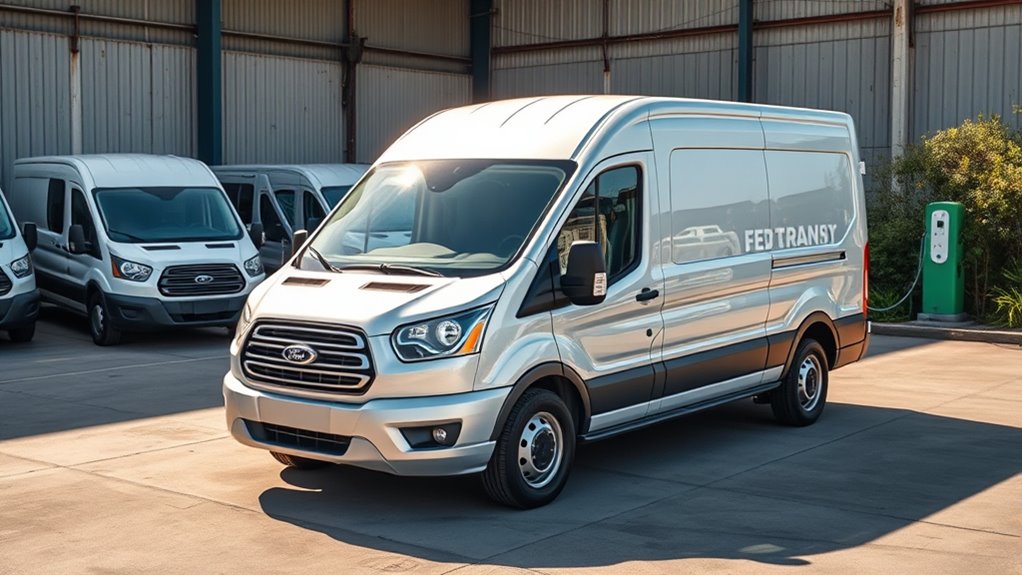
Ford’s journey into electric commercial vehicles has been marked by innovation and persistence. From early experiments to today’s E-Transit, you can see how Ford has steadily advanced its electric offerings, focusing on key technological improvements to meet the needs of businesses. Central to this progress is battery technology, which has evolved rapidly, allowing for increased range and better performance. In the beginning, electric vans faced limitations because battery packs were heavy and offered limited mileage. Ford responded by investing in research to develop more efficient, lighter batteries that pack more energy into smaller spaces. This shift has meant your electric transit can now travel farther on a single charge, making it more practical for daily operations. Alongside battery improvements, Ford has prioritized expanding the charging infrastructure. You’ll find that charging stations are becoming more widespread and faster, helping you to recharge your vehicle quickly during busy workdays. Ford’s focus on establishing a reliable charging network means less downtime and more productivity, whether you’re delivering goods or servicing clients. Early experiments with electric vans were often limited to pilot programs or small-scale deployments, but Ford recognized the potential and committed to scaling up. They introduced the Transit Electric as a direct response to customer demand for sustainable, cost-effective transportation options. The E-Transit, built on the familiar Transit platform, combines traditional durability with cutting-edge electric powertrains. You benefit from a vehicle that retains the familiar spaciousness and reliability you rely on while enjoying the advantages of zero emissions and lower operating costs. Ford’s approach has been pragmatic: improving battery technology to extend range and developing charging solutions that fit your schedule. Fast chargers now allow you to get back on the road in minutes rather than hours, which is essential for your business efficiency. The company’s investments in these areas show a clear understanding of your needs for dependable, easy-to-charge vehicles. As technology advances, the integration of high-performance batteries and fast charging stations continues to improve the practicality of electric vehicles for commercial use. Additionally, ongoing advancements in battery recycling are crucial for sustainable and environmentally friendly electric vehicle deployment. Innovations in sustainable materials are also being explored to further reduce the environmental impact of manufacturing electric vehicle components. Today’s E-Transit is a product of years of continuous improvement, driven by technological innovation and a commitment to sustainable mobility. As you consider electric commercial vehicles, it’s evident that Ford’s advancements in battery technology and charging infrastructure have transformed what was once experimental into a viable, everyday solution. You no longer have to compromise on capacity or range to go green; Ford’s electric transit models now deliver both. This evolution reflects Ford’s dedication to supporting your business’s transition to cleaner transportation and their vision for the future of electric commercial vehicles. Moreover, ongoing research into battery sustainability underscores Ford’s commitment to environmentally responsible manufacturing practices.

MELIPRON Cargo Van Partition Bulkhead Fit for Ford Transit 150 250 350 Medium Roof with Door Handle, Acrylic Custom Window Board
Safety Insurance: Van bulkhead is made of heavy-duty gauge steel with exceptional strength and resistance to impact, fire,...
As an affiliate, we earn on qualifying purchases.
Frequently Asked Questions
What Inspired Ford to Pursue Electric Versions of the Transit?
You’re inspired by the growing market adoption of electric vehicles and the regulatory push for sustainable transportation. Ford saw the shift as an opportunity to meet customer demand for eco-friendly options and stay competitive. By pursuing electric versions of the Transit, you align with environmental regulations and capitalize on trends that favor cleaner, more efficient commercial vehicles, ensuring your business remains forward-thinking and compliant.
How Do Electric Transits Compare in Cost to Diesel Models?
Think of the electric Transit as a green leaf in a bustling city. You’ll find the initial cost analysis shows electric models are often pricier upfront than diesel ones. However, you save through fuel savings and lower maintenance costs over time. While the sticker price may be higher, the long-term savings and environmental benefits make electric Transits a smart investment for your business and the planet.
What Are the Long-Term Maintenance Differences for Electric Transits?
You’ll find that electric Transits generally have lower long-term maintenance costs because their battery lifespan is quite durable, reducing replacement frequency. Plus, repair complexity is simpler since electric vehicles lack many moving parts found in diesel models, like oil filters and exhaust systems. This means fewer repairs and less downtime over the vehicle’s lifetime, making electric Transits a cost-effective choice for long-term ownership.
How Does Battery Technology Evolve in Ford’s Electric Transit Models?
You’ll notice that battery technology in Ford’s electric Transit models keeps getting brighter with advancements in cell chemistry, enhancing energy density and longevity. Ford regularly updates its batteries, integrating better thermal management and more durable materials. These battery advancements help improve range, reduce charging times, and extend lifespan, making your electric Transit more reliable and efficient over time. The evolution continues, promising a more seamless and sustainable driving experience for you.
What Future Innovations Are Planned for Ford’s Electric Commercial Vehicles?
Ford plans to innovate its electric commercial vehicles by integrating autonomous driving features, enhancing safety and efficiency. You can expect future models to feature advanced autonomous systems that streamline deliveries and reduce driver workload. Additionally, Ford aims to expand charging infrastructure, making it more accessible and faster, so you can recharge quickly and keep your fleet moving. These innovations will transform how you operate electric commercial vehicles, increasing productivity and sustainability.

MELIPRON Cargo Van Shelves Fit for Ford Transit Connect, Ram ProMaster City, Nissan NV200, Chevy City Express, Heavy-Duty Steel Work Van Shelving Organizer and Storage, 42" W x 43" H x 13" D
TRUE HEAVY DUTY FOR PROS: Stop worrying about sagging shelves. Our industrial steel van shelving is verified to...
As an affiliate, we earn on qualifying purchases.
Conclusion
You’ve seen the saga of the Ford Transit’s electrification evolve from early experiments to exciting e-transit realities. Today’s electric efforts exemplify innovation, inspiring industry influence and igniting interest. As Ford forges forward, you can feel the fresh fervor fueling future fleets. Embrace the evolution, because the journey from past prototypes to today’s pioneering e-transit promises powerful, practical progress—proof that progress is persistent, promising, and profoundly promising for tomorrow’s transportation.

Van Shelving Storage Unit with Door Kit 45" L x 44" H x13 D, Designed to fit GMC, Chevy, Ford Vans Standard/Low Roof
Listing for 1 (one) Van Shelving Unit with Door Compatible with Full Size STANDARD ROOF Vans - GMC...
As an affiliate, we earn on qualifying purchases.

MELIPRON Steel Cargo Van Shelving Storage System Fit for NV200, Transit Connect 2014+, Chevy City Express, Promaster City with S-Shaped Hooks(32" W x 43" H x 13" D)
TRUE HEAVY DUTY FOR PROS: Stop worrying about sagging shelves. Our industrial steel van shelving is verified to...
As an affiliate, we earn on qualifying purchases.