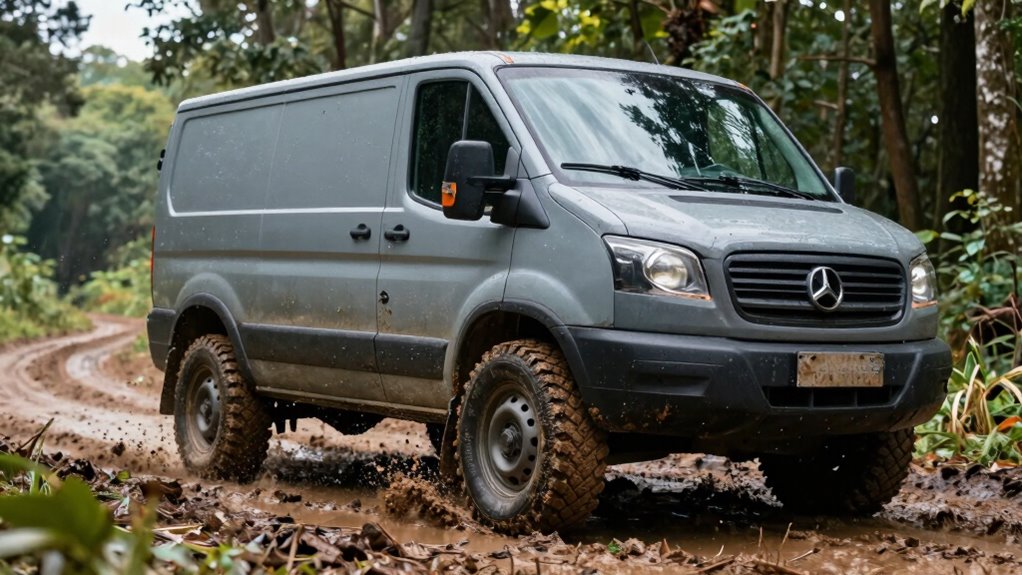

All-wheel drive has evolved from a niche feature to a standard offering across various vehicles, including trucks, SUVs, and even compact cars. Modern systems seamlessly distribute power for better traction and stability, whether on city streets or rugged terrains. Integration with electric drivetrains further enhances responsiveness and off-road capabilities. Over the years, tech advancements have made AWD faster, more efficient, and versatile, helping you navigate nearly any condition effortlessly—if you’re curious about how these innovations developed, keep exploring.
Listen free for 30 days with Audible
Thousands of audiobooks and originals — cancel anytime.
As an affiliate, we earn on qualifying purchases.
Key Takeaways
- AWD technology evolved from mechanical systems to seamless electric integrations, improving traction and responsiveness across vehicle segments.
- Electric AWD systems offer instant power distribution to all wheels, enhancing handling and off-road capabilities.
- Modern AWD integrates electric drivetrains, reducing mechanical components, increasing efficiency, and enabling real-time traction adjustments.
- Continuous advancements have made AWD systems more responsive, ensuring better performance on challenging terrains and steep inclines.
- Today’s AWD systems balance rugged off-road performance with urban efficiency, reflecting a focus on versatility and adaptive traction technology.

All-wheel drive (AWD) technology has evolved considerably over the decades, transforming from a niche feature into a standard offering across many vehicle segments. Today, you can find AWD systems in everything from compact cars to heavy-duty trucks, all designed to enhance traction and stability. One of the biggest shifts in recent years is the integration of electric drivetrains into AWD setups. Unlike traditional systems that rely on mechanical linkages and differentials, electric drivetrains can seamlessly distribute power to all four wheels almost instantaneously. This not only improves handling and safety but also opens up new possibilities for off-road capabilities. When you’re venturing onto rugged trails or icy roads, electric AWD systems can adjust power delivery in real-time, ensuring you maintain control regardless of terrain or weather conditions.
The advent of electric drivetrains has revolutionized how AWD systems function, offering smoother, more responsive performance. With electric motors at each wheel, your vehicle can react faster to changing traction conditions, giving you a significant edge off-road and on slick surfaces. This rapid responsiveness is especially beneficial when tackling uneven terrain or steep inclines, where traditional mechanical AWD might lag or struggle. Plus, electric AWD systems tend to be more efficient since they eliminate the energy losses associated with mechanical components like driveshafts and differentials. As a result, your vehicle can deliver better fuel economy or extended range, which is a vital advantage for those who rely on their vehicle for both daily commuting and outdoor adventures. Additionally, these systems exemplify how philosophical insights on authenticity and existence influence technological innovation by emphasizing the importance of efficiency and responsiveness.
Off-road capabilities are greatly enhanced by these advancements because electric AWD systems can precisely control power distribution, maximizing grip and minimizing wheel spin. When you’re steering onto rocky paths, muddy trails, or snowy backroads, this precise control helps you maintain momentum and avoid getting stuck. Many modern electric vehicles with AWD also come equipped with advanced driving modes tailored for off-road conditions, giving you confidence in a variety of terrains. This synergy of electric drivetrains and AWD technology means you don’t have to sacrifice comfort or efficiency for rugged performance. Instead, you get a versatile system that adapts to your needs, whether you’re commuting in the city or exploring remote wilderness areas.

USANOOKS Microfiber Cleaning Cloth Grey - 12 Pcs (12.5"x12.5") - High Performance - 1200 Washes, Ultra Absorbent Microfiber Towel Weave Grime & Liquid for Streak-Free Mirror Shine - Car Washing Cloth
- High Absorbency Grip Root Weave: Locks in 8-10x weight in liquids
- Lint-Free and Scratch-Resistant: Prevents streaks, swirls, and damage
- Durable for 1200+ Washes: Long-lasting reuse with overlock stitching
As an affiliate, we earn on qualifying purchases.
Frequently Asked Questions
How Does All-Wheel Drive Improve Vehicle Safety in Snowy Conditions?
All-wheel drive improves your safety in snowy conditions by enhancing traction stability, helping your vehicle grip slippery surfaces better. With all-wheel drive, you experience fewer slips and skids, giving you more control. This technology boosts your driver confidence, making it easier to navigate challenging conditions safely. By distributing power to all four wheels, all-wheel drive guarantees you stay steady and in control, even on the iciest, most treacherous roads.
What Are the Environmental Impacts of All-Wheel Drive Technology?
Imagine your electric vehicle, happily gliding through snow with all-wheel drive, but secretly it’s draining more energy, reducing fuel efficiency and increasing environmental impacts. While AWD improves traction, it often means extra weight and complexity, leading to higher energy consumption. This means more frequent charging or fuel use, which isn’t great for our planet. So, you might enjoy the snow, but your EV’s environmental footprint grows with each icy adventure.
How Does All-Wheel Drive Differ From Four-Wheel Drive Systems?
All-wheel drive (AWD) uses a drive mechanism that automatically distributes power to all four wheels, providing better traction on slippery surfaces. Four-wheel drive (4WD), on the other hand, usually offers a manual system with selectable modes for different terrains, making it more complex and rugged. AWD is simpler to operate and ideal for on-road use, while 4WD suits off-road adventures due to its system complexity and ability to handle tough conditions.
Can All-Wheel Drive Systems Be Added to Older Transit Vehicles?
You can add all-wheel drive systems to older transit vehicles, but it’s not straightforward. About 60% of retrofits face compatibility issues, making installation challenging. Retrofit challenges include adapting the drivetrain and ensuring integration with existing systems. You’ll need expert technicians to assess your vehicle’s compatibility and tackle these obstacles, but with proper planning, upgrading your transit vehicle to all-wheel drive can improve traction and safety.
What Future Innovations Are Expected in All-Wheel Drive Technology?
You can expect future all-wheel drive innovations to include autonomous traction systems that automatically adjust power distribution for ideal grip. Electric drivetrains will play a significant role, making AWD setups more efficient and eco-friendly. These advancements will enhance safety, handling, and fuel economy, especially in challenging conditions. As technology progresses, expect smarter, more adaptive AWD systems that seamlessly integrate with autonomous vehicle features for improved transit performance.

HOMEXCEL Microfiber Cleaning Cloth 12 Pack, 12.5 x 12.5 inch Microfiber Towels for Cars, Ultra Absorbent Washing Cloth, Lint Free Streak Free Cleaning Rags for Car, Kitchen, and Window (Grey)
- High Water Absorption: Excellent at absorbing dirt and liquids
- Scratch-Free Material: Soft fabric protects car paint
- Fast Drying: Quickly absorbs water for streak-free finish
As an affiliate, we earn on qualifying purchases.
Conclusion
As you’ve seen, all-wheel drive has evolved from simple traction aids to sophisticated systems that tackle everything from snow to off-road adventures. Today’s technology is a far cry from the early days, yet it still shares a common goal: keeping you moving safely. Just like the rugged vehicles of the past, modern AWD offers dependability—only now, it does so with more precision and comfort. The future promises even smarter traction, but the thrill of all-wheel drive remains timeless.

Amazon Basics Microfiber Car Drying Towels, Highly Absorbent, Lint Free, Scratch Free, Ultra-Soft, Car Detailing, Buffing and Polishing, 16" x 16", Yellow, 12-Pack
- Pack Size: 12 towels per pack
- Towel Dimensions: 16 x 16 inches
- Design: Double-sided microfiber
As an affiliate, we earn on qualifying purchases.

HUYINPJ Floor Organizer Compatible with 2021-2026 Ford Transit Center Console Storage Organizer Under Seat Box Bin Cup Holder for Transit Accessories(Not for Transit Connect)
- Compatibility: Fits 2021-2026 Ford Transit
- Maximized Storage: Utilizes under-seat space efficiently
- Organized Storage: Stores phones, umbrellas, cables, snacks
As an affiliate, we earn on qualifying purchases.
Back to school Picks
back to school
As an affiliate, we earn on qualifying purchases.