
When upfitting an e-Transit, consider how the large battery pack affects cargo space, so plan your layout for safe access and safety. Be mindful of the electrical system, ensuring wiring, fuses, and accessories are compatible with high-voltage components. Incorporate smart charging ports and accessible outlets, and follow safety regulations like insulation and emergency disconnects. To optimize your vehicle’s performance and safety, focus on these unique aspects—you’ll discover more efficient strategies ahead.
Key Takeaways
- Battery placement affects cargo space, requiring strategic layout to ensure accessibility and safety without damaging the battery.
- High-voltage electrical systems demand specialized wiring, fuse protection, and grounding, necessitating collaboration with EV-specific specialists.
- Charging port placement and cable management are critical for efficient charging and operational convenience.
- Safety measures include proper insulation, warning labels, emergency disconnects, and staff training on high-voltage hazards.
- Upfit plans must consider electric drivetrain constraints to optimize accessory integration without impacting battery life or charging efficiency.
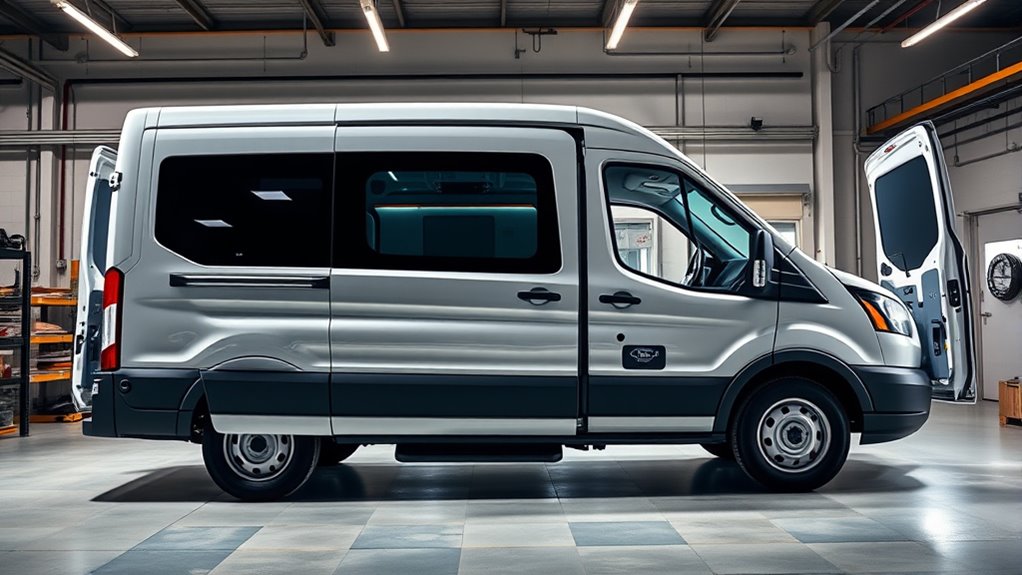
As more businesses adopt electric vehicles, understanding upfitting considerations for the Ford E-Transit becomes essential. The shift to electric delivery vans introduces new challenges and opportunities that differ markedly from traditional internal combustion engine models.
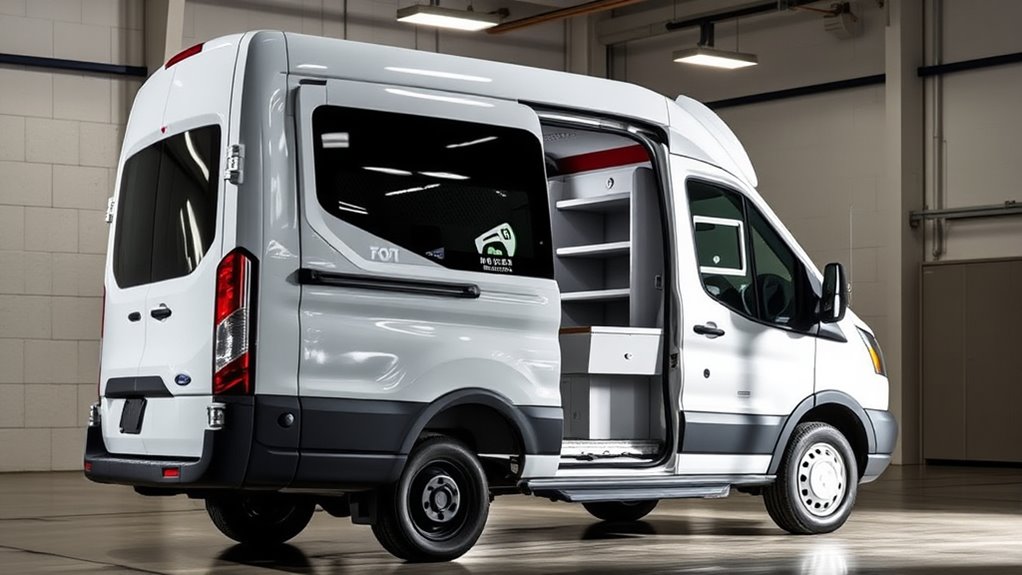
When planning your upfit, you need to evaluate how the vehicle’s electric drivetrain influences space, power requirements, and integration with various accessories or storage solutions. Unlike standard vans, the E-Transit’s battery pack occupies a substantial portion of the chassis, which impacts how you design and install shelving, racks, or specialized compartments. You can’t just assume you’ll have the same amount of cargo space as a diesel-powered version. Instead, you must assess how the battery placement affects your layout and guarantee your cargo can be accessed easily without risking damage to the battery or electrical components.
Battery placement impacts cargo space, requiring careful layout planning to ensure accessibility and safety.
Power distribution is another critical aspect. The E-Transit relies on high-voltage systems, so upfitting must prioritize proper wiring, fuse protection, and grounding. You’ll need to collaborate with specialists who understand electric vehicle architecture to avoid overloading circuits or creating safety hazards. Installing additional lighting, sensors, or communication equipment requires careful planning to prevent interference with the vehicle’s electrical system.
Furthermore, you should verify that any added accessories are compatible with the vehicle’s power limits and don’t compromise battery life or charging efficiency. This means choosing lightweight, energy-efficient options and consulting with upfitters experienced in EV modifications.
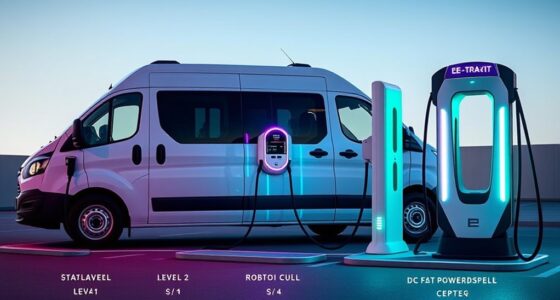
Charging infrastructure integration is often overlooked during upfitting but is crucial for operational efficiency. You’ll want to incorporate features like smart charging ports, cable management, and possibly even on-board chargers for quick turnaround times. The vehicle’s design may also influence where you position external power outlets or charging stations, especially if you operate in environments with limited access to charging infrastructure.
Planning for easy access to charging points can help streamline your daily operations and reduce downtime. Additionally, considering the availability of reliable charging stations in your operational area can significantly impact your fleet’s productivity and planning.
Finally, safety considerations are paramount. The high-voltage system in the E-Transit necessitates specific safety measures, including proper insulation, warning labels, and emergency disconnects. Upfitters should be familiar with electric vehicle safety standards to ensure your modifications don’t compromise safety protocols.
You also need to educate your drivers and maintenance staff about the unique features and potential hazards to prevent accidents or damage. Overall, tailoring your upfit to the E-Transit requires a blend of technical expertise and strategic planning, but doing so guarantees you maximize the vehicle’s benefits while maintaining safety, efficiency, and reliability in your fleet.

MELIPRON Cargo Van Partition Bulkhead Fit for Ford Transit 150 250 350 Medium Roof with Door Handle, Acrylic Custom Window Board
Safety Insurance: Van bulkhead is made of heavy-duty gauge steel with exceptional strength and resistance to impact, fire,...
As an affiliate, we earn on qualifying purchases.
Frequently Asked Questions
How Does E-Transit Weight Affect Upfitting Options?
Your E‑Transit’s weight substantially impacts upfitting options because heavier models can limit available configurations and payload capacity.
You need to consider the weight of added equipment and how it affects the vehicle’s range and handling. Heavier upfits may require reinforcement of the chassis or suspension upgrades.
You might have to choose lighter materials or compact solutions to maintain efficiency and safety. Always ensure your modifications stay within weight limits for ideal performance.
Are There Specific Upfitting Challenges for Electric Cargo Vans?
Think of electric cargo vans like a delicate dance—balancing power and space. You’ll face challenges with battery placement, which can limit interior customization, and additional weight from batteries might strain your payload capacity.
Charging infrastructure also plays a role, demanding strategic planning. But with careful planning, you can choreograph an efficient, eco-friendly setup that maximizes every inch, turning obstacles into opportunities for innovation and sustainability.
How Does Battery Placement Influence Interior Modifications?
Battery placement notably affects your interior modifications by limiting space and requiring structural adjustments. If batteries are placed under the floor, you’ll need to reinforce the chassis and plan for wiring routes. This can reduce cargo height and volume.
Conversely, placing batteries elsewhere may impact accessibility and weight distribution. You should carefully consider these factors to maintain functionality, safety, and ideal vehicle balance during your upfitting process.
What Are the Best Practices for Charging Port Integration?
You should position the charging port for easy access, secure it against environmental elements, and connect it with sufficient wiring for safety and efficiency.
Use weatherproof covers to protect from water and debris, guaranteeing the port is conveniently located for quick hookups.
Integrate it seamlessly into the vehicle’s design. Proper placement minimizes disruptions, enhances usability, and simplifies maintenance, making your e-Transit ready for efficient charging anytime you need it.
How Does Upfitting Impact E-Transit’s Overall Range?
Upfitting can impact your E‑Transit’s overall range by adding weight and potentially altering aerodynamics. Larger or more complex upgrades, like heavy-duty shelving or specialized equipment, increase energy consumption, reducing your driving distance per charge.
You might also encounter compatibility issues with the vehicle’s existing systems, which can affect efficiency. To minimize range loss, choose lightweight, integrated solutions and work closely with your upfitter to optimize design for electric performance.

MELIPRON Van Shelves Fit Ford Transit, RAM ProMaster, Chevy Express, Nissan NV, Sprinter, Steel Cargo Van Shelving Storage System, 52" W x 46" H x 13" D
Drilling Required: Before assembling promaster shelves, you need to drilled holes in the van walls and floor. Adjust...
As an affiliate, we earn on qualifying purchases.
Conclusion
Upfitting your E-Transit is like tuning a finely crafted instrument—you need to take into account every detail to ensure it performs perfectly. By understanding the unique electrical and weight considerations, you can create a vehicle that’s both efficient and reliable. Think of it as planting a seed; with careful planning and attention, your e-transit will grow into a powerful, dependable workhorse that adapts seamlessly to your needs. Embrace these considerations, and watch your investment flourish.

Van Partition with Hinged Door Fits for Ford Transit Medium Roof | Fit for 14-26 Transit 150/250/350; hinged Steel Bulkhead ensures Quick Access and Clear Visibility; Perfect for Contractors
PERFECT FITMENT: Van safety partition fits for 2014-2026 Ford Transit 150/250/350 mid roof. Not for low/high roof! Ideal...
As an affiliate, we earn on qualifying purchases.

MELIPRON Van Partition Bulkhead with Hinged Door Fit for 2014-2026 Ford Transit High Roof 150/250/350, Heavy-Duty Steel Cargo Divider, Rattle-Free & Security Lock
TAILORED FOR TRANSIT: Van bulkhead fits for 2014-2026 Ford Transit High Roof. Not for Low/Medium Roof! Drilling required...
As an affiliate, we earn on qualifying purchases.