To charge your e‑Transit, you’ll find three main options. Level 1 uses a standard household outlet, adding about 3 to 5 miles of range per hour—great for overnight topping off. Level 2 requires a dedicated 240-volt station, providing 20 to 30 miles of range per hour for faster charging. For quick trips, DC fast chargers can restore 80% in around 30 minutes. Understanding these options helps you optimize your vehicle’s usability—keep exploring to learn more.
Key Takeaways
- Level 1 chargers use standard 120V outlets, providing 3-5 miles of range per hour for minimal daily top-offs.
- Level 2 chargers operate at 240V, offering 20-30 miles of range per hour, suitable for overnight and regular use.
- DC Fast Chargers deliver up to 150 kW or more, restoring about 80% of E‑Transit’s battery in approximately 30 minutes.
- Charging speeds vary based on charger capacity and vehicle compatibility, with fast chargers ideal for long trips and quick stops.
- Strategic use of different charging levels helps optimize battery health and vehicle readiness.
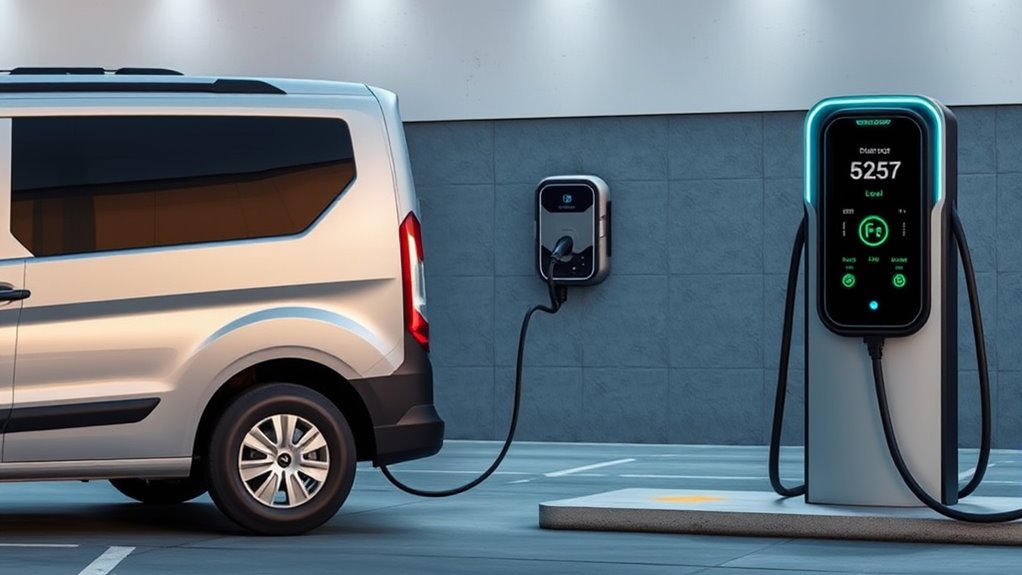
Charging speeds for the E‑Transit have considerably improved, allowing you to get back on the road faster than ever. Whether you’re making a quick stop or planning a long trip, understanding the different charging options helps you optimize your time and keep your vehicle ready to go. The E‑Transit supports multiple levels of charging—Level 1, Level 2, and DC Fast Charging—each suited for different needs and situations.
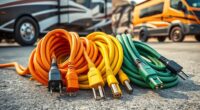
Level 1 charging is the most basic and accessible option. It uses a standard household outlet, typically 120 volts, and can be plugged into any regular power socket. While this method is convenient because you don’t need special equipment, it’s also the slowest. Expect to add only about 3 to 5 miles of range per hour of charging.
Level 1 charging uses a standard outlet and adds just 3 to 5 miles of range per hour.
So, if you’re parked overnight at home, this might be enough to top off your battery for the next day’s work. However, for daily use or when you need a quick top-up, Level 1 can be limiting because it requires a substantial amount of time to fully charge your vehicle.
Level 2 charging offers a much faster alternative. It requires a dedicated charging station and operates at 240 volts, similar to what you might find for a home dryer or oven. With Level 2, you can recharge your E‑Transit at a rate of roughly 20 to 30 miles of range per hour, depending on the charger’s power output.
This makes it ideal for overnight charging at home or quick stops at public charging stations. You’ll find Level 2 chargers in many urban areas, workplaces, and retail locations, making it easy to keep your vehicle topped up during the day or overnight. Installing a Level 2 charger at home can substantially reduce your charging time, giving you more flexibility and less downtime.
DC Fast Charging is the quickest way to recharge your E‑Transit when you’re on the go. It bypasses the slower charging levels by delivering direct current at very high power levels—often up to 150 kW or more. With a DC Fast Charger, you can typically restore 80% of your battery in just 30 minutes, depending on the charger’s capacity and your vehicle’s compatibility.
This is especially useful for long-distance trips or when you have limited time between stops. Keep in mind that frequent use of DC Fast Charging can impact battery longevity over the long term, so it’s best used strategically rather than as your primary charging method.
To maximize your charging efficiency, it’s helpful to understand holistic approaches to health and wellness, which can include optimizing your vehicle’s charging habits to maintain battery health and longevity.
Frequently Asked Questions
How Do Charging Speeds Affect E-Transit Battery Lifespan?
Charging speeds can impact your E-Transit battery lifespan if you regularly use fast chargers. Fast charging heats up the battery more, which may accelerate wear over time.
To maximize battery health, you should use Level 1 or Level 2 chargers for daily charging and reserve DC fast charging for emergencies. This approach helps reduce stress on the battery, extending its overall lifespan and maintaining ideal performance.
Can I Upgrade My E-Transit Charging Station Later?
Absolutely, you can upgrade your e-transit charging station later—it’s like revving up from a bicycle to a race car! Modern charging stations are designed for flexibility, allowing you to swap out or enhance components as technology advances.
Just check compatibility with your vehicle and confirm your electrical system can handle the upgrade. Planning ahead makes future upgrades smoother and keeps your E-Transit running at peak performance.
Are There Any Safety Concerns With Fast Charging?
Yes, there are safety concerns with fast charging. You should guarantee that your vehicle and charging equipment are compatible and properly maintained to prevent overheating, electrical faults, or fire hazards.
Always follow manufacturer instructions and use approved charging stations. Keep an eye on the charging process and avoid charging in adverse weather conditions.
Proper installation and regular inspections help minimize risks associated with fast charging.
How Does Ambient Temperature Influence Charging Times?
Think of ambient temperature like the weather’s role in a race—you’ll run faster in cool air and slower in heat. When it’s too cold, your E‑Transit’s battery may charge slower or need extra time to warm up, just like a runner struggles in the heat.
Conversely, very hot temperatures can cause the system to slow down to prevent overheating, extending charging times. Stay mindful of the weather to optimize your charging speed.
What Are the Cost Differences Between Charging Levels?
Charging costs vary considerably depending on the level you use. Level 1 is usually the cheapest, often included in home electricity rates, costing just a few cents per kWh.
Level 2 costs more due to higher power demand but remains affordable for daily use.
DC Fast charging is the most expensive, as it requires specialized equipment and fast power delivery, leading to higher fees.
Your choice impacts your overall charging expenses.
Conclusion
Now that you know the different charging levels, you might wonder if faster charging really boosts your efficiency. The truth is, while DC fast chargers can save time, they may impact your battery’s lifespan over time. So, think about your needs: if quick turns are essential, fast chargers are great. But for regular use, Level 1 or 2 might be gentler on your battery, proving that sometimes, slower can be smarter.