
To plan routes with public chargers in your van, use dedicated apps to find reliable stations along your path, checking availability and compatibility in advance. Aim to charge to about 80%, scheduling stops at fast chargers for efficiency. Keep backup options ready and stay updated with live traffic and station statuses to avoid delays. Staying flexible allows you to adapt your route as needed; more tips can help you navigate smoothly.
Key Takeaways
- Use dedicated apps and websites to identify reliable charging stations along your route.
- Verify charger compatibility and prioritize fast chargers to minimize downtime.
- Plan stops at around 80% charge, considering energy consumption, terrain, and weather conditions.
- Check for amenities and backup stations to ensure comfort and avoid delays during charging stops.
- Monitor real-time traffic and station status to adapt your route dynamically and prevent disruptions.
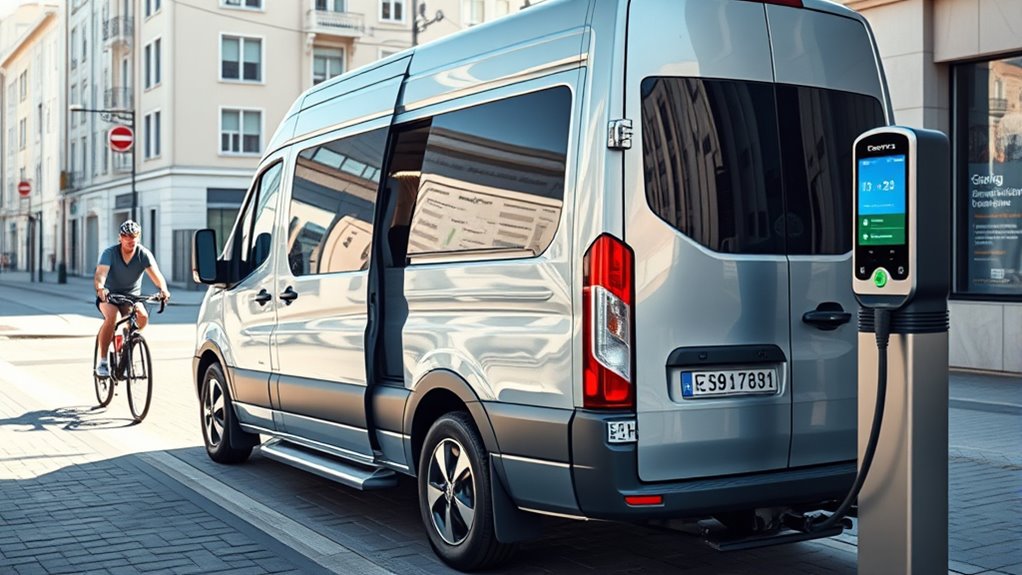
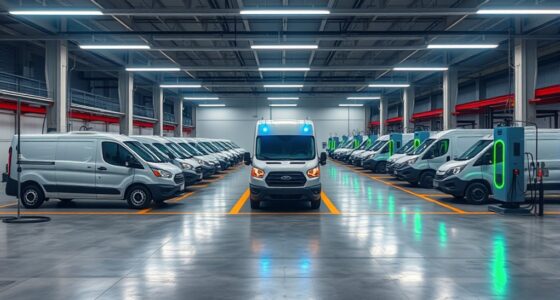
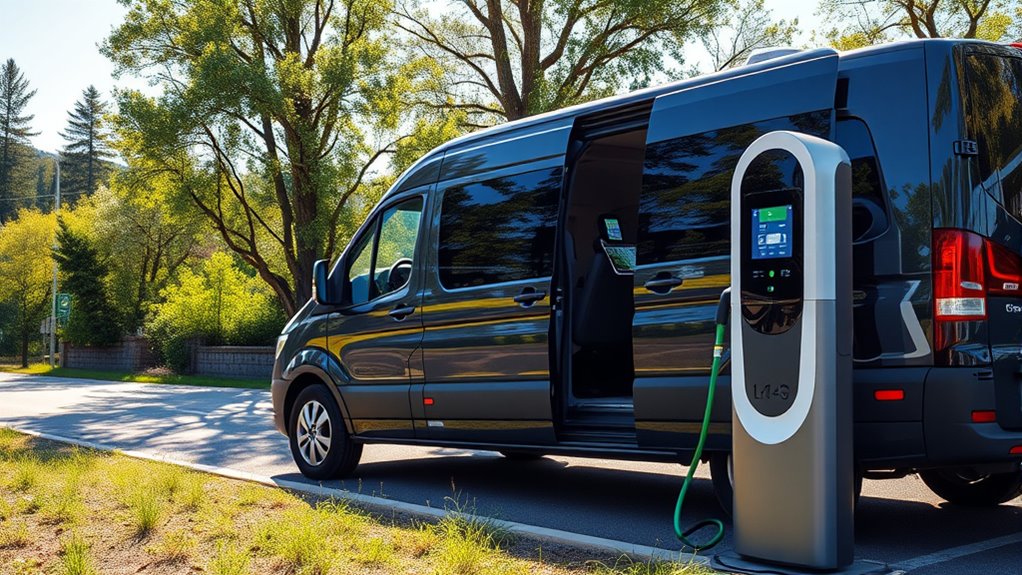
Planning routes with public chargers in a van requires careful attention to detail to guarantee a smooth trip. When you’re relying on public charging stations, every mile counts, so mapping out your route in advance becomes essential.
Start by researching the locations of chargers along your intended path. Use dedicated apps or websites that specialize in EV charging stations, which provide real-time data on availability, type of charger, and operating hours. These tools help you identify the most reliable options and avoid stations that are frequently out of service or overcrowded.
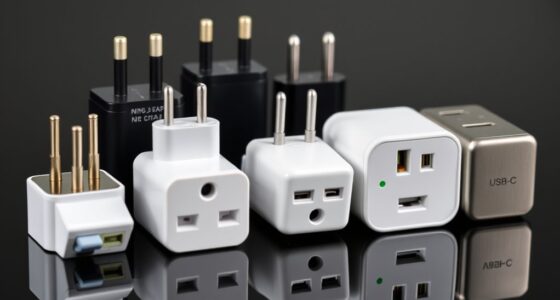
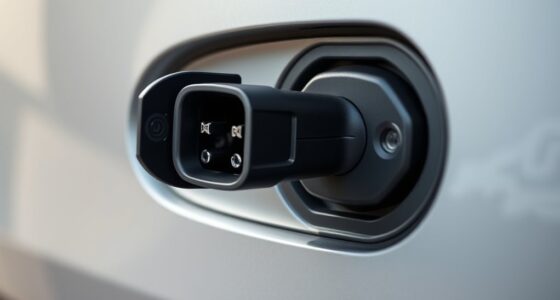
Once you’ve compiled a list of potential charging points, consider the type of chargers available. Not all stations are compatible with every vehicle, so double-check that the connectors match your van’s charging port. Also, note the charging speed—fast chargers can considerably reduce your downtime, allowing you to get back on the road quicker.
Prioritize stations that offer rapid charging, especially if you’re traveling through remote areas or have tight schedules. Planning your stops strategically is crucial. You should aim to charge at around 80% capacity rather than waiting until the battery is nearly depleted. This helps preserve battery health and reduces the risk of running out of charge in unserviced areas.
Determine the average energy consumption of your van, factoring in load, speed, terrain, and weather conditions. With this, you can estimate how far you can travel between charges and plan your stops accordingly. Always add a buffer to your calculations—unexpected delays or detours can happen, and you don’t want to find yourself stranded.
In addition, consider the amenities at charging stations. Some locations offer facilities like restrooms, food, or Wi-Fi, which can make your stop more comfortable. If you’re traveling with passengers, these extras can be a real plus.
Keep a backup plan ready as well. Identify alternative chargers nearby in case your primary option is out of service or occupied. This proactive approach prevents unnecessary stress and keeps your trip on track.
Finally, stay flexible and monitor your route regularly. Traffic, construction, or station outages may require adjustments on the fly. Using navigation apps that integrate live traffic updates and charging station statuses helps you stay informed.
In addition, be aware that indoor air quality can be up to 5 times worse than outdoor air, making air purifiers an essential part of creating a healthier environment inside your van. With thorough planning and the right tools, you can confidently navigate your journey, ensuring your van stays charged and your trip remains enjoyable.
Frequently Asked Questions
How Do I Find Real-Time Availability of Public Chargers?
You can find real-time availability of public chargers by using dedicated apps like PlugShare, ChargePoint, or Electrify America. These apps show live status updates, so you can see if chargers are in use or free.
Enable location services on your device for accurate results, and check for user comments or updates that might indicate current conditions.
Always verify before heading to the station to avoid unnecessary detours.
What Should I Do if a Charger Is Out of Service?
If a charger is out of service, you should immediately look for nearby alternative chargers using your navigation app or charging network map.
Keep a list of backup stations in case your preferred one isn’t working.
Contact the charging station’s support line if needed, and notify the app or network provider about the outage.
Always plan your route with extra charging options to avoid running out of power unexpectedly.
Are There Any Apps to Help Plan Multi-Leg Routes?
Yes, there are apps that can help you plan multi-leg routes with public chargers. You can use apps like PlugShare, ChargePoint, or A Better Route Planner (ABRP).
These apps show real-time charger availability, locations, and help optimize your route based on your vehicle’s range. They’re user-friendly, and many allow you to filter chargers by network or charger type, ensuring you find the best options for your trip.
How Do I Handle Long Wait Times at Busy Chargers?
Imagine your journey as a story, with each charging stop a pivotal chapter. When faced with long wait times at busy chargers, you can stay patient, or better yet, plan ahead using apps that show real-time charger availability.
Arrive early, have backup stations mapped out, and consider off-peak hours. This way, you control the narrative, turning potential delays into smooth, well-paced adventures.
Can I Reserve a Public Charger in Advance?
Yes, you can reserve a public charger in advance at some locations. Many charging networks offer reservation options through their apps or websites, allowing you to secure a spot before your trip.
This helps avoid long wait times and guarantees your vehicle has a charger when you arrive.
Check the specific network’s reservation policies and availability, and make your reservation early, especially during busy travel times.
Conclusion
By planning your route with public chargers in mind, you guarantee smooth trips and avoid range anxiety. For example, imagine you’re on a cross-country journey and spot a charger in a small town. Stopping there not only refuels your van but also gives you a chance to explore local sights. With a bit of prep and smart planning, your adventures become stress-free, letting you enjoy the journey as much as the destination.