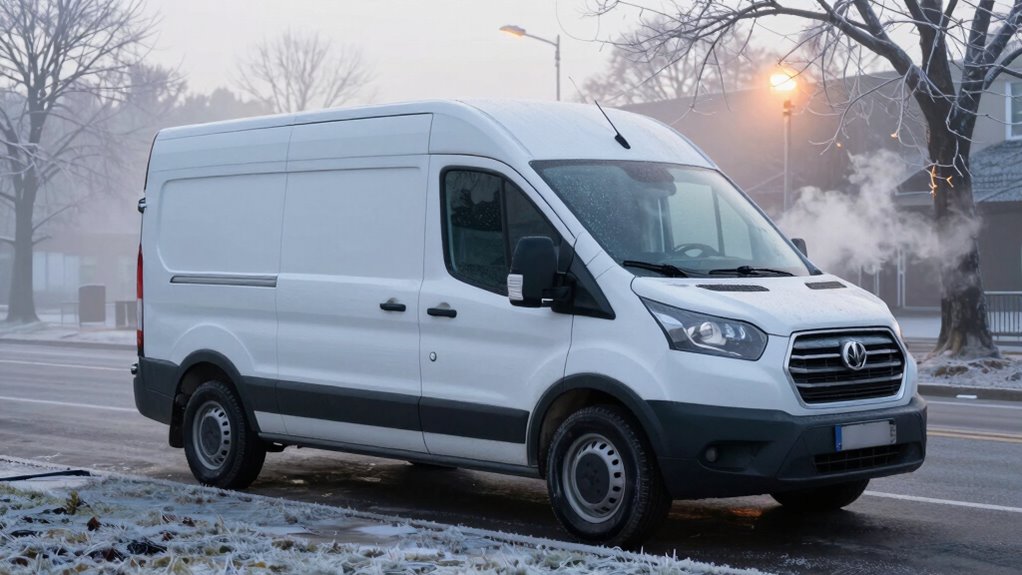

On cold mornings, you’ll notice your E-Transit’s range drops more than expected because low temperatures slow down the chemical reactions inside the battery, making it less efficient. The thermal management system works hard to warm the battery and cabin, but it uses extra energy, which adds to your range loss. Longer warm-up times and reduced power are common, but using preconditioning can help. Keep exploring to learn how to better manage your vehicle in winter conditions.
Open a free Amazon Business account
Business pricing, bulk buying and tax-exempt orders.
As an affiliate, we earn on qualifying purchases.
Key Takeaways
- Cold mornings significantly reduce the E-Transit’s range by hindering battery chemical reactions.
- Thermal management systems consume extra energy to warm the battery, further decreasing available range.
- Longer vehicle warm-up times and preconditioning are essential to maintain efficiency in cold weather.
- Cold exposure can accelerate battery degradation and impact long-term vehicle performance.
- Using remote climate controls and proper winter care helps mitigate cold weather effects on the E-Transit.

On chilly mornings, you might notice your E-Transit’s range drops more than you’d expect, revealing a stark reality about electric vehicles in low temperatures. The decrease in battery efficiency becomes immediately apparent, as the cold hampers the chemical reactions inside the battery that generate power. Instead of performing at peak capacity, your vehicle’s battery struggles to deliver the same amount of energy, leading to a noticeable reduction in driving range. This isn’t just a minor inconvenience; it’s a fundamental challenge that reveals how sensitive electric vehicle batteries are to temperature changes.
Thermal management systems play a vital role in mitigating these issues, but they aren’t foolproof. Most E-Transits are equipped with heating systems designed to warm the battery and cabin, guaranteeing comfort and functionality. However, activating these systems consumes additional energy, which further drains the battery and accelerates range loss. When you start your vehicle on a cold morning, the thermal management system kicks in, pulling energy from the battery to raise its temperature. This process, while necessary to protect the battery and maintain efficiency over time, temporarily reduces the vehicle’s available range. It’s a balancing act between preserving battery health and maintaining daily usability.
You might also notice that the vehicle takes longer to warm up. The thermal management system prioritizes heating the battery to ideal operating temperatures, which can be energy-intensive. As a result, you might find yourself planning shorter routes or leaving earlier than usual to account for the decreased range. The cold also slows down the chemical reactions within the battery, making it less responsive and less capable of delivering power quickly, especially during acceleration or heavy loads. This combination of factors underscores the importance of preconditioning your vehicle if your climate allows. Using a remote climate control system to warm the battery and cabin before driving helps preserve range and guarantees you start your trip with a more efficient battery temperature. Additionally, understanding the thermal management systems involved can help you better optimize their use and extend your vehicle’s performance in cold weather. Recognizing how battery chemistry is affected by temperature can further assist in managing your vehicle’s efficiency during winter months. Incorporating battery heating techniques can also help mitigate some of these cold-weather effects.
Furthermore, battery degradation caused by repeated cold exposure can diminish overall battery longevity, emphasizing the importance of proper winter care. Moreover, the battery’s chemical reactions are fundamentally affected by temperature, making cold weather a significant factor in overall EV performance. In essence, the cold reveals the limits of current thermal management technology and the inherent vulnerabilities of battery efficiency in low temperatures. While advances are ongoing, understanding these factors helps you better prepare for winter driving. By managing your expectations and utilizing preconditioning features, you can minimize the impact of cold weather on your E-Transit’s performance. Recognizing that cold temperatures challenge battery efficiency and thermal management allows you to adapt your driving habits, ensuring you get the most out of your electric vehicle even on the chilliest mornings.
electric vehicle battery preconditioning system
As an affiliate, we earn on qualifying purchases.
As an affiliate, we earn on qualifying purchases.
Frequently Asked Questions
How Does Cold Weather Affect the E-Transit’s Battery Lifespan?
Cold weather can accelerate battery degradation in your E-Transit, reducing its overall lifespan. When temperatures drop, the battery’s thermal management system works harder to keep the cells at ideal levels, which can strain the system and cause faster wear. You might notice decreased range and efficiency, especially in colder mornings. Proper thermal management helps mitigate these effects, but prolonged exposure to cold still impacts the battery’s longevity over time.
Are There Specific Maintenance Tips for Cold Mornings?
Think of cold mornings as a chilly handshake for your E-Transit. To keep it warm and running smoothly, check your thermal insulation; make sure it’s intact to protect the battery. Also, monitor your tire pressure—cold weather can deflate them, reducing efficiency. Preconditioning your vehicle before departure helps, too. These simple steps keep your E-Transit ready to face cold mornings with confidence and performance.
Can Pre-Heating Improve Morning Performance?
Pre-heating can greatly improve your morning performance by enhancing interior comfort and battery efficiency. When you warm up the cabin beforehand, you avoid the cold shock on your vehicle’s battery, helping it operate more efficiently. Plus, a pre-heated interior makes your drive more comfortable right from the start. Using a pre-heating system guarantees your E-Transit is ready to go, saving energy and providing a warmer, more pleasant experience during cold mornings.
How Does Cold Weather Impact Charging Times?
Cold weather slows down your E-Transit’s charging times because low temperatures reduce battery efficiency, making it harder for the battery to accept and hold a charge. Additionally, charging infrastructure may operate less efficiently in cold conditions, further extending charging duration. To combat this, pre-heating your vehicle before charging can help maintain battery temperature, improving charging speed and overall efficiency during cold mornings.
What Safety Features Activate in Cold Conditions?
In cold conditions, your vehicle’s safety features activate to guarantee winter driving safety. You’ll notice systems like heated seats, defrost, and traction control engage automatically, following safety protocols to enhance grip and visibility. These features help prevent accidents and keep you secure on icy roads. Stay alert, and remember that cold weather can affect battery performance, so always check your vehicle’s safety systems before heading out in winter.
E-Transit remote climate control kit
As an affiliate, we earn on qualifying purchases.
As an affiliate, we earn on qualifying purchases.
Conclusion
As you prepare for cold mornings, remember that your E-Transit is like a seasoned traveler facing winter’s chill—resilient but not invincible. Just last week, a friend’s van struggled to start after a frosty night, reminding you that even the best equipment needs extra care. Embrace preconditioning and mindful planning, because understanding this chilly reality guarantees your journeys remain smooth and reliable, no matter how harsh the dawn. Stay warm, stay prepared.
As an affiliate, we earn on qualifying purchases.
cold weather EV charging accessories
As an affiliate, we earn on qualifying purchases.
As an affiliate, we earn on qualifying purchases.
Fall Picks
fall essentials
As an affiliate, we earn on qualifying purchases.