
TL;DR

Get business pricing on garage and car supplies
- Business-only prices and quantity discounts
- Tax-exempt purchasing
- Multiple users, one account, clear invoices
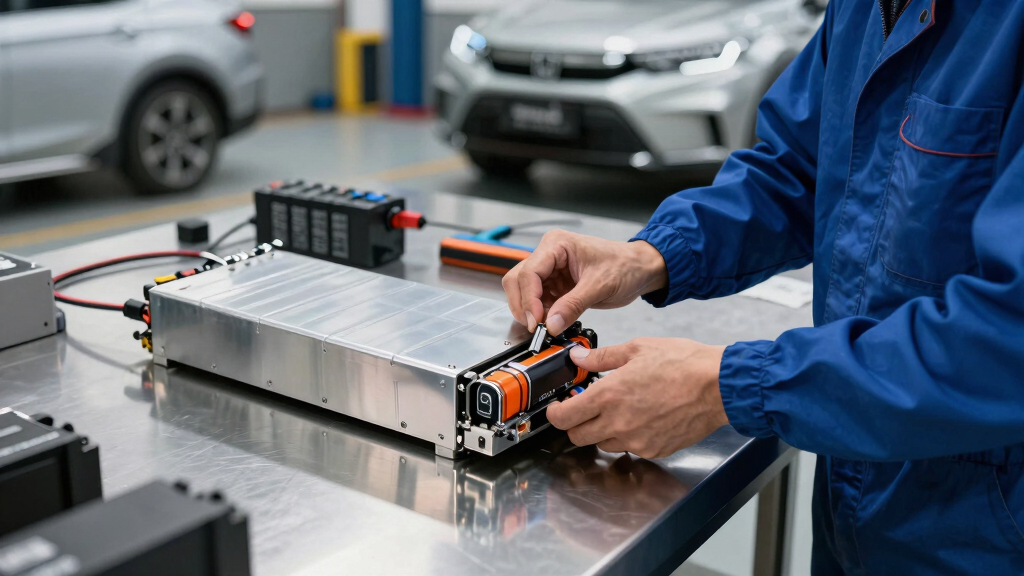
Honda has formed a new partnership with Solid Power to develop solid-state EV batteries. This collaboration aims to accelerate the commercial availability of safer, more efficient batteries for electric vehicles in the next few years.
Honda has announced a partnership with Solid Power, a developer of solid-state batteries, to accelerate the development and commercialization of solid-state EV batteries, a move that could significantly impact the future of electric vehicle technology.
Honda’s collaboration with Solid Power, announced in March 2024, aims to leverage Solid Power’s expertise in solid-state battery technology to produce safer, higher-density batteries for electric vehicles. The partnership reflects Honda’s strategic push to improve EV performance and safety, with plans to integrate these batteries into future models within the next few years.
While Honda has not disclosed specific timelines for commercial deployment, sources indicate that prototypes could be tested in Honda vehicles as early as 2025, with potential market introduction by 2027 or later. The partnership involves joint research, development, and testing efforts, with Honda providing automotive expertise and Solid Power offering its battery technology.
Implications of Honda’s New Battery Partnership
This partnership is significant because solid-state batteries promise higher energy density, faster charging times, and improved safety over current lithium-ion batteries. If successful, Honda’s move could accelerate the adoption of solid-state batteries across the EV industry, potentially leading to longer-range, safer vehicles and influencing competitors to follow suit. It also marks a notable step in Honda’s broader electrification strategy, aiming to transition away from internal combustion engines and strengthen its position in the EV market.
As an affiliate, we earn on qualifying purchases.
Background on Solid-State Battery Development and Honda’s EV Strategy
Solid-state batteries have been under development by various automakers and tech companies for several years, with several startups and established firms racing to bring commercial products to market. These batteries replace liquid electrolytes with solid materials, offering advantages such as increased safety, higher energy density, and faster charging.
Honda has been investing in electric vehicle technology, including hybrid and fully electric models, but has faced challenges in developing competitive solid-state batteries. The partnership with Solid Power signals Honda’s intent to accelerate progress in this area, following industry trends and technological breakthroughs reported in recent years.
“This partnership with Solid Power represents a major step forward in our electrification efforts, aiming to bring safer, more efficient batteries to our future EVs.”
— Honda spokesperson
electric vehicle battery charger
As an affiliate, we earn on qualifying purchases.
As an affiliate, we earn on qualifying purchases.
Uncertainties Surrounding Timeline and Commercial Readiness
It remains unclear how soon solid-state batteries developed through this partnership will be ready for mass production and integration into Honda vehicles. Specific timelines for testing, certification, and market launch have not been publicly confirmed, and technological hurdles still exist in scaling up solid-state battery manufacturing.
Additionally, it is not yet confirmed whether Honda will develop its own batteries or rely on Solid Power’s existing prototypes, or if other automakers will adopt this technology simultaneously.
As an affiliate, we earn on qualifying purchases.
Next Steps in Honda and Solid Power’s Battery Development Roadmap
Honda and Solid Power are expected to begin joint testing of prototype batteries in Honda vehicles within the next year. The companies will likely evaluate performance, safety, and durability over the coming months, with potential public updates on progress.
Further announcements regarding timelines, pilot programs, and potential commercialization are anticipated as the partnership advances, with industry observers watching for signs of commercial viability by 2025-2027.
As an affiliate, we earn on qualifying purchases.
Key Questions
What are solid-state batteries and how do they differ from current EV batteries?
Solid-state batteries use solid electrolytes instead of liquid or gel electrolytes found in traditional lithium-ion batteries. They offer higher energy density, faster charging, and improved safety because they are less prone to fires or leaks.
When might Honda start using solid-state batteries in its vehicles?
While Honda has not confirmed exact dates, prototypes are expected to be tested in Honda vehicles by 2025, with potential market availability around 2027 or later.
How significant is this partnership for the EV industry?
This collaboration could accelerate the development of commercially viable solid-state batteries, influencing industry standards and encouraging other automakers to pursue similar technologies.
Will this partnership affect Honda’s current EV offerings?
Yes, the development of solid-state batteries aims to improve future Honda EV models by providing longer range, faster charging, and enhanced safety features.
Are there any risks or challenges associated with solid-state batteries?
Yes, significant technical challenges remain in scaling production, ensuring durability, and reducing costs. These hurdles mean commercial availability could still be several years away.
Source: rss
Fall Picks
fall essentials
As an affiliate, we earn on qualifying purchases.