
TL;DR

Get business pricing on garage and car supplies
- Business-only prices and quantity discounts
- Tax-exempt purchasing
- Multiple users, one account, clear invoices
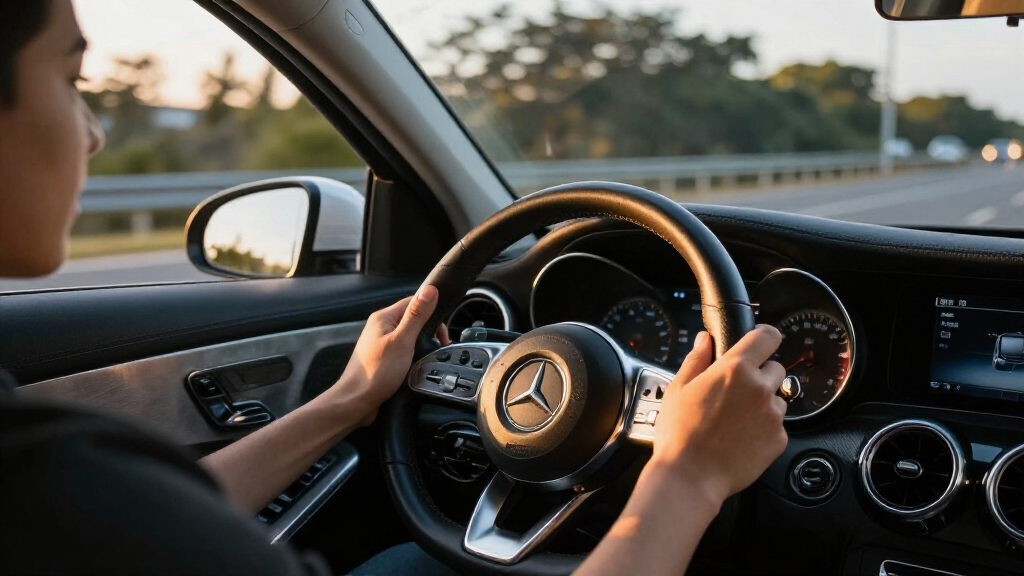
Mercedes plans to add MB.Drive Assist Pro, a destination-based driver-assistance system, to many electric and combustion models early next year, including through over-the-air updates for eligible cars already sold. It is designed for hands-free use on controlled-access highways but requires a hand on the wheel on surface streets, a distinction Mercedes ties to driver responsibility and automation levels. Whether that requirement makes the system safer or less appealing than Tesla’s FSD remains a matter of regulation, driver preference and real-world performance.
Mercedes plans to offer MB.Drive Assist Pro, a destination-based driving assistance system, on a large number of its electric and gasoline-powered vehicles early next year, with eligible vehicles already on the road able to receive it through an over-the-air update. Unlike Tesla’s Full Self-Driving (Supervised), Mercedes’ system is designed to require drivers to keep a hand on the wheel on surface streets, while allowing hands-free driving on controlled-access highways.
Like Tesla FSD (Supervised), MB.Drive Assist Pro lets a driver enter a destination and have the vehicle navigate there, according to InsideEVs’ report. Mercedes says the system can also park the car. The main distinction described in the report is the steering-wheel requirement off highways: Mercedes expects the driver to keep a hand on the wheel as the system handles more complex city streets.
Mercedes Chief Technology Officer Jörg Burzer framed the difference around driver responsibility, not simply system capability. Both systems are considered SAE Level 2, meaning the driver remains responsible for supervising the vehicle. Mercedes calls its offering “Level 2 Plus Plus,” but the label does not make it a Level 3 system, in which responsibility shifts to the vehicle under defined conditions.
The company also points to its sensor setup. Mercedes Head of Active Safety Christoph von Hugo said MB.Drive Assist Pro uses cameras, five radar sensors and 12 ultrasonic sensors, with an Nvidia-powered computer processing data. Tesla’s system, as characterized in the source report, relies on cameras. Mercedes argues that combining sensor inputs can improve performance and safety; the report does not provide comparative test results establishing that advantage.
A Different Promise for City Driving
The wheel requirement could shape whether drivers see Mercedes’ system as a meaningful alternative to Tesla’s. For someone seeking destination-to-destination assistance but unwilling to buy a Tesla, the Mercedes system may offer a choice that pairs automated driving functions with the brand’s vehicles and interiors. But drivers accustomed to operating Tesla FSD hands-free on surface streets may experience the Mercedes rule as a restriction, even though both systems remain supervised Level 2 assistance.
The distinction also matters for how drivers understand responsibility. Mercedes’ approach makes the supervision expectation tangible: the driver is expected to remain engaged and keep a hand on the wheel in urban settings. That requirement does not by itself establish that the system is safer, nor does a hands-free feature establish that a system can safely drive without supervision. The source report offers no head-to-head safety data, so claims about which approach performs better remain unsettled.
Products Worth Considering

VIOFO A229 Pro 4K HDR Dash Cam with Front and Rear Cameras

VIOFO A229 Plus Front and Rear Dash Cam with Dual 2K HDR

Vantrue N5S 4-Channel 360° Dash Cam with Front, Rear, and Cabin Cameras
As an affiliate, we earn on qualifying purchases.
How Mercedes Defines Driver Responsibility
InsideEVs reported on Mercedes’ system in a feature that included a prototype drive and interviews with company executives and drivers who use Tesla FSD. Mercedes’ reasoning is tied to the difference between controlled-access highways and surface streets: the company says highways present fewer variables, while city roads are more complex and unpredictable.
Burzer described the dividing line between Level 2 and Level 3 as who carries responsibility. He said that with Level 2 Plus Plus, the driver is responsible; at Level 3, “the machine, the car, the software stack, is responsible.” Mercedes said it does not yet know whether U.S. customers share European drivers’ stated preference for a hand-on-wheel requirement in cities. The system is also presented as an upcoming option, not as a broadly available service today.
““With Level 2 Plus Plus, you are responsible. At Level 3, the machine, the car, the software stack, is responsible.””
— Jörg Burzer, Mercedes chief technology officer, speaking to InsideEVs
Launch Details and Real-World Performance
Mercedes has not provided a specific launch date in the source report, a complete list of eligible models, or pricing and regional availability. The rollout is described as coming to many electric and combustion vehicles early next year, with eligible existing cars receiving an over-the-air update, but the exact scope remains unclear.
It is also unclear how MB.Drive Assist Pro will perform across different roads and conditions once customers can use it, or whether its sensor mix will produce a measurable safety or reliability advantage over Tesla FSD. The report includes driver impressions of Tesla’s system and Mercedes’ prototype, not controlled, independent comparisons. Mercedes also had not established whether U.S. customers would welcome the steering-wheel requirement.
Model and Availability Details Ahead
The next concrete milestones are Mercedes’ release of the eligible-model list, regional availability, pricing and a firm rollout schedule. Drivers will also need details on the system’s operating limits, monitoring requirements and how over-the-air installation will work for vehicles already in customers’ hands.
Once the system reaches production vehicles, comparisons with Tesla will depend on its performance in ordinary driving and on what customers make of the hands-on rule. Until then, Mercedes’ stated distinction is clear: hands-free assistance on controlled-access highways, but a driver’s hand on the wheel on surface streets.
Key Questions
What is Mercedes MB.Drive Assist Pro?
It is a planned destination-based driver-assistance system that can navigate to a selected destination and park, according to the InsideEVs report. Drivers remain responsible for supervising it.
Does Mercedes’ system require hands on the wheel everywhere?
No. The report says MB.Drive Assist Pro is designed for hands-free operation on controlled-access highways, but requires a hand on the wheel on surface streets.
When will MB.Drive Assist Pro be available?
Mercedes plans to add it to many electric and combustion models early next year, and says eligible vehicles already purchased can receive it over the air. The source does not give a specific date or model list.
Is MB.Drive Assist Pro a self-driving system?
The report describes it as a supervised SAE Level 2 system. Mercedes says the driver remains responsible; the system should not be treated as a replacement for an attentive driver.
Has Mercedes shown that its system is safer than Tesla FSD?
No comparative safety results are included in the source report. Mercedes cites its cameras, five radar sensors and 12 ultrasonic sensors, but the claim that multiple sensor inputs improve safety is attributed to the company and is not supported there by head-to-head test data.
Source: insideevs.com