TL;DR
Ford’s 2027 F-150 has introduced hands-free towing using BlueCruise, allowing drivers to tow trailers without manual control. This development signals advances in autonomous driving for trucks but remains in early deployment stages.
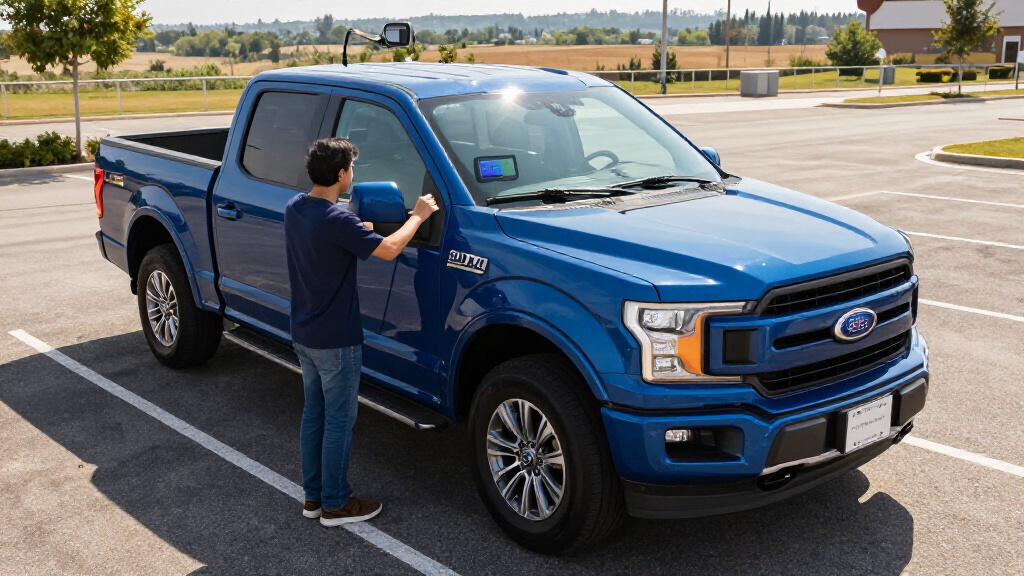
Ford’s 2027 F-150 pickup truck now offers hands-free towing capabilities through its BlueCruise system, a significant step forward in autonomous vehicle technology for trucks. This feature allows drivers to tow trailers without needing to manually control the vehicle, marking a new milestone in driver-assist technology. The announcement underscores Ford’s push to integrate advanced driver assistance systems into its popular truck lineup, aiming to improve safety, convenience, and productivity for commercial and personal users alike.
According to Ford, the 2027 F-150 will be equipped with BlueCruise, enabling hands-free trailer towing on compatible highways. This feature is designed to operate during highway driving conditions where the system’s sensors and cameras can monitor the environment without driver intervention. Ford states that the system will automatically engage when towing a trailer, allowing the driver to focus on other tasks or relax during long highway trips.
Ford has not yet specified whether this capability will be available across all F-150 trims or as part of a specific package. The automaker also indicated that the feature is part of a broader initiative to expand autonomous and semi-autonomous driving features in its vehicles, aligning with industry trends towards greater vehicle automation.
While Ford has confirmed the technical capability, it is not yet clear how widespread or fully tested this hands-free towing feature is, or how it compares to existing systems from competitors. The company emphasized that driver attention remains essential and that the system is designed to assist, not replace, the driver during towing operations.
Implications for Truck Towing and Autonomous Tech
This development is significant because it represents a major leap in autonomous driving technology applied to trucks, a segment traditionally slower to adopt such features. Hands-free towing could improve safety by reducing driver fatigue and errors during long highway trips, especially for commercial operators who tow frequently. It also positions Ford as a leader in integrating semi-autonomous features into pickup trucks, potentially influencing industry standards and customer expectations for future vehicle models.
However, the feature’s safety, reliability, and regulatory approval will be critical factors in its adoption. If successful, it could lead to broader acceptance of autonomous towing systems across the automotive industry, affecting competitors and supply chain dynamics.
Ford F-150 BlueCruise hands-free towing system
As an affiliate, we earn on qualifying purchases.
As an affiliate, we earn on qualifying purchases.
Recent Advances in Autonomous Towing Technologies
Over the past few years, automakers and tech companies have been steadily developing autonomous driving features, with several offering partial automation on highways. Ford’s BlueCruise, introduced in recent models, has been among the most prominent driver-assist systems in the industry, primarily focused on lane-keeping and adaptive cruise control.
The trend toward integrating autonomous features into trucks has gained momentum, driven by the demand for safer, more efficient towing. Industry interest in autonomous towing has surged, with many manufacturers exploring or testing similar capabilities. The current focus is on enhancing safety, reducing driver workload, and enabling new levels of vehicle automation in commercial applications.
While specific details about the 2027 F-150’s towing system remain unconfirmed, the announcement aligns with this broader industry movement, signaling that autonomous towing may soon become a standard feature in high-end trucks.
auto towing trailer hitch accessories
As an affiliate, we earn on qualifying purchases.
As an affiliate, we earn on qualifying purchases.
Unconfirmed Details on Deployment and Coverage
It remains unclear how widely available the hands-free towing feature will be across the F-150 lineup or whether it will be limited to specific trims or packages. Details about the testing process, safety validation, and regulatory approval are still emerging. Additionally, Ford has not disclosed whether the feature will be available in regions outside North America or how it will perform under various towing conditions.
Industry experts caution that real-world reliability and driver acceptance will be crucial for widespread adoption, but these aspects are still under development and assessment.
As an affiliate, we earn on qualifying purchases.
Upcoming Testing, Certification, and Market Rollout
Ford is expected to conduct extensive testing and gather real-world data to validate the safety and effectiveness of the hands-free towing system. Regulatory approvals and safety certifications will be necessary before the feature can be widely deployed. The company may also roll out the feature gradually, starting with select markets or trims, before expanding availability.
Further details about the rollout timeline, user interface, and driver training requirements are anticipated in the coming months, as Ford continues to refine and validate the technology.
As an affiliate, we earn on qualifying purchases.
Key Questions
Will all 2027 Ford F-150 trucks have hands-free towing?
It is not yet confirmed whether the feature will be available across all trims. Ford has indicated it will be part of the 2027 model, but availability may initially be limited to certain packages or regions.
How safe is the hands-free towing system?
Ford states that the system is designed to assist, not replace, the driver, and driver attention remains essential. The safety and reliability of the feature will depend on extensive testing and regulatory approval.
When will the feature be available to consumers?
Exact availability dates are not yet announced. Ford is expected to conduct further testing and certification before a full market rollout, likely starting in late 2026 or early 2027.
Will this technology be available outside North America?
Ford has not specified regional availability. The initial rollout is expected primarily in North America, with potential expansion based on regulatory approvals and market demand.
Does this mean trucks will be fully autonomous?
No. The system is described as semi-autonomous, assisting with towing and highway driving but requiring driver supervision at all times.
Source: rss