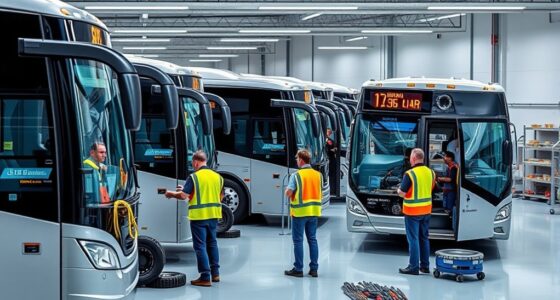
To keep your transit fleet on the road, focus on proactive maintenance scheduling based on mileage and usage to prevent unexpected breakdowns. Maintain an organized parts inventory with reliable suppliers to speed up repairs and reduce downtime. Use fleet management software for automatic reminders and tracking service history. Implement predictive maintenance to identify issues early, saving time and costs. Keep optimizing your strategies, and you’ll discover more ways to guarantee your fleet stays operational.
Key Takeaways
- Implement a preventive maintenance schedule based on mileage, usage, or time to prevent unexpected breakdowns.
- Maintain an organized, accurate parts inventory to enable quick repairs and reduce vehicle downtime.
- Use fleet management software for automated maintenance reminders and tracking service history.
- Build strong relationships with reliable suppliers and have multiple vendors to ensure quick parts availability.
- Leverage predictive maintenance and digital tools to identify issues early and optimize repair and maintenance processes.
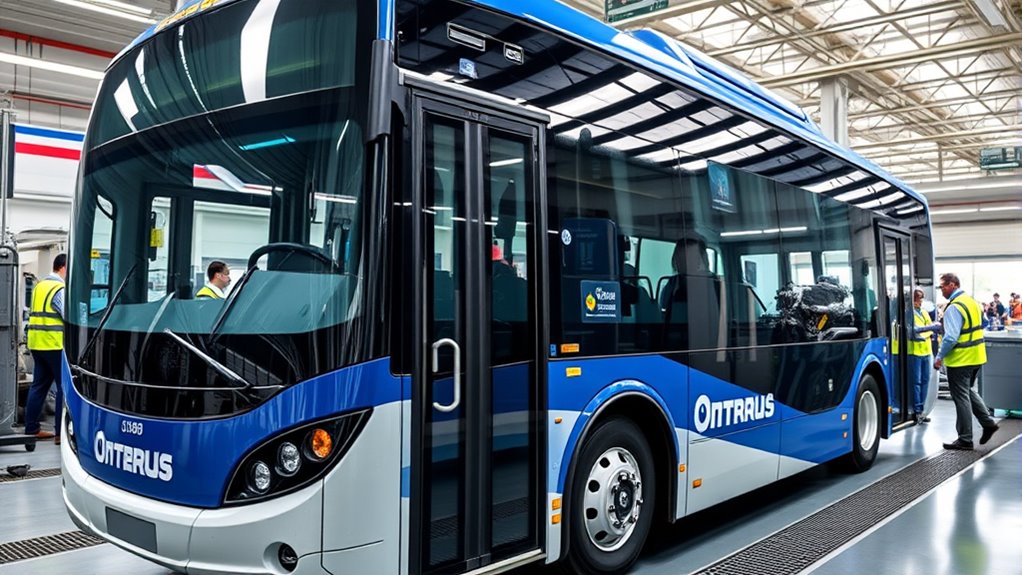
Maintaining a reliable transit fleet is essential for ensuring efficient transportation services, but unexpected downtime can disrupt schedules and increase costs. To keep your fleet operating smoothly, you need a proactive approach that emphasizes effective maintenance scheduling and meticulous management of your parts inventory. By planning regular maintenance, you reduce the chances of sudden breakdowns and costly repairs. Scheduling preventative maintenance based on mileage, usage, or time intervals helps identify potential issues before they escalate, keeping vehicles on the road longer and minimizing unplanned outages.
Having a well-organized parts inventory is equally critical. When you keep an accurate and accessible stock of essential components, you can perform repairs promptly without waiting for parts to arrive. This not only shortens vehicle downtime but also prevents delays that could ripple through your schedule. Regularly reviewing your parts inventory ensures you have the right parts on hand for routine maintenance and unexpected repairs. Implementing an inventory management system can help track usage patterns, identify fast-moving items, and alert you when stock levels are low. Additionally, proper inventory management improves your overall parts procurement process, making repairs more efficient. Effective inventory control also minimizes excess stock and reduces waste, which can save money over time. Furthermore, leveraging technology solutions such as digital inventory systems can enhance accuracy and streamline your parts management process.
A key aspect of maintenance scheduling is integrating it with your fleet management software. This allows you to automate reminders for upcoming service needs, track maintenance history, and analyze patterns that could indicate underlying issues. By doing so, you can optimize service intervals and avoid unnecessary work that may still disrupt your operations. Additionally, a detailed maintenance schedule helps your team prioritize repairs, allocate resources efficiently, and adhere to safety standards, all of which contribute to reducing downtime. Incorporating predictive maintenance techniques can further enhance your ability to anticipate problems before they occur, saving time and resources.
Equally important is establishing strong relationships with reliable parts suppliers. Quick access to high-quality parts can substantially cut down repair times. Consider maintaining agreements with multiple vendors or local suppliers to ensure you have options if one source faces delays. When your parts inventory is aligned with your maintenance schedule, you can streamline repairs, improve turnaround times, and extend the lifespan of your fleet assets. Moreover, understanding the importance of brand reputation can help you choose suppliers that consistently provide dependable parts and service.
Ultimately, minimizing transit fleet downtime requires diligent planning and management. By implementing strategic maintenance scheduling and maintaining an organized parts inventory, you can prevent many issues from arising and address unavoidable repairs swiftly. This proactive approach reduces operational disruptions, lowers costs, and keeps your transit services running smoothly, ensuring your fleet remains dependable and ready to meet demand.
Frequently Asked Questions
How Can I Predict Potential Fleet Breakdowns Early?
You can predict potential fleet breakdowns early by leveraging predictive analytics, which analyze historical and real-time data to identify patterns indicating imminent issues. Use these insights to optimize your maintenance scheduling, addressing problems before they cause breakdowns. Regular diagnostics combined with predictive analytics enable you to proactively manage your fleet’s health, reduce unexpected failures, and keep your transit vehicles reliably on the road.
What Are the Best Tools for Real-Time Fleet Monitoring?
Ever wondered how to stay ahead of fleet issues? The best tools for real-time fleet monitoring include advanced fleet tracking systems integrated with GPS technology. These tools provide live data on vehicle locations, engine health, and driver behavior, helping you detect problems early. By leveraging these technologies, you can optimize routes, reduce downtime, and make sure your transit fleet stays on the road efficiently and safely.
How Do Seasonal Changes Affect Fleet Maintenance Schedules?
Seasonal changes impact your fleet maintenance schedules considerably. You should plan seasonal maintenance to address weather preparedness, such as inspecting tires for winter traction or checking cooling systems for summer heat. Adjust your schedules proactively to prevent breakdowns caused by harsh conditions. Regularly review and modify maintenance routines based on seasonal demands, ensuring your fleet remains reliable and on the road regardless of weather fluctuations.
What Training Improves Driver Awareness and Reduces Downtime?
You can improve driver awareness and reduce downtime by providing extensive driver safety training focused on accident prevention. Encourage your drivers to stay alert, follow traffic laws, and recognize potential hazards. Regular refreshers and real-world scenarios help reinforce safe driving habits. By investing in ongoing training, you empower your drivers to make smarter decisions, lowering accident risks, and keeping your transit fleet on the road with minimal disruptions.
How Can I Optimize Parts Inventory for Quick Repairs?
Think of your parts inventory as a well-tuned engine. You optimize it through accurate parts forecasting and smart inventory management, ensuring essential components are always ready. By analyzing historical repair data and anticipating future needs, you prevent delays. Keep a safety stock of critical parts and streamline ordering processes. This proactive approach keeps repairs swift, reduces downtime, and keeps your fleet rolling smoothly on the road.
Conclusion
By staying proactive and attentive, you keep your fleet’s wheels turning smoothly, like a well-oiled machine in motion. Every maintenance check and quick repair acts as a safeguard, preventing small hiccups from snowballing into costly breakdowns. Remember, minimizing downtime isn’t just about fixing problems—it’s about keeping your transit system alive and thriving like a steady heartbeat. When you prioritize prevention, you’re not just avoiding delays; you’re ensuring your fleet’s journey continues without interruption, mile after mile.