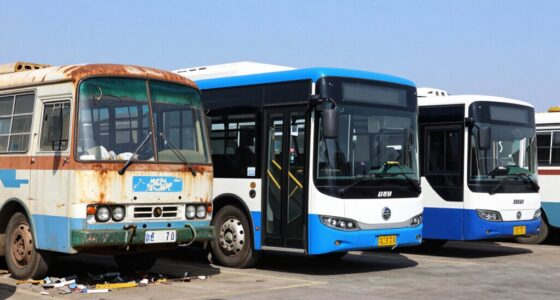

To master depot charging planning, map out your fleet’s daily routes and usage patterns to schedule charging during off-peak times. Guarantee your charging infrastructure can support your fleet size and consider fast chargers for quick turnarounds. Balance charging speed with battery health, and utilize smart charging systems to optimize energy use and reduce costs. Educating your team on proper procedures will boost efficiency. Keep exploring these strategies to enhance your fleet’s performance and longevity.

Get garage and car supplies delivered free — and shop member deals
- Fast, free delivery on millions of items
- Access to Prime Big Deal Days deals on October 6–7
- Prime Video, Amazon Music and more included
Key Takeaways
- Analyze fleet usage patterns to schedule charging during off-peak hours and vehicle return times.
- Ensure sufficient charging infrastructure with scalable solutions to meet fleet size and future growth.
- Optimize charging practices to extend battery life while maintaining operational readiness.
- Utilize smart energy management tools for real-time data and cost-effective charging strategies.
- Train staff on proper charging procedures and regularly review plans for continuous improvement.
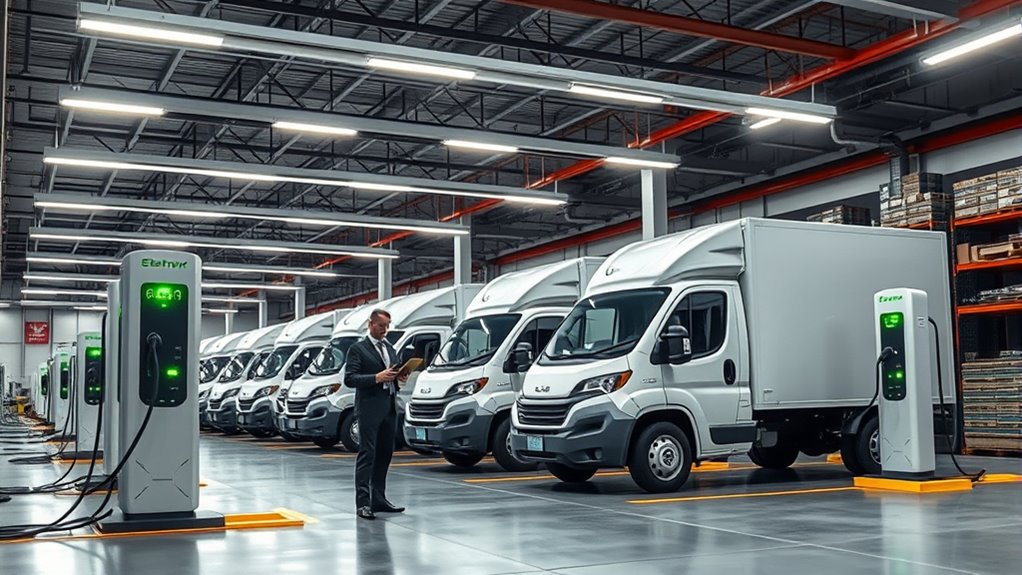
Effective depot charging planning is essential for optimizing your electric vehicle fleet operations. When you set up a well-structured charging plan, you ensure that your vehicles are always ready to meet daily demands without unnecessary delays or disruptions. Proper planning helps you manage energy costs, reduces downtime, and extends the lifespan of your fleet’s batteries. It’s about striking the right balance between vehicle availability and charging efficiency, which directly impacts your operational productivity.
Effective depot charging planning boosts fleet readiness, reduces costs, and extends battery life through strategic management.
Start by analyzing your fleet’s daily routes and usage patterns. You need to understand when and where your vehicles are most active to determine ideal charging times. For example, if most of your vehicles return to the depot in the evening, you can schedule charging during off-peak hours to save on energy costs. Conversely, if some vehicles operate overnight or during early morning hours, plan for charging during those windows. This targeted approach minimizes idle charging and maximizes battery utilization.
Another critical aspect is evaluating your depot’s infrastructure. Ensure you have enough charging stations to support your fleet’s size and operational schedule. Overloading a limited number of chargers can lead to bottlenecks, causing delays and reducing fleet availability. Investing in fast chargers may be beneficial if you need quick turnaround times, but consider the long-term costs and whether your vehicles’ battery capacities can handle fast charging without degrading prematurely.
Proper infrastructure planning also involves considering electrical capacity and future expansion needs, so your depot can grow alongside your fleet. This ensures that your charging setup remains efficient and scalable as your operations expand. Additionally, understanding battery longevity and how charging practices affect it can help you prolong the lifespan of your vehicles’ batteries and avoid costly replacements.
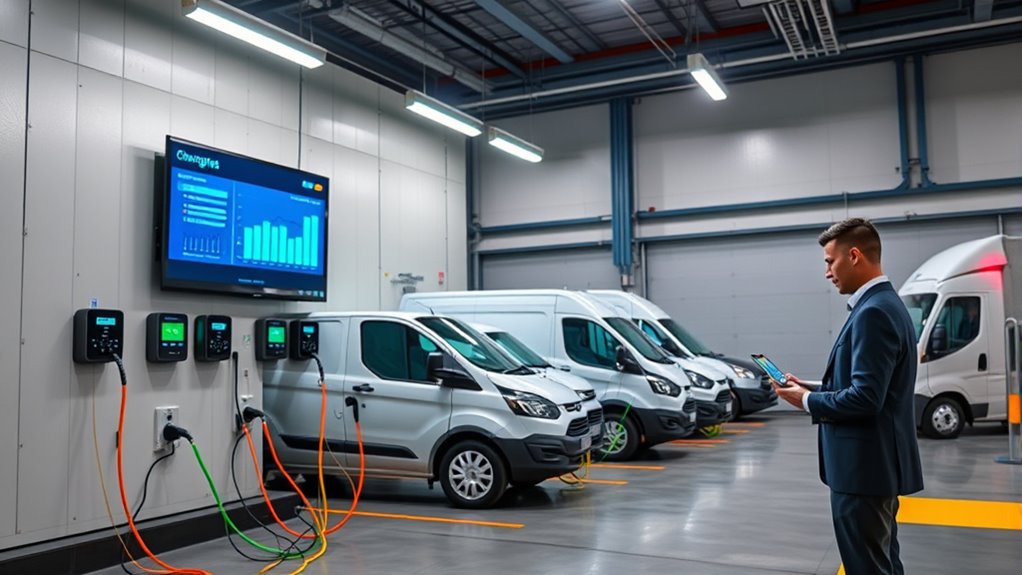
Monitoring and managing energy consumption is also crucial. Implementing smart charging solutions allows you to optimize when and how your vehicles charge, based on real-time data and grid conditions. These systems can automatically adjust charging times to take advantage of lower electricity rates or grid incentives, resulting in significant cost savings.
Additionally, they can alert you to any issues with chargers or vehicle batteries, enabling quick maintenance responses to prevent operational downtime. This proactive approach helps maintain fleet reliability and reduces unexpected disruptions.
Finally, involve your team in the planning process. Training staff on proper charging procedures and emphasizing the importance of adhering to the schedule ensures consistency and reduces errors. Regularly reviewing your charging strategy based on operational feedback helps you adapt to changing needs and technological advancements.
EV charging station for fleet depot
As an affiliate, we earn on qualifying purchases.
As an affiliate, we earn on qualifying purchases.
Frequently Asked Questions
How Do I Determine the Optimal Number of Chargers Needed?
You determine the ideal number of chargers by analyzing your fleet’s daily usage, including vehicle turnover times and charging durations. Assess how many vehicles need charging simultaneously and consider peak demand periods.
Use this data to guarantee chargers meet your fleet’s needs without excess. Also, factor in future growth plans. Balancing these elements helps you avoid under- or over-investing in charging infrastructure, ensuring efficient operations.
What Are the Best Practices for Managing Charging Station Downtime?
Imagine your charging stations going offline unexpectedly, halting your fleet’s operations. To prevent this chaos, schedule regular maintenance during off-peak hours, monitor real-time system health, and keep spare chargers handy.
Communicate downtime proactively to drivers, and establish quick-repair protocols. This proactive approach minimizes disruptions, keeps your fleet running smoothly, and guarantees that downtime becomes a rare hiccup rather than a costly obstacle.
How Can I Integrate Renewable Energy Sources Into Depot Charging?
You can integrate renewable energy sources into depot charging by installing solar panels or wind turbines on-site. Connect these to your charging infrastructure with smart inverters and energy management systems that prioritize renewable energy use.
Consider signing power purchase agreements (PPAs) for additional renewable supply if on-site options are limited. Regularly monitor and optimize energy flow to maximize renewable usage, reducing costs and your carbon footprint effectively.
What Cybersecurity Measures Are Essential for Depot Charging Infrastructure?
You need robust cybersecurity measures to protect your depot charging system. Start with strong firewalls and encryption to block unauthorized access.
Implement regular software updates and multi-factor authentication for all users.
Constantly monitor network activity for suspicious behavior, and have a solid incident response plan ready.
Missing these steps could leave your infrastructure vulnerable, risking data breaches or operational disruptions.
Stay vigilant—your fleet’s security depends on it.
How Do I Handle Charging Planning for Mixed Fleet Types?
To handle charging planning for mixed fleet types, you should assess each vehicle’s charging needs, including range, duty cycle, and charging speed.
Create a flexible schedule that accommodates these differences, prioritizing high-utilization vehicles.
Invest in versatile charging infrastructure, such as fast chargers for larger vehicles and slower chargers for others.
Continuously monitor utilization and adapt your plan to guarantee all fleet types stay charged efficiently without bottlenecks.
fast charging station for electric vehicles
As an affiliate, we earn on qualifying purchases.
As an affiliate, we earn on qualifying purchases.
Conclusion
Now that you’ve mastered depot charging planning, you’re practically a superhero of fleet management! With your newfound knowledge, you’ll turn your charging station into a powerhouse, ensuring your fleet runs smoother than a rocket on launch day. Say goodbye to downtime and hello to unstoppable efficiency—your vehicles will be charging faster than lightning strikes, and your operations will be unstoppable! Get ready to revolutionize your fleet with the ultimate depot charging strategy.
smart EV charging management system
As an affiliate, we earn on qualifying purchases.
As an affiliate, we earn on qualifying purchases.
electric vehicle battery maintenance tools
As an affiliate, we earn on qualifying purchases.
As an affiliate, we earn on qualifying purchases.
Halloween Picks
halloween
As an affiliate, we earn on qualifying purchases.