
To cut emissions and save fuel, you can adopt idling reduction policies like enforcing time limits, issuing fines, and running awareness campaigns. Using technology such as auxiliary power units, automatic shut-off systems, and smart scheduling can further boost efficiency. Educating drivers and equipping fleets with the right tools makes compliance easier, leading to cleaner air and lower costs. Keep exploring to discover additional strategies that help you achieve sustainable and cost-effective idling reduction.
Key Takeaways
- Implement policies enforcing idle time limits, fines, and awareness campaigns to reduce unnecessary vehicle engine running.
- Utilize technological solutions like Automatic Engine Shut-off systems and Auxiliary Power Units (APUs) to minimize idling.
- Promote smart scheduling and route optimization software to decrease waiting times and engine idling.
- Encourage driver training and equipment use, such as high-quality auxiliary power sources, for effective idling reduction.
- Combine policy enforcement with technological adoption for maximum environmental benefits and operational cost savings.
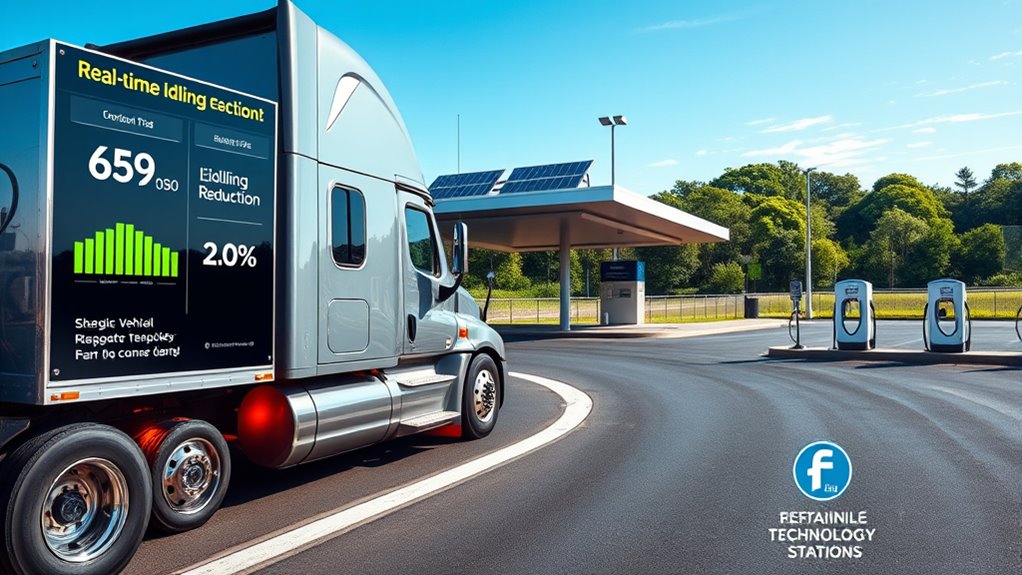
Idling reduction policies and technology options are vital tools for decreasing emissions and saving fuel. When you actively implement these strategies, you not only reduce harmful pollutants but also cut operational costs. Vehicle idling, especially in commercial fleets and public transportation, consumes considerable amounts of fuel while releasing emissions like carbon dioxide, nitrogen oxides, and particulate matter. These pollutants contribute to climate change and deteriorate air quality, affecting public health.
Recognizing this, many governments and organizations have adopted policies that limit unnecessary idling, encouraging drivers to turn off their engines when parked or waiting. Such policies often include strict idling time limits, fines, and educational campaigns to raise awareness about the environmental and financial impacts of idling.
Many organizations adopt policies to limit idling, including time restrictions, fines, and awareness campaigns.
On top of policies, technological innovations play a vital role in reducing idling times. For instance, auxiliary power units (APUs) provide essential heating, cooling, and power needs without running the main engine. This technology is especially useful in the trucking industry, where drivers often need to stay warm or cool during rest periods.
Similarly, automatic engine shut-off systems can be installed in vehicles to turn engines off after a specified period of inactivity. These systems are straightforward to operate and can be integrated into existing vehicle controls, making them accessible for fleet operators seeking to comply with regulations and improve efficiency.
Another effective technology is the use of smart scheduling software that minimizes waiting times at loading docks, terminals, and customer sites. By optimizing routes and schedules, you can reduce the amount of time your vehicles spend idling.
Additionally, emerging innovations like battery-electric vehicles or hybrid systems can considerably reduce emissions by eliminating or reducing the need for engine operation during stationary periods. When you adopt these options, you’re not just complying with regulations; you’re actively contributing to cleaner air and a healthier environment.
Implementing idling reduction policies and technology options also involves educating drivers and staff on best practices. Training them to recognize unnecessary idling and utilize available tools can lead to substantial savings. For instance, encouraging drivers to turn off engines during extended stops and use auxiliary power sources can make a noticeable difference.
Furthermore, implementing high-quality equipment for sound recording can ensure clearer communication and reduce the need for retakes, which can save time and resources during operations. The collective impact of these measures can be considerable, especially over the long term, leading to lower fuel expenses and compliance with environmental standards.
Frequently Asked Questions
What Are the Latest Technological Innovations in Idling Reduction?
The latest innovations in idling reduction include advanced automatic engine shut-off systems, smart telematics, and hybrid powertrains. These technologies detect when engines aren’t needed and turn them off or switch to electric mode, saving fuel and reducing emissions.
You can also leverage real-time data analytics to optimize engine use. By adopting these innovations, you’ll improve efficiency, lower operational costs, and contribute to environmental sustainability.
How Do Policies Vary Internationally for Idling Reduction?
You’ll find that international policies for idling reduction vary widely. In some countries, strict regulations limit engine idling times and impose fines, while others promote incentives for using advanced technologies.
For example, European nations often implement all-encompassing standards, whereas the US offers a mix of federal and state policies. You should stay informed about local regulations, as they directly impact your operational practices and compliance requirements.
What Funding Options Are Available for Implementing Idling Reduction Tech?
You can access various funding options, such as government grants, loans, and incentives, to implement idling reduction tech. Federal programs like the Diesel Emissions Reduction Act (DERA) offer grants.
While some state and local agencies may provide subsidies or rebates. Additionally, some utility companies offer incentives for adopting cleaner technologies.
Explore these options to secure financial support, making it easier to upgrade your fleet and reduce emissions effectively.
How Do Idling Reduction Strategies Impact Fleet Operational Costs?
By adopting idling reduction strategies, you can substantially lower your fleet’s operational costs. These approaches reduce fuel consumption, decrease engine wear, and cut maintenance needs, all translating into savings over time.
Though it might seem like a small change, it streamlines your operations and enhances efficiency. In the long run, you’ll find that quieter, cleaner vehicles not only save money but also boost your fleet’s sustainability and reputation.
What Are the Environmental Benefits of Widespread Idling Reduction Adoption?
By adopting widespread idling reduction, you considerably cut down greenhouse gas emissions and air pollutants, helping improve air quality and combat climate change.
You also reduce fuel consumption, which lowers your fleet’s carbon footprint and conserves natural resources.
Additionally, fewer emissions contribute to healthier communities and less environmental degradation.
Conclusion
By adopting idling reduction policies and technology, you can cut emissions and save money. It’s a simple choice that benefits your community and the environment. Yet, ignoring these options keeps pollution and costs high, dragging everyone down. The decision is clear: embrace cleaner, smarter solutions now or face the ongoing consequences of inaction. Ultimately, the power to make a difference lies in your hands—choose wisely for a healthier, more sustainable future.