

To effectively manage road and jobsite events, you need a solid incident response plan that clearly defines procedures, roles, and communication channels. It should include steps for handling accidents, spills, and injuries, with regular drills to ensure your team responds confidently. Keeping detailed documentation and updating the plan guarantees ongoing safety and compliance. If you want to discover more about creating an effective response strategy, there’s plenty of essential information you should explore further.
Key Takeaways
- Develop tailored response procedures for road and jobsite incidents, including vehicle accidents, spills, and injuries.
- Clearly assign roles and establish communication channels for prompt coordination during emergencies.
- Conduct regular drills to ensure team familiarity and improve response efficiency.
- Maintain detailed documentation of incidents for investigations, insurance, and continuous plan improvement.
- Regularly review and update the incident response plan to address evolving risks and ensure preparedness.
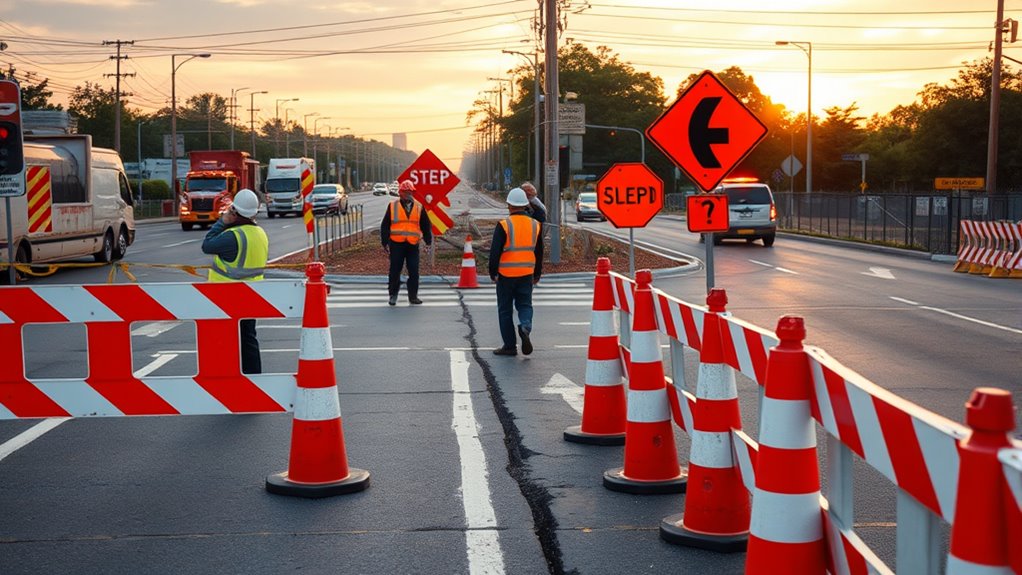
When a road or jobsite incident occurs, having a clear and well-practiced incident response plan is crucial to guarantee safety and minimize disruptions. You need to be prepared to act swiftly and decisively, ensuring everyone on site knows their role and understands the steps to take. A detailed plan isn’t just a document; it’s a roadmap that guides your team through chaos, helping prevent further injuries, property damage, and project delays.
Start by establishing clear communication channels. When an incident happens, every second counts. Ensure that your team knows how to alert the appropriate personnel immediately—whether it’s via radio, phone, or emergency signaling devices. Assign specific roles ahead of time, such as who’ll lead the response, who’ll handle medical emergencies, and who’ll manage traffic control. This clarity prevents confusion and overlapping efforts when time is of the essence.
Your incident response plan should also include detailed procedures tailored to different types of emergencies—like vehicle accidents, hazardous material spills, or worker injuries. Knowing what steps to take reduces panic and streamlines the response process. For example, in the case of a vehicle collision, your team should quickly secure the scene, provide first aid if needed, and notify emergency services.
For chemical spills, immediate containment and evacuation are priorities, followed by notifying hazmat teams. Having these protocols spelled out makes it easier to act confidently under pressure.
Training plays a critical role in the effectiveness of your incident response plan. Regular drills ensure everyone knows their responsibilities and can execute their duties efficiently. When your team practices scenarios, they become familiar with the procedures, reducing hesitation during actual emergencies. It also highlights areas where your plan might need adjustments, keeping your response strategies dynamic and effective.
Additionally, your plan should include documentation procedures. After an incident, accurate reports are essential for investigations, insurance claims, and future prevention strategies. Make sure your team understands what information to gather—photos, witness statements, equipment details—and how to document everything systematically. Incorporating proper equipment maintenance into your plan can also prevent many incidents caused by equipment failure.
Lastly, review and update your incident response plan regularly. As your project evolves, new risks may emerge, and lessons learned from past incidents can lead to improvements. Keeping your plan current ensures your team remains prepared, confident, and capable of managing emergencies effectively.
Frequently Asked Questions
How Often Should Incident Response Plans Be Reviewed and Updated?
You should review and update your incident response plans at least annually, or whenever there are significant changes to your operations, personnel, or regulations. Regular reviews help guarantee the plan remains effective and relevant.
Additionally, after an incident or drill, assess what worked and what didn’t, making necessary adjustments. Staying proactive and current minimizes risks and prepares you better to handle emergencies efficiently.
Who Should Be Designated as the Incident Response Team Leader?
You should designate a capable and experienced individual, such as a safety manager or site supervisor, as the incident response team leader.
They must have strong leadership skills, knowledge of safety protocols, and the authority to coordinate responses effectively.
This person will oversee the team, make quick decisions, and guarantee communication with emergency services.
Choosing someone with proven judgment and calmness under pressure is essential for effective incident management.
What Training Is Necessary for Effective Incident Response?
Did you know that 75% of effective incident responses depend on proper training? To respond effectively, you need specialized training in emergency procedures, safety protocols, and communication skills.
You should also understand how to use safety equipment and coordinate with emergency services. Regular drills and scenario-based exercises are vital, so you’re prepared for real events.
Staying updated on safety standards and policies ensures you respond swiftly and confidently when incidents occur.
How Do Plans Differ for Different Types of Road or Jobsite Incidents?
You tailor your plans based on the incident type, focusing on specific risks and response actions. For road incidents, prioritize quick traffic control and communication with emergency services.
For jobsite events, emphasize site safety, equipment handling, and worker evacuation procedures. You adapt your strategies to address hazards unique to each situation, ensuring your response is effective and minimizes injury or damage.
Regularly review and update these plans to stay prepared for different scenarios.
What Communication Protocols Should Be Established During an Incident?
They say “communication is key,” and during an incident, clear protocols are essential. You should establish immediate contact with emergency services.
Notify your team through a designated communication channel, and keep all parties updated regularly.
Use simple language, avoid ambiguity, and confirm messages are received.
Assign roles for communication to prevent chaos.
Staying calm and organized ensures everyone knows what to do and helps manage the situation effectively.
Conclusion
Having an effective incident response plan is essential, especially since studies show that workplaces with such plans experience 50% fewer injuries. When you’re prepared for road and jobsite events, you can respond swiftly and confidently, minimizing risks and ensuring everyone’s safety. Remember, your quick action can make all the difference in preventing accidents and saving lives. Stay proactive, review your plan regularly, and keep safety at the forefront—your team depends on it.