When spec’ing a transit for plumbers, focus on choosing the right water storage capacity based on your typical job needs and work duration. Opt for durable, corrosion-resistant tanks with easy access for refilling and monitoring. Select a reliable pump system that provides steady pressure for your tools, and make certain all components are securely mounted and organized for safety and efficiency. For detailed tips on optimizing your system, keep exploring how to fully equip your transit.
Key Takeaways
- Determine water needs based on job duration and tools to select appropriate tank size and capacity.
- Choose durable, corrosion-resistant tanks with easy access points for quick refilling and monitoring.
- Install reliable pumps with proper flow regulation and control valves to ensure consistent water delivery.
- Securely mount tanks with sturdy brackets and organize hoses to prevent shifting and safety hazards during transit.
- Incorporate efficient filling methods like quick-connect fittings for rapid refills and minimal work disruption.
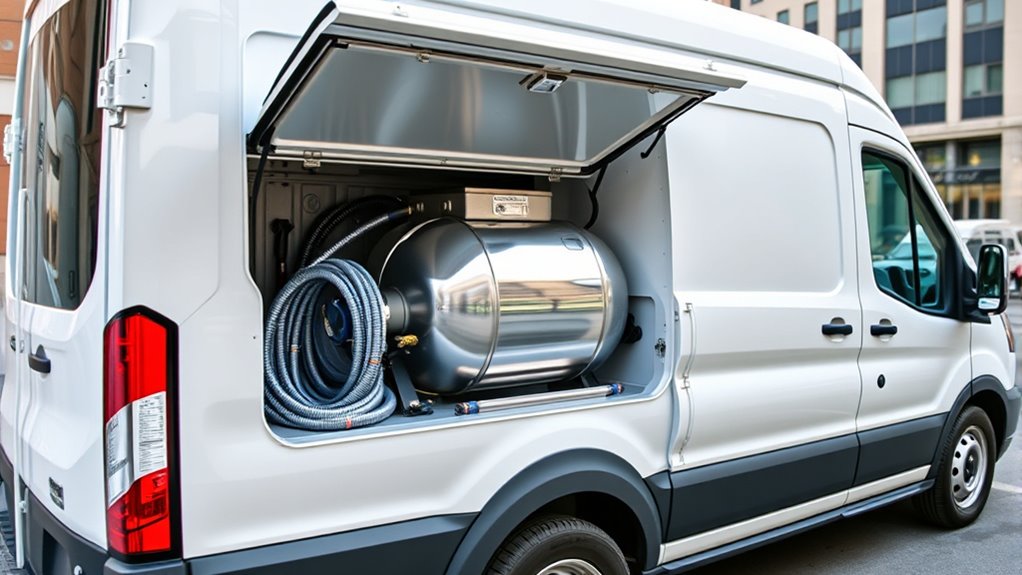
Have you ever considered how essential reliable water storage and access are during transit? When you’re on the move, especially in plumbing work, having a steady water supply isn’t just convenient—it’s critical. You need to ensure your setup can deliver water efficiently, maintain pressure, and be easy to operate without sacrificing space or weight capacity. Properly spec’ing a transit vehicle for plumbing tasks requires understanding the demands of your work and choosing the right storage solutions to meet those needs.
Reliable water storage and access during transit are critical for efficient plumbing work.
First, assess how much water you’ll typically use during a job and how long you’ll be working away from a fixed water source. This helps determine the size and type of water storage tanks you need. Larger tanks provide more autonomy but add weight and take up space. Compact, high-capacity tanks are ideal if space is tight or if you want to reduce weight, but they require careful management to avoid overfilling or running dry.
Consider tanks with built-in features like level indicators, drain valves, and easy access points, so you can monitor and refill water quickly without interrupting work.
Next, think about how you’ll access and dispense water from these tanks. A reliable pump system is essential; it should deliver consistent pressure and flow, especially if you’re using high-demand tools or fixtures. A high-quality, compact pump with a pressure regulator can prevent fluctuations that might interfere with your work.
Installing a manual or automatic shutoff valve near the pump gives you control, so you can start or stop water flow as needed without having to disconnect hoses or tanks.
Additionally, integrating filtration and sanitation options into your water system can save headaches on the job. A simple inline filter prevents debris from clogging tools or fixtures, while a portable water heater can be beneficial for certain tasks.
Consider also how you’ll fill the tanks: quick-connect fittings, fill ports, or even external water hookups make refilling faster and easier, especially during back-to-back jobs.
Finally, think about mobility and safety. The water storage setup should be securely mounted to prevent shifting or spills during transit. Use durable brackets and tie-downs, and ensure hoses and connections are stored neatly to avoid tripping hazards or damage.
Lightweight, corrosion-resistant materials extend the lifespan of your setup and keep maintenance minimal. Incorporating water storage capacity considerations can help optimize your setup for different job requirements and improve overall efficiency.
Spec’ing a transit for plumbing isn’t just about choosing big tanks; it’s about creating a balanced system that provides enough water, is easy to operate, and fits seamlessly into your workflow. When you get it right, you’ll save time, reduce frustration, and keep your work flowing smoothly from start to finish.
Frequently Asked Questions
What Are the Best Materials for Transit Water Tanks?
Polyethylene is your best bet for transit water tanks because it’s durable, lightweight, and resistant to corrosion. It won’t crack or rust, making it ideal for frequent use and rough conditions.
You might also consider stainless steel for extra strength and sanitation, but it’s heavier and more expensive.
Whatever you choose, guarantee the material is food-grade to keep the water safe and clean during transport.
How Do I Ensure Water Pressure Is Adequate?
Ensuring water pressure stays adequate is vital—did you know that most plumbing systems require at least 20 psi for peak function?
To achieve this, you should install a high-quality pump rated to handle your water demand, and include a pressure regulator to maintain consistent pressure.
Regularly inspect hoses and fittings for leaks or blockages, and keep your water tank full to prevent pressure drops during use.
Can I Install a Water Heater in the Van?
Yes, you can install a water heater in your van. To do this, choose a compact, RV or marine-style unit suitable for limited space.
Confirm your electrical system can support it, and plan for proper ventilation and drainage.
Mount the heater securely, and connect it to your water supply.
Regularly check for leaks, and maintain the unit to ensure reliable hot water on demand during your work.
What Maintenance Is Required for Water Storage Systems?
You need to regularly inspect your water storage system for leaks, cracks, and sediment buildup.
Clean tanks every few months to prevent bacteria growth, and sanitize them annually with a safe disinfectant.
Check hoses and fittings for wear and replace as needed.
Keep an eye on water quality and pressure, and always drain and refill the tank periodically to guarantee fresh, safe water for your work.
How Do I Prevent Water Contamination in the Tank?
To prevent water contamination, you should regularly clean and disinfect the tank with a safe solution, like hydrogen peroxide or bleach, following manufacturer guidelines.
Keep the tank sealed to prevent dirt and debris from entering, and use a filtered water source.
Also, inspect for leaks or damage often, and replace any parts showing signs of wear.
Proper maintenance and vigilant monitoring keep your water supply safe and clean.
Conclusion
Think of your transit as a well-oiled machine—every part, from water storage to access points, plays a vital role. I once watched a plumber transform a cramped van into a flowing workspace, proving that smart design saves time and effort. Just like that van, your transit needs careful planning to keep everything running smoothly. When you prioritize effective water storage and easy access, you’re not just building a vehicle—you’re creating a reliable partner on every job.