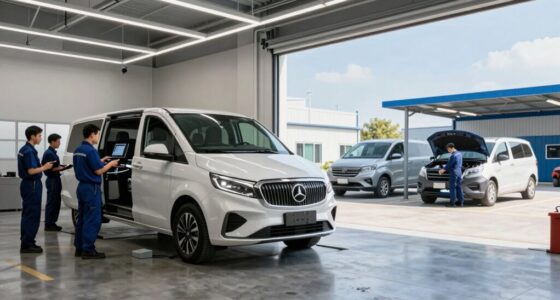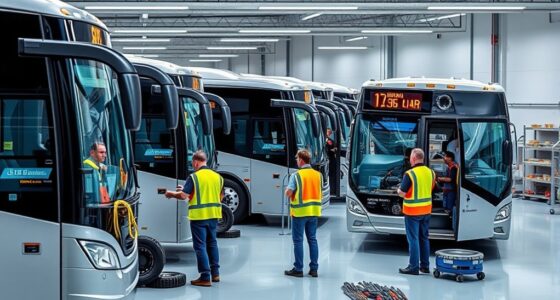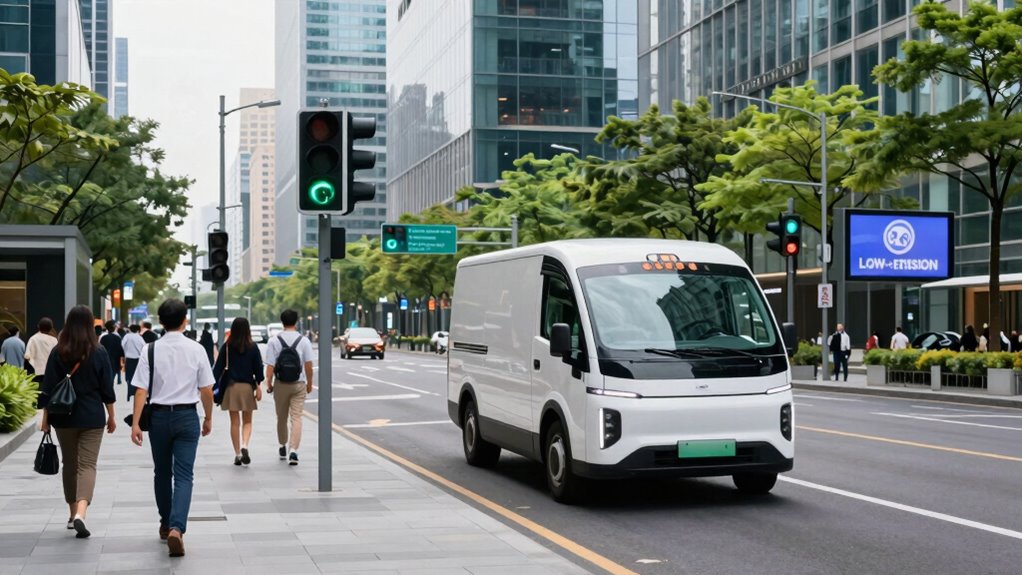

To adapt your fleet for urban low-emission zones, start by evaluating your current vehicles and identifying high-polluting ones to replace with electric or low-emission models. Upgrade charging infrastructure and stay informed about city-specific regulations and deadlines. Optimize routes and implement telematics to reduce emissions further. Regular maintenance and eco-driving training also help. Continue exploring strategies to stay compliant and improve your fleet’s sustainability in city environments.
Key Takeaways
- Evaluate and replace high-emission vehicles with electric or low-emission models to meet city regulations.
- Upgrade charging infrastructure and ensure safety standards for efficient EV fleet operation.
- Stay informed about local low-emission zone policies and deadlines to maintain compliance.
- Optimize routes and implement telematics to reduce emissions and improve fleet efficiency.
- Train drivers on eco-friendly driving techniques to minimize environmental impact and adhere to regulations.
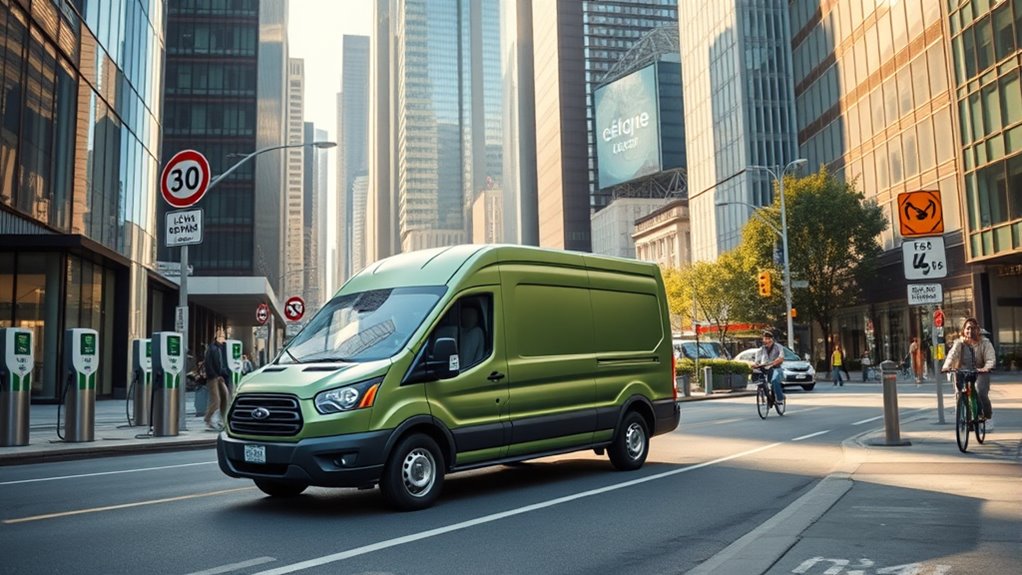
Urban low-emission zones are increasingly being implemented as a practical solution to reduce air pollution and improve public health in city centers. If you’re managing a fleet that operates within these zones, understanding how to adapt your vehicles is crucial. One of the most effective ways to comply with these regulations is through electric vehicle adoption. Electric vehicles (EVs) produce zero tailpipe emissions, making them an ideal choice for navigating low-emission zones. Transitioning your fleet to EVs not only helps you meet current standards but also positions your business as environmentally responsible, which can enhance your reputation and appeal to eco-conscious clients.
Adopting electric vehicles helps fleets comply with low-emission zones and boosts environmental responsibility.
To effectively implement emission reduction strategies, start by evaluating your current fleet. Identify vehicles that are most polluting or least efficient and prioritize replacing them with electric models or other low-emission alternatives. Many cities offer incentives or grants for fleet electrification, which can ease the financial burden of switching. Additionally, consider the logistical aspects—such as charging infrastructure—to ensure your EVs remain operational without delays, making the shift smoother and more feasible. Developing a comprehensive plan that includes infrastructure upgrades can significantly accelerate your transition. Incorporating fleet management software can also help monitor vehicle performance and optimize operations during this transition. Furthermore, understanding the materials and heat distribution of charging equipment can ensure safety and efficiency in your charging stations.
A thorough understanding of the regulatory landscape can help you stay ahead of potential policy changes and avoid penalties, ensuring your fleet remains compliant over the long term. Beyond simply replacing combustion engines with electric ones, you should explore other emission reduction strategies to further lower your environmental impact. For instance, optimizing routes can reduce unnecessary mileage and fuel consumption, while adopting telematics technology helps monitor vehicle performance and driving behavior. Regular maintenance also plays a vital role, ensuring your vehicles operate efficiently and emit fewer pollutants. Combining these strategies creates a thorough approach to compliance and sustainability.
It’s important to stay informed about evolving city regulations and deadlines for low-emission zone compliance. Different cities have varying standards and timelines, so proactive planning is essential. Engaging with local authorities or industry groups can provide valuable insights and support during this shift. Moreover, investing in driver training on eco-friendly driving techniques can maximize emission reductions, as smooth acceleration and deceleration significantly cut emissions and fuel use. Additionally, leveraging high-precision projectors with superior color accuracy and contrast can enhance presentations and training sessions for your drivers and staff, ensuring better understanding and adherence to eco-friendly practices.
Adapting your fleet for city regulations isn’t just about meeting legal requirements; it’s about future-proofing your operations. Electric vehicle adoption and emission reduction strategies are essential components of this transformation. By embracing these changes now, you not only ensure compliance but also contribute to cleaner air and healthier urban environments. The shift may seem challenging at first, but with strategic planning and the right investments, you can turn these regulations into an opportunity to lead your industry in sustainability.
Frequently Asked Questions
How Do Low-Emission Zones Impact Vehicle Insurance Costs?
Low-emission zones can lower your vehicle insurance premiums because insurers see reduced risk due to the decreased likelihood of fines or penalties. They adjust their risk assessment, considering cleaner vehicles as less damaging to the environment and potentially safer. As a result, your fleet might benefit from more favorable insurance costs, especially if you upgrade to compliant, eco-friendly vehicles. Keep in mind, these zones can also influence coverage options and premiums over time.
Can Electric Vehicles Fully Replace Traditional Fleet Vehicles in Urban Zones?
Electric vehicles can fully replace traditional fleet vehicles in urban zones, especially as electric vehicle infrastructure improves. They considerably boost urban air quality by reducing emissions. You should consider investing in charging stations and maintenance support to guarantee smooth operation. As technology advances, electric fleets become more practical, cost-effective, and environmentally friendly, helping you meet city regulations and improve overall urban air quality.
Are There Exemptions for Certain Types of Vehicles or Businesses?
Did you know that around 30% of urban low-emission zones offer vehicle exemptions? Yes, certain vehicle exemptions and business exemptions exist, often for essential service vehicles or historically significant cars. These exemptions aim to balance city regulations with operational needs. So, if you’re managing a fleet, check local rules—some vehicles or businesses might qualify for exemptions, easing your shift to cleaner transportation options.
What Are the Penalties for Non-Compliance With Low-Emission Zone Regulations?
If you don’t conform with low-emission zone regulations, penalty enforcement kicks in, and you could face hefty fines or vehicle restrictions. Cities use compliance tracking to monitor your fleet’s adherence, making it clear whether you’re meeting standards. Non-compliance can quickly lead to financial penalties and operational disruptions. To avoid this, make sure your fleet stays compliant and stay updated on local regulations to prevent costly penalties.
How Can Fleet Managers Monitor Compliance With City Emission Standards?
You can monitor compliance with city emission standards by leveraging vehicle telematics and emission tracking tools. These technologies provide real-time data on vehicle location, engine performance, and emission levels, allowing you to identify non-compliant vehicles swiftly. Regularly reviewing telematics reports helps guarantee your fleet adheres to low-emission zone regulations, reducing penalties and supporting sustainable urban mobility efforts. Implementing these systems keeps you proactive and compliant in evolving city environments.
Conclusion
Adapting your fleet for urban low-emission zones might seem costly at first, but the long-term benefits outweigh the initial investment. Not only will you stay compliant and avoid fines, but you’ll also enhance your company’s reputation as an eco-conscious leader. Don’t let worries about costs hold you back—embracing cleaner vehicles boosts efficiency and future-proofs your business in evolving city regulations. Act now, and turn compliance into your competitive advantage.