AIThis post was created with the assistance of artificial intelligence (AI).

TL;DR

Ford Transit accessories can protect cargo, improve storage, add carrying capacity, and make daily driving more comfortable. Choose each part for your van’s model year, body length, roof height, drivetrain, and intended use, then check its ratings and added weight before installation.

A ladder rack that clears one Transit’s roof can turn a familiar parking garage into a hard stop in another. The van may look nearly identical, but a different roof height, wheelbase, or model year can change the fit. That’s why “fits Ford Transit” is only a starting point, not a complete fitment check. Ford Transit accessories can help you tailor a van for a plumbing business, a delivery route, a weekend camper, or fleet use. This guide walks you through the choices that make a practical difference: cargo protection, racks and towing gear, comfort, security, and conversion equipment. You’ll also learn how to check compatibility and payload before you spend money on a part that doesn’t fit or leaves too little capacity for your tools.
At a glance
Ford Transit Accessories: A Practical Buying Guide
Key insight
A Transit accessory can fit one version of the van and fail to fit another because model year, wheelbase, roof height, body style, drivetrain, and factory options can change dimensions, mounting poin…
Key takeaways
1

Match every accessory to the Transit’s model year, generation, wheelbase, roof height, body style, drivetrain, and factory options.

2

Include racks, shelving, conversion equipment, passengers, and cargo when checking payload and axle limits.

3

Use the lowest rating among the van, hitch, rack, carrier, and other components as the practical load limit.

4

Keep airbags, visibility, controls, sensors, cooling, and required safety equipment clear.

5

Test a fleet upfit on one van during real work before standardizing it across vehicles.

Buying for a business?Offer from Amazon

Get business pricing on garage and car supplies

  • Business-only prices and quantity discounts
  • Tax-exempt purchasing
  • Multiple users, one account, clear invoices
As an affiliate, we earn on qualifying purchases.

Start with the Transit you actually own

Ford Transit accessories fit best when you match them to the van’s model year, generation, wheelbase, body length, roof height, drivetrain, and factory options. These details determine more than whether mounting holes line up: they can affect door clearance, roof contact points, wiring routes, and the location of sensors. A mismatch can mean a rack that cannot be secured as designed, a partition that leaves an unsafe gap, or an installation that interferes with equipment you rely on. Check the maker’s fitment guide with those details before you order; a shared badge alone doesn’t prove a part will fit. For example, a partition made for a long-wheelbase cargo van may leave a gap or block access in a different body configuration. That gap can let loose cargo move into the cab during sudden braking, while a blocked side door can slow access during a job. Fitment is therefore a practical safety and workflow check, not just a matter of appearance. Use this quick check before buying:
  1. Read the model year and vehicle configuration from your registration or vehicle documents.
  2. Measure the space the accessory needs, including door openings and clearance above the roof.
  3. Check the product’s exact fitment listing and installation instructions.
  4. Confirm that the part leaves sensors, wiring, controls, and safety equipment unobstructed.
  5. Keep the fitment details and receipt with your vehicle records.
Transit and Transit Connect accessories generally aren’t interchangeable: the vehicles have different dimensions and mounting systems. A shelf advertised for a Transit may be too wide or use mounting points that your Transit Connect doesn’t have. If a listing leaves out the wheelbase or roof height, ask the manufacturer for the precise fitment before placing the order. Getting a written fitment confirmation can also make returns or warranty questions easier to resolve.

Products Worth Considering

DEWALT 20V MAX XR Brushless Hammer Drill and Impact Driver Combo Kit

DEWALT 20V MAX XR Brushless Hammer Drill and Impact Driver Combo Kit

Chemical Guys 14-Piece Arsenal Builder Car Wash Kit with Foam Blaster

Chemical Guys 14-Piece Arsenal Builder Car Wash Kit with Foam Blaster

Autel MaxiCOM MK808S Bidirectional Automotive Diagnostic Scanner

Autel MaxiCOM MK808S Bidirectional Automotive Diagnostic Scanner

As an affiliate, we earn on qualifying purchases.

Protect your tools and keep the cargo area usable

Ford Transit accessories such as floor liners, wall panels, shelving, drawers, bins, partitions, and tie-downs can make a work van easier to load and help protect its interior. Their value depends on how they change access and capacity: shelving makes small parts easier to find, but takes up floor space; open floor space handles bulky loads, but needs tie-downs and a loading routine to keep cargo from shifting. Pick the setup around the gear you carry most often, with clear paths to doors and equipment you may need quickly. On a wet Monday, a sealed floor liner can keep muddy water from soaking into the cargo floor while sturdy bins stop small fittings from rattling loose. A shelving system earns its space when your daily jobs need fast access to many small parts. The time saved searching can add up over repeated stops, but deep shelves may make items harder to reach from the side door and add weight even when empty. A delivery driver with bulky cartons may get more value from open floor space and strong tie-downs. Try laying out the cargo area with cardboard boxes the size of your planned shelves; you’ll see whether the design blocks a side door or leaves room for long materials before drilling anything. Commercial upfits should leave required safety equipment accessible and avoid blocking airbags or the driver’s view. Add the weight of flooring, shelving, partitions, and loaded tools to your payload calculation. This matters because accessories use capacity before the first tool or parcel goes aboard; several individually modest modules can leave much less room for the load the van earns its keep carrying. A part that keeps a wrench from sliding across the van can still cost useful carrying capacity once you install several heavy modules.

Add roof or towing capacity without guessing

Ford Transit accessories for carrying ladders, cargo, or trailers need ratings that match the specific van and the load you plan to carry. A rating is a boundary for a particular component and use, not a promise that every configuration can carry that much. Check the vehicle manual and accessory labels for roof-load, towing, hitch, and component limits; the lowest-rated component sets the practical limit. If a hitch is rated for less than the trailer or wiring setup, the hitch rating governs.
AccessoryWhat it helps you doWhat to check
Roof or ladder rackCarry long materials or laddersVehicle roof-load rating, rack rating, total height, and clearance
Hitch and wiringPull a trailer or attach a carrierVan towing capacity, hitch rating, wiring compatibility, and tongue load
Rear cargo carrierCarry bulky gear outside the cargo bayHitch rating, carrier rating, visibility, and access to rear doors
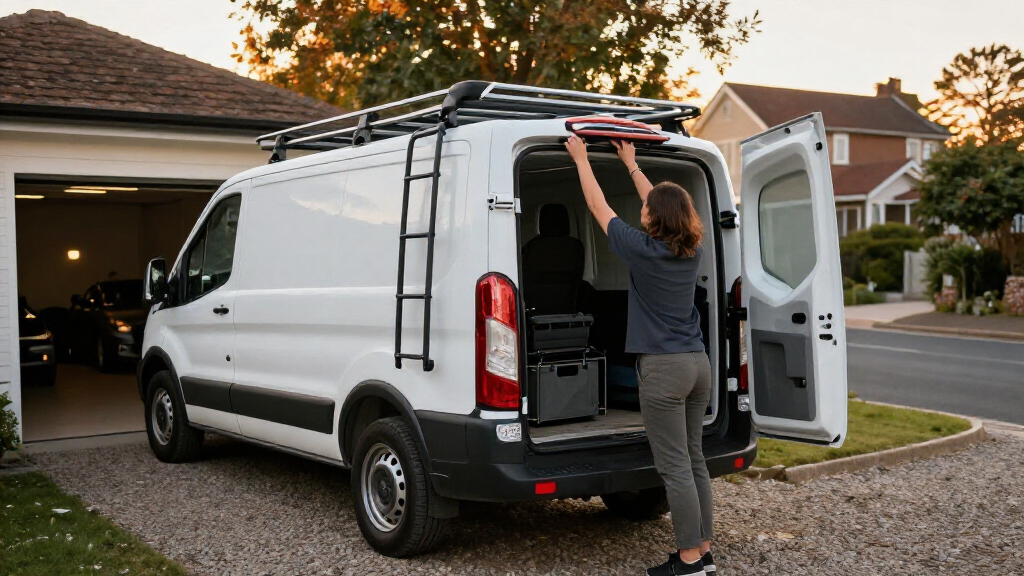
Picture a contractor who adds a roof rack and a ladder, then loads the van with flooring samples. Those items all count toward the vehicle’s limits, and the rack also raises the van’s total height. The height change can rule out garages, covered loading bays, or some drive-throughs, even if the rack’s load rating is adequate. Write the planned load on paper, include the weight of the accessories themselves, and check the manual and certification label before driving. Roof racks can work on high-roof Transits, but the rack must be suitable for that configuration and loading plan. A trailer setup also needs a realistic check of tongue load and cargo placement: staying within the towing rating alone does not ensure every axle or component is within its limit.

Make long shifts or weekends more comfortable

Ford Transit accessories such as seat covers, window shades, storage organizers, interior lights, cameras, and phone mounts can reduce daily friction when you choose parts that leave controls and visibility clear. A courier reaching the van before sunrise, for instance, can use well-placed cargo lighting to find a parcel without balancing a phone flashlight between their teeth. Better lighting can save time at each stop, though a bright lamp pointed toward the cab may create glare while driving. A driver on a long route may appreciate a shade that cuts glare during a parked break. Fit comes with limits. A phone mount should keep your eyes near the road, and an accessory should never block the driver’s view or cover vehicle controls. Seat covers need special care around seat-mounted airbags; use covers designed for the exact seat and follow their installation instructions. If a camera or lighting kit needs new wiring, check whether the van’s electronics and the accessory support each other. The convenience of an extra device is less useful if its cable snags controls or its installation causes electrical faults. Small changes can work better than a full cabin makeover. Try a removable organizer for daily paperwork before committing to a permanent console, or test a shade on the sunniest window first. This gives you a chance to notice whether it gets in the way of mirrors, handles, or a sliding door before you buy matching pieces for every window. A trial also reveals whether the accessory solves a recurring annoyance or just adds another item to move around.

Build a camper conversion around weight and airflow

Camper accessories such as insulation, ventilation, swivel seats, beds, water systems, auxiliary batteries, and solar equipment can turn a Transit into a comfortable travel van, but each addition affects weight, space, or electrical demands. The tradeoff is cumulative: insulation and cabinetry improve comfort and storage, while reducing interior room and payload; batteries provide power away from hookups, while adding weight and requiring secure mounting. A bed and water tank may seem modest on their own; add cabinetry, batteries, food, passengers, and camping gear and the payload can shrink quickly. Start with a layout for a real trip. Imagine a two-person weekend away: map where you’ll sleep, cook, store water, and change clothes, then note the weight and power needs of each item. Include water when full, since it is easy to overlook and adds substantial load. This exercise helps expose conflicts before installation: a cabinet may block a door, or a bed may leave too little room for the cooking setup you planned. Ventilation matters when you cook or sleep inside. A roof vent can help move warm, damp air out, but its placement must work with the van’s roof, wiring, and other equipment. Without airflow, moisture can build up and make the cabin uncomfortable; a vent that conflicts with a rack or solar panel may be difficult to use as intended. Electrical installations deserve special care. Confirm that batteries, solar components, wiring, and protective devices suit the vehicle and the planned loads. A larger battery may extend time off-grid, but it also needs appropriate charging, protection, and mounting; adding capacity without planning those elements can create reliability and safety problems. For electrified or newer versions, verify that components are approved for that specific van and don’t obstruct cooling, sensors, or high-voltage components. Installation quality, payload, and warranty terms can vary with the modification, so check the vehicle documentation and ask a qualified installer about complicated systems.

Reduce theft risk with a setup that fits your routine

Security accessories such as deadlocks, alarms, lockable storage, and window protection can make tools harder to steal, but their compatibility with factory locks, electronics, and insurance requirements varies. Think about the actual risk: a tradesperson who parks on dim streets overnight may value a lockable tool cabinet and extra protection more than someone who unloads at a staffed depot each afternoon. The aim is to make the likely theft harder or less rewarding; no single accessory makes a van theft-proof. Start with the items that would stop your work if they disappeared. Keep high-value tools in a bolted, lockable box, and avoid leaving them visible through the windows. A box can slow access for a thief, but it also takes space and may add weight, so choose a size that fits the tools you actually need to secure. Then check that any added lock or alarm works with the van’s existing system; a poorly matched alarm can create hassles when you lock up or hand keys to another driver. Ask your insurer whether a security modification affects cover or requires disclosure. Save the product details and installation paperwork. For a fleet manager, also consider replacement availability and downtime: a common lock with local support may be easier to maintain across several vans than a specialist product that takes weeks to replace. This is a useful tradeoff when a van being out of service costs more than the extra protection is likely to save.

Choose parts that work for a fleet, not just one van

A fleet accessory earns its place when it holds up to repeated use, can be installed consistently, and has replacement parts available when something breaks. A cheaper component may reduce initial cost but prove expensive if it wears quickly or leaves vans idle while a replacement is sourced. A modular, vehicle-specific upfit can help owners tailor vans as jobs change: one team might use shelving and bins this month, then reconfigure for larger equipment next season. Modularity provides flexibility, though additional fittings and reconfiguration can add labor and weight. Lighter materials and integrated power or lighting can also help, as long as the system suits the van and its electronics. Before fitting out several vehicles, test one van on a real shift. Have a driver load it, find commonly used tools, secure a typical delivery, and report what rattles or blocks access. That simple trial can reveal that a shelf is too deep for a side-door reach or that a lighting switch sits in an awkward spot. It also shows whether the accessory saves enough time or protects enough equipment to justify rolling the cost out across the fleet. Compare products on fitment, load ratings, materials, installation time, service access, warranty terms, and replacement availability. Ask for costs over the expected service life, including installation and likely repairs, rather than comparing purchase price alone. Aftermarket and Ford-branded parts can both be good choices; branding alone doesn’t answer whether a product fits or suits the work. Ask the seller how a modification affects service access and warranty coverage, especially when installation changes wiring or requires structural drilling.

Frequently Asked Questions

Will this accessory fit my Ford Transit?

Check the model year, generation, wheelbase, roof height, body style, drivetrain, and factory options against the accessory maker’s fitment guide. Listings that say only “fits Ford Transit” may leave out details that affect mounting or clearance.

Are Ford Transit and Transit Connect accessories interchangeable?

Usually not. Transit and Transit Connect are different vehicle lines with different dimensions and mounting systems, so check fitment for the exact vehicle before buying.

Can I put a roof or ladder rack on a high-roof Transit?

Often, if the rack is designed and rated for your specific van and load. Check the roof-load limit, total vehicle height, parking clearance, and whether the rack affects doors or sensors.

How much weight can my Transit carry or tow?

Use the ratings for your specific vehicle in its manual or on its certification label. Accessories count toward payload, and towing depends on the van’s configuration and equipment; the lowest-rated part limits the setup.

Can accessories affect my warranty or insurance?

They can, depending on the modification, installation, policy, and applicable rules. Ask your dealer or insurer about coverage for consequential damage, and disclose major conversions when your policy requires it.

Which accessories should I buy first for a work van?

Many work vans benefit from cargo flooring, shelving or bins, secure tie-downs, a partition, and interior lighting. Choose based on your regular load and check fitment and payload before ordering.

Can I install Transit accessories myself?

Removable organizers and some trim pieces may suit a careful DIY installation. Electrical work, structural drilling, restraint-system components, and heavy racks may need a qualified installer; repairs involving brakes, airbags, or high-voltage EV systems should go to certified mechanics.

Conclusion

Start with the jobs your Transit needs to handle, then choose accessories that fit its exact configuration and leave enough capacity for people and cargo. Check fitment, ratings, and installation details before you drill, wire, or load the van. A well-planned Transit should feel ready for the day when you open the doors—not like a puzzle you have to work around.
You May Also Like

Best DEWALT Power Tools for Contractors (2026) — Guide 38

Discover the top DEWALT tools in 2026, from impact drivers to air compressors. Find the perfect option for your needs with our detailed guide.

Jeff Gordon And Bill Elliott Raced IROC Pontiacs Wheel-to-Wheel In DC Last Weekend. Who Knew?

Former NASCAR stars Jeff Gordon and Bill Elliott competed wheel-to-wheel in IROC Pontiacs last weekend in Washington, D.C., showcasing their driving skills.

Best DEWALT Power Tools for DIY (2026) — Guide 41

Discover the top DEWALT tools for 2026, including impact drivers, drills, and accessories. Find the perfect fit for your projects with our expert guide.

Volvo Dumbed-Down Seat Adjustment Knobs And I Actually Really Like It

A review of the 2026 Volvo EX90 praises its simplified seat-adjustment switch while criticizing the similar two-switch setup for four windows.