To make certain your Ford Transit drives smoothly and tires wear evenly, you should aim for a camber close to 0° with slight negative tilt and a toe-in setting of about 0.15 to 0.25 inches. Misalignment often causes uneven tire wear, like feathering or inner and outer edge wear, and can lead to handling issues. If you want to understand how these specs affect your vehicle and how to spot wear patterns, keep exploring this topic.
Listen free for 30 days with Audible
Thousands of audiobooks and originals — cancel anytime.
As an affiliate, we earn on qualifying purchases.
Key Takeaways
- Ford Transit typically requires a camber near 0° with slight negative tilt and a toe-in of about 0.15 to 0.25 inches.
- Improper wheel alignment causes uneven tire wear, such as inner or outer edge scalloping or feathering.
- Misaligned camber leads to excessive inner or outer tire edge wear, indicating tilt issues.
- Toe misalignment results in tire feathering and scalloping, reducing tire lifespan and handling quality.
- Regularly checking and maintaining proper alignment specs prevents uneven tire wear and extends tire life.
Have you noticed your Ford Transit pulling to one side or uneven tire wear? If so, it’s a clear sign that your wheel alignment might be off. Proper wheel alignment ensures your vehicle handles smoothly, maintains even tire wear, and improves overall safety.
When your wheels aren’t correctly aligned, your tires can wear unevenly, leading to the need for premature replacements and increased costs. It’s important to understand the correct alignment specs for your Ford Transit to keep it running efficiently and to avoid unnecessary tire damage.
The key alignment angles you should be aware of are caster, camber, and toe. Caster refers to the tilt of the steering axis when viewed from the side of the vehicle. Proper caster helps with steering stability and straight-line tracking.
Camber is the tilt of the wheels from top to bottom when viewed from the front. Negative camber means the top of the tire leans inward, while positive camber leans outward. Correct camber ensures even tire contact with the road, preventing uneven wear.
Toe measures how much the tires point inward or outward when viewed from above. Proper toe settings contribute to steering responsiveness and tire longevity.
For a Ford Transit, the manufacturer’s recommended alignment specifications are typically around 0° camber with a slight negative tilt, and a toe-in setting of about 0.15 to 0.25 inches, but these can vary depending on the model year and specific configuration. It’s essential to refer to the service manual or consult a professional for precise specs.
Maintaining these settings within the recommended range helps distribute the load evenly across your tires, prevents excessive wear, and guarantees your vehicle handles correctly.
If you notice your tires are wearing unevenly—especially more on one side or at the edges—this could indicate misalignment. For example, excessive inner or outer edge wear points to camber issues, while feathering or scalloping might signal toe problems.
Addressing these issues early with a professional wheel alignment service can save you money and extend your tires’ lifespan. Regular checks, especially after hitting potholes or curbs, are vital to maintaining proper alignment.

2026 Upgraded Wheel Alignment Tool, 2 PCS Toe Alignment Tool Plates Without Removing Calipers, Wheel Alignment Kit with 2 Measuring Tapes, Compatible with Most Cars and SUVs
- No Caliper Removal Needed: Direct use with extension pieces
- Enhanced Durability: Reinforced core for stability
- Precise Measurements: Two 16.4-ft tapes, accurate to 1/32 inch
As an affiliate, we earn on qualifying purchases.
As an affiliate, we earn on qualifying purchases.
Frequently Asked Questions
How Often Should I Check My Ford Transit’s Wheel Alignment?
You should check your Ford Transit’s wheel alignment at least once a year or every 10,000 to 12,000 miles, whichever comes first.
If you notice uneven tire wear, pulling to one side, or unusual steering behavior, get it checked sooner.
Regular inspections help prevent uneven tire wear, improve handling, and extend your vehicle’s lifespan.
Don’t wait for problems to arise—schedule a professional alignment to keep your Transit running smoothly.
Can Uneven Tire Wear Indicate Other Issues Besides Alignment?
Yes, uneven tire wear can indicate issues beyond alignment. You might have problems with suspension parts, tire imbalance, or improper tire inflation.
Worn shocks or struts can also cause uneven wear, as can faulty steering components. Regularly inspecting your tires and vehicle can help catch these issues early, saving you money and ensuring safe driving.
If you notice uneven wear, it’s best to have a mechanic diagnose the root cause promptly.
What Are Signs of Improper Wheel Alignment on My Ford Transit?
When your Ford Transit pulls to one side or the steering feels uneven, you’re likely dealing with improper wheel alignment.
You might also notice a crooked steering wheel when driving straight or uneven tire wear patterns.
If your vehicle vibrates at certain speeds or the steering feels loose, those are additional signs.
Don’t ignore these clues—they’re your vehicle’s way of saying something’s off, so get it checked before small issues turn into big repairs.
Does Towing Affect the Ford Transit’s Wheel Alignment?
Yes, towing can influence your Ford Transit’s wheel alignment. When you tow heavily or frequently, it puts extra stress on the suspension and steering components, which can cause misalignment over time.
You might notice your vehicle pulling to one side, uneven tire wear, or a crooked steering wheel. To prevent issues, make sure your towing setup is within specifications and get regular alignment checks if you tow often.
Are There Specific Tire Types Better Suited for Ford Transit?
You should consider all-season or heavy-duty tires for your Ford Transit, as they offer durability and traction suited for various loads and conditions.
If you frequently drive in winter, opt for snow tires for better grip.
For commercial use, choose tires with higher load ratings to handle heavy cargo.
Always check the manufacturer’s recommendations to guarantee compatibility and optimize performance, safety, and longevity of your tires.
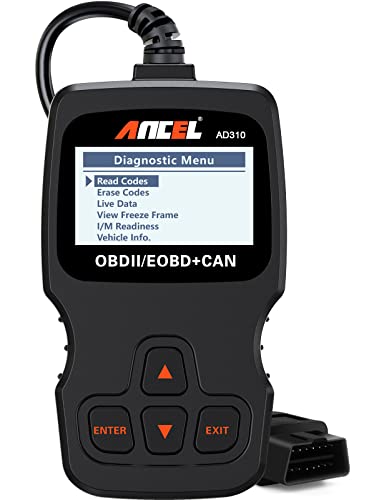
ANCEL AD310 Classic Enhanced Universal OBD II Scanner Car Engine Fault Code Reader CAN Diagnostic Scan Tool, Read and Clear Error Codes for 1996 or Newer OBD2 Protocol Vehicle (Black)
- Diagnostic Capabilities: Read and clear engine trouble codes
- Recommended by Experts: Trusted by Scotty Kilmer and mechanics
- Live Data Monitoring: View real-time vehicle data
As an affiliate, we earn on qualifying purchases.
As an affiliate, we earn on qualifying purchases.
Conclusion
Proper wheel alignment guarantees your Ford Transit handles smoothly and wears tires evenly. Imagine noticing uneven tire wear after a long trip—it’s a sign your alignment might be off. Just like a delivery driver who had to replace tires prematurely due to misalignment, you can avoid costly repairs by regularly checking and adjusting your setup. Keep your Transit running efficiently by staying on top of alignment specs—your vehicle, and your wallet, will thank you.

Toplamper Wheel Toe Alignment Tool Kit for at Home DIY Garage Use, Stainless Steel Toe Plates with Dual Tape Measures, Quick Front-End Toe Check for Automotive Cars Trucks SUVs – Black (Patent Design)
- DIY Front-End Toe Adjustment: Ideal for home garage use
- Reference and Adjustment Tool: Helps correct toe-in and toe-out
- Heavy-Duty Stainless Steel Plates: Resists bending and corrosion
As an affiliate, we earn on qualifying purchases.
As an affiliate, we earn on qualifying purchases.

Ziopetru 1 Pack Magnetic Camber Gauge, Wheel Alignment Tool for Automotive
- Restores Camber to Original Position: Helps restore vehicle camber after repairs
- Precise Camber and Caster Check: Measures camber and caster angles accurately
- Adjustable Range -5° to 5°: Horizontal adjustment from -5 to 5 degrees
As an affiliate, we earn on qualifying purchases.
As an affiliate, we earn on qualifying purchases.
College move-in / dorm season Picks
dorm essentials
As an affiliate, we earn on qualifying purchases.