To guarantee easy starts in cold weather, you should test your diesel glow plugs with a multimeter by checking their resistance—if it’s too high or infinite, they likely need replacing. When replacing them, disconnect the battery, remove the faulty plugs carefully, and install new ones to the manufacturer’s torque specs. Properly functioning glow plugs help your engine warm up faster and run smoothly. Stay tuned to learn more about efficient testing and replacement techniques.
Key Takeaways
- Locate glow plugs near the cylinder head and disconnect their connectors before testing.
- Use a multimeter to measure resistance; a faulty glow plug shows infinite or high resistance.
- Replace glow plugs if they show signs of damage, corrosion, or fail resistance tests.
- Ensure the engine is cool and disconnect the battery before removing or installing glow plugs.
- Tighten new glow plugs to the manufacturer’s torque specifications and verify proper electrical connection.
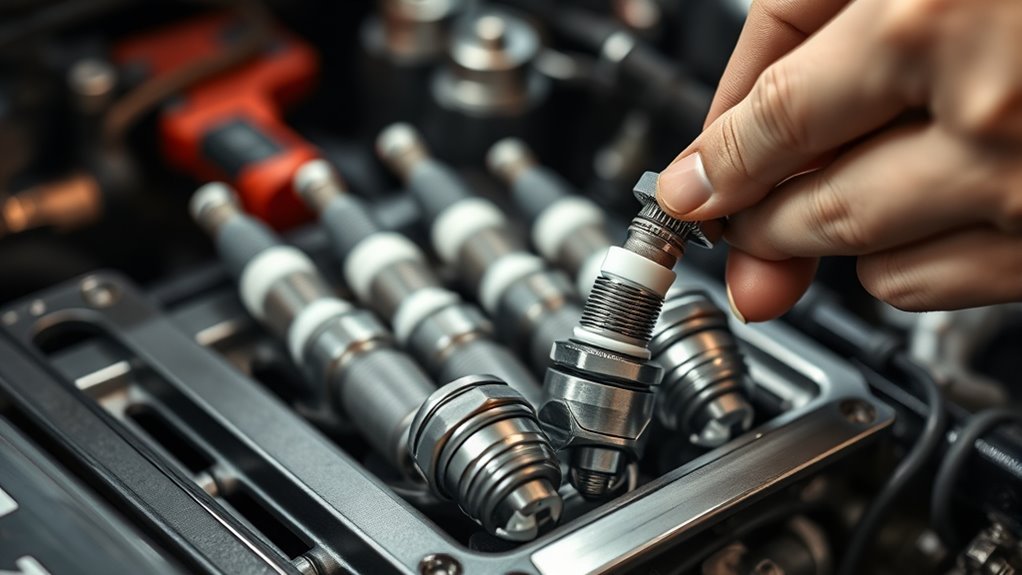
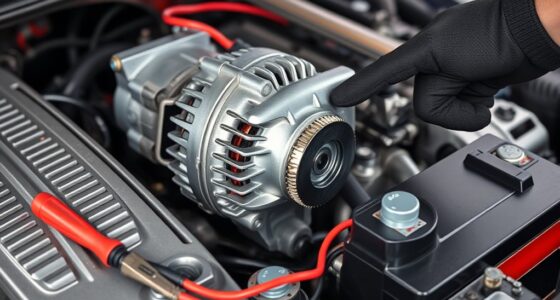
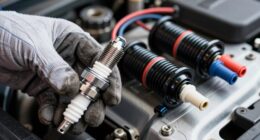
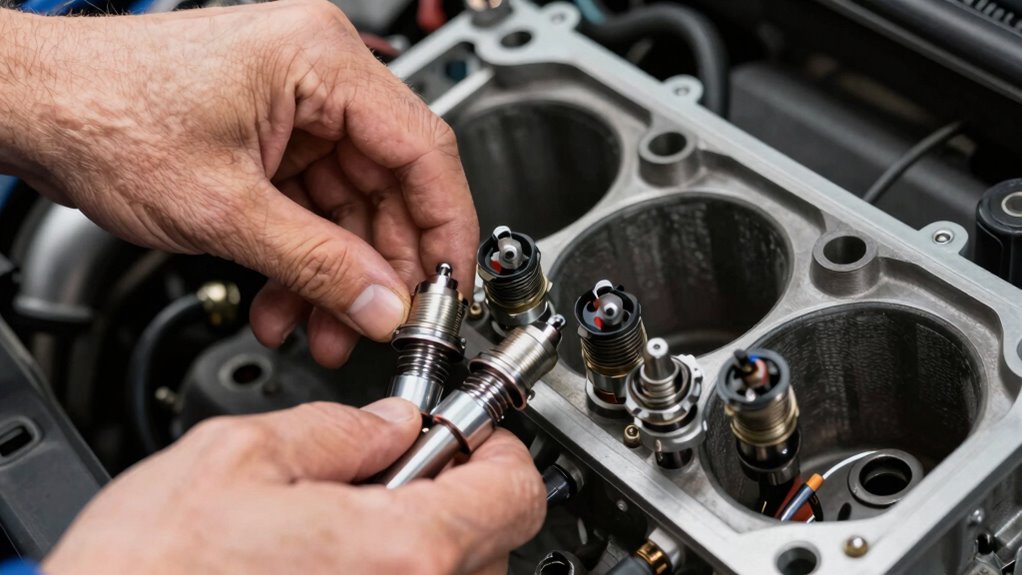
Have you ever wondered how diesel engines start in cold weather? It’s all thanks to glow plugs—small but essential components that heat the combustion chambers to guarantee reliable cold starts. When temperatures drop, diesel fuel thickens, making it harder for the engine to fire up. That’s where glow plugs come into play, warming the air inside the cylinders so the engine can ignite smoothly. Without them, you’d face prolonged cranking times, rough starts, and increased wear on your engine. Making sure your glow plugs are functioning properly isn’t just about convenience; it also impacts your vehicle’s fuel efficiency and emission control. Properly working glow plugs help your engine reach ideal operating temperature faster, which means less fuel wasted during extended cranking and warm-up periods. Additionally, efficient combustion reduces harmful emissions, contributing to cleaner air and helping your vehicle comply with emission standards. Regular testing can also help identify early signs of failure, preventing unexpected breakdowns in cold weather. Testing your glow plugs is straightforward, but it’s crucial to do it correctly. First, turn off your engine and locate the glow plugs—usually accessible in the engine bay, often near the cylinder head. You can test them with a multimeter set to measure resistance. Disconnect each glow plug connector and place the probes on the terminals. A healthy glow plug typically shows a resistance value within the manufacturer’s specifications. If the reading is infinite or considerably higher than normal, that glow plug is faulty and needs replacement. Some vehicles come with glow plug indicators on the dashboard; if you notice the light staying on longer than usual or blinking, it’s a sign that your glow plugs might be failing. For a more thorough test, you can also use a glow plug tester, which applies voltage and checks if the plug heats up properly. Checking your vehicle’s owner’s manual can provide specific testing procedures and specifications for your model. Replacing glow plugs is usually a manageable task, but it’s important to follow proper procedures to avoid damaging delicate components. First, ensure the engine is cool to prevent burns and ease removal. Disconnect the battery to prevent electrical shorts. Remove the faulty glow plugs carefully, as they can be fragile or stuck due to carbon buildup or corrosion. When installing new ones, tighten them to the manufacturer’s specified torque to avoid cracking the ceramic element. Properly functioning glow plugs are a critical part of diesel engine performance, especially in cold climates. Maintaining your glow plug system can improve overall cold start performance, ensuring your vehicle starts reliably even in harsh winter conditions. After installation, reconnect the electrical connectors and start your engine. If it still struggles to start in cold weather, double-check your work and consider having a professional inspect the system. Regular testing and timely replacement of glow plugs can considerably improve your engine’s cold start performance, fuel efficiency, and emission control, making your vehicle more reliable and environmentally friendly.
Frequently Asked Questions
How Long Do Diesel Glow Plugs Typically Last?
Diesel glow plugs typically last between 100,000 and 150,000 miles, depending on driving conditions and maintenance. Their lifespan varies based on glow plug durability and how often you start your engine in cold weather. If you notice hard starts or rough idling, it’s a sign to check and possibly replace them. Regular inspections can help extend their service life, ensuring reliable engine starts and best performance.
Can Faulty Glow Plugs Cause Engine Misfires?
Faulty glow plugs can definitely cause engine misfires, especially during cold starts. While glow plug lifespan varies, worn or failing plugs disrupt proper combustion, leading to rough running and misfire prevention issues. You might notice difficulty starting your diesel engine or rough idling. Regularly testing and replacing glow plugs guarantees reliable starts and smooth engine operation, preventing misfires caused by incomplete combustion or poor ignition.
Are Aftermarket Glow Plugs as Reliable as OEM?
You might find that aftermarket glow plugs can be as reliable as OEM ones, but it depends on their quality. High-quality aftermarket glow plugs often have a similar lifespan and performance, but cheaper options may fall short. To guarantee reliable engine starts and longevity, choose aftermarket glow plugs that meet or exceed OEM standards, and verify their quality. This way, you get the best balance of cost and reliability for your diesel engine.
How Do Weather Conditions Affect Glow Plug Performance?
Weather effects can substantially impact glow plug efficiency. In colder conditions, glow plugs work harder to heat the combustion chambers, making it tougher for them to perform ideally if they’re worn or faulty. Conversely, in warmer weather, they may not need to work as hard, but poor-quality or damaged glow plugs can still cause hard starts. Keep an eye on their condition, especially during extreme temperatures, to guarantee reliable engine starts.
Is It Necessary to Replace Glow Plugs With New Batteries?
You might wonder if it’s necessary to replace glow plugs with new batteries, and the answer depends on battery compatibility and glow plug lifespan. If your battery is weak or incompatible, it can hinder glow plug performance, risking hard starts. However, replacing glow plugs without considering your battery’s condition might be futile. Always check both components simultaneously to ensure reliable starts, especially in colder weather, where glow plug efficiency is vital.
Conclusion
Now that you’ve tested and replaced your glow plugs, your diesel engine will start smoother than a well-oiled machine. Think of your glow plugs as the morning coffee for your engine—getting everything fired up quickly and effortlessly. With these simple steps, you’ve turned a stubborn starting issue into a thing of the past. So, go ahead, enjoy that reliable roar every morning, knowing you’ve got the power to wake up your engine with a spark of confidence.