
Your Ford Transit’s maintenance schedule varies by region, with US models needing oil changes every 5,000 miles and fluid checks every 15,000 to 30,000 miles, while EU versions often rely on onboard systems and inspections every 5,000 miles. Major milestones include brake and suspension checks at 15,000 miles and transmission fluid changes around 60,000 miles. Regional differences focus on specific components and service intervals—continue to explore for detailed guidance tailored to your vehicle’s needs.

Get business pricing on garage and car supplies
- Business-only prices and quantity discounts
- Tax-exempt purchasing
- Multiple users, one account, clear invoices
Key Takeaways
- Oil changes are recommended every 5,000 miles in the US and aligned with a 30,000-mile/24-month cycle in the EU.
- Routine inspections, including tires, brakes, and fluids, occur at 15,000 and 30,000 miles, with specific service tasks for each region.
- Major service milestones include fluid changes at 60,000 miles, such as transmission fluid, and timing belt inspection at 100,000 miles.
- Brake fluid replacement is advised every 3-5 years, with additional focus on cooling system and filter replacements at specified intervals.
- Maintenance protocols vary regionally, with the US emphasizing regular, frequent servicing, while the EU relies on onboard diagnostics and condition-based inspections.
Basic Maintenance Intervals for Ford Transit in the US and EU

Understanding the basic maintenance intervals for your Ford Transit is essential to keep it running smoothly and safely. In the US, you should replace engine oil and the oil filter every 5,000 miles, along with tire rotation, tire condition checks, and brake inspections. Tire pressure must be maintained according to manufacturer specs during each service. Brake fluid, cooling system, transfer case, and differential fluids are typically inspected at 15,000 miles. Regularly check and top off fluids like windshield washer, brake, and coolant. In the EU, maintenance schedules often align with similar intervals but are based on a 30,000-mile or 24-month cycle, reflecting regional differences. Both regions emphasize routine checks of tires, brakes, fluids, and filters to ensure safety, performance, and compliance with standards. Additionally, regular multi-point inspections help identify potential issues early and prevent costly repairs. Following the recommended maintenance schedule and fluid checks can extend the lifespan of your vehicle and improve overall reliability. Properly managing raw food intake, especially for pets, can contribute to their overall health and longevity. Incorporating predictive maintenance practices can further help in preventing unexpected breakdowns and maintaining optimal vehicle performance. Regular diagnostic testing can also assist in detecting hidden issues before they develop into major problems.
Major Service Milestones and Recommended Procedures

Knowing the key service milestones for your Ford Transit helps you stay ahead of potential issues and plan maintenance effectively. At 15,000 miles, you’ll need a basic inspection of brakes, tires, and fluids. By 30,000 miles, replace the air filter, inspect suspension components, and check steering. At 60,000 miles, a major service is due: change transmission fluid, replace spark plugs (for gasoline engines), and thoroughly inspect brakes. Regularly reviewing vehicle maintenance schedules ensures your vehicle remains reliable and safe over its lifespan. Additionally, scheduling preventative maintenance at these intervals can help identify issues early and prevent costly repairs. By 100,000 miles, inspect or replace the timing belt or chain, flush the coolant system, and review the drivetrain. At 150,000 miles, perform engine diagnostics, clean fuel injectors if necessary, and inspect the exhaust system. Staying on top of these milestones guarantees your Transit runs smoothly and avoids costly repairs. Additionally, considering the compatibility and diagnostic tools of your diagnostic equipment can streamline maintenance procedures.
Fluid Change Schedules and Maintenance Tips

Maintaining proper fluid levels and timely changes are essential to keep your Ford Transit running smoothly and prevent costly repairs. Transmission fluid should be changed every 30,000 to 60,000 miles, depending on usage and model year. Some models, like the 2015 Transit Connect, have sealed transmissions without dipsticks, requiring service via check valves under the vehicle. Regular transmission fluid changes help maintain ideal lubrication and cooling, preventing transmission failure, especially under heavy loads. Brake fluid must be replaced every three years to prevent moisture buildup, corrosion, and brake system degradation. Engine oil typically needs changing around every 7,500 miles, along with coolant and power steering fluids. Differential and drivetrain fluids also require scheduled changes, often every three years, to ensure smooth performance and protect drivetrain components. Changing transmission fluid regularly can extend the lifespan of your vehicle’s transmission and improve overall performance.
Key Inspections at Specific Mileage Intervals
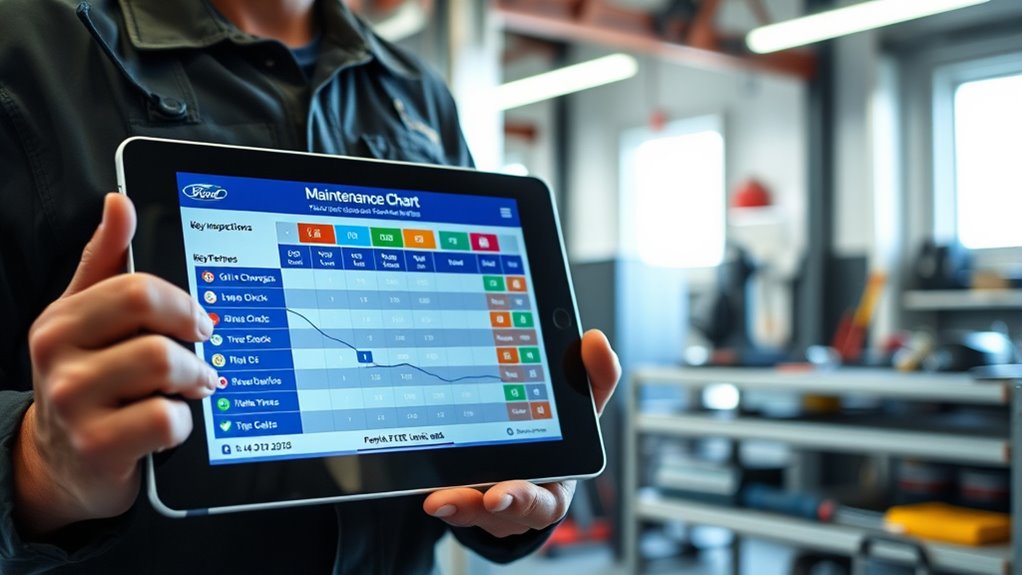
Understanding the critical inspection milestones helps you stay ahead of potential issues and keeps your Transit running smoothly. At specific mileage intervals, routine checks catch wear and tear early, saving you time and money. Regular maintenance also ensures that your vehicle remains reliable and safe for daily use. Proper scheduling of these services can extend the lifespan of your Transit and help maintain its resale value. Additionally, being aware of automated maintenance alerts can assist in timely service planning and prevent unexpected breakdowns. Monitoring vetted maintenance guidelines ensures that all inspections adhere to manufacturer recommendations for optimal performance. Incorporating essential oils for vehicle health, such as eucalyptus or peppermint, can also contribute to a fresher and more comfortable driving environment. Staying informed about lemon juice spoilage signs can help you keep your cleaning supplies fresh and effective.
Critical Inspection Milestones
Critical inspection milestones are essential checkpoints that guarantee your Ford Transit remains safe, reliable, and compliant with regulations at key mileage intervals. These milestones ensure your vehicle functions at its best and prevent costly repairs. At specific points, you’ll need to:
- Conduct initial delivery and break-in inspections within the first 1,000 miles, verifying odometer accuracy and inspecting chassis and body details. Regular checks can also help identify early signs of wear before they develop into major issues.
- Perform mid-interval system inspections around 30,000 miles, focusing on brakes, steering, suspension, and safety equipment.
- Complete EU periodic technical inspections and cross-border checks every two years, confirming emissions, safety components, and compliance.
- Carry out powertrain and drivetrain inspections at approximately 60,000 miles, including engine, transmission, and exhaust system assessments. These inspections may involve Level I or Level V vehicle inspections to assess vehicle condition without driver involvement.
These milestones help you stay ahead of maintenance needs, ensuring safety and roadworthiness.
Routine Maintenance Checks
Regular routine maintenance checks are essential for keeping your Ford Transit performing safely and efficiently. Every 5,000 miles, you should inspect and rotate your tires, check brake components, and confirm tire pressures meet manufacturer specs. During these checks, look for signs of uneven wear, noise, or brake issues. To support your ongoing creative practice, developing a routine of these inspections can help you stay proactive and attentive to your vehicle’s needs. Every 15,000 to 30,000 miles, replace air filters and inspect wipers, radiators, and cooling systems to maintain engine efficiency. Fluid levels—coolant, brake fluid, and others—should be checked every 5,000 miles, with some fluids, like differential and transfer case lubricants, replaced at specific intervals. Conduct multi-point inspections at every 5,000 miles, covering lights, steering, suspension, and exhaust systems. Proper vehicle maintenance extends vehicle lifespan and helps prevent breakdowns. Additionally, understanding the costs associated with maintenance can help you budget effectively for repairs and replacements.
Differences in Maintenance Approaches Between US and European Markets

You’ll notice that maintenance schedules differ markedly between the US and European markets, especially in service intervals and focus areas. US practices tend to favor more frequent fluid checks and shorter mileage intervals, while European schedules emphasize longer intervals and component longevity. These differences are shaped by factors like fuel types, vehicle usage, and regional regulations, influencing how each market maintains its Ford Transit fleet. Additionally, regional preferences for regional vehicle regulations and environmental standards may also reflect broader health and environmental considerations that indirectly impact maintenance practices. Variations in compliance requirements can further dictate specific maintenance protocols tailored to each region’s legal standards.
Service Interval Variations
The maintenance schedules for Ford Transits differ markedly between the U.S. and European markets, primarily due to contrasting approaches to service intervals.
- U.S. schedules favor fixed-mile intervals, with oil changes every 5,000 miles and fluid replacements at set milestones like 30K, 50K, and 60K miles.
- European routines rely more on onboard warning systems, prompting timely services based on vehicle condition rather than strict mileage.
- Both regions recommend inspections every 5,000 miles, but Europe’s approach is more flexible, influenced by real-time feedback.
- Timed services, such as brake fluid replacement, occur every 3-5 years in both markets but are scheduled differently—fixed in the U.S., condition-based in Europe.
These differences reflect regional philosophies, balancing cost, vehicle longevity, and preventive maintenance.
Fuel Type and Longevity
Maintenance strategies for Ford Transits vary considerably between the U.S. and European markets, especially when it comes to fuel types and engine longevity. In Europe, the focus is on the 2.0L EcoBlue diesel engine, which uses advanced fuel injection and low-friction pistons to enhance efficiency and durability. Stricter low sulfur diesel standards and EU emission rules lead to more frequent inspections of high-pressure fuel systems. Conversely, U.S. models feature larger gasoline and diesel engines with a focus on transmission durability, such as the standard 6-speed SelectShift automatic. U.S. engines are designed for robustness, with less emphasis on emissions-specific components, impacting maintenance intervals. Overall, European Transits benefit from optimization for fuel economy, contributing to longer engine life, while U.S. vehicles prioritize drivability and load capacity.
Market-Specific Maintenance Focus
Differences in maintenance approaches between the US and European markets primarily stem from variations in vehicle design, usage patterns, and warranty policies. You’ll notice that US schedules feature more frequent service visits, reflecting heavier usage and warranty requirements. In contrast, European schedules favor longer intervals, aligning with different driving conditions and vehicle longevity expectations. For example:
- US oil changes every 5,000 miles, with frequent brake inspections and fluid replacements.
- European oil changes every 7,500–10,000 miles, focusing more on extended intervals.
- US services include transmission and coolant changes around major milestones, often at 30,000-mile intervals.
- European maintenance emphasizes longer-lasting components, with inspections at higher mileage points, such as 150,000 miles.
These differences shape your maintenance priorities based on your market.
Preventative Maintenance Tasks for Optimal Vehicle Longevity

Implementing regular preventative maintenance tasks is essential for keeping your Ford Transit running smoothly and extending its lifespan. You should replace the engine oil and filter every 5,000 miles using manufacturer-recommended oils to ensure proper lubrication and engine efficiency. Regularly inspect the cooling system, hoses, and clamps to prevent overheating. Rotate your tires every 5,000 miles, check tire pressure, and look for damage or uneven wear to maximize safety and tire life. Every 5,000 miles, inspect the brake system, including pads, rotors, and fluid levels, and service brakes around 30,000 miles. Replace the engine air filter and cabin filter at 15,000 miles, and check all fluid levels at each service. These proactive steps help prevent costly repairs and promote long-term vehicle reliability.
Adapting Maintenance for High-Mileage and Commercial Use

As your Ford Transit accumulates high mileage or sees frequent commercial use, standard maintenance schedules often need adjustment to keep the vehicle performing reliably. You should consider more frequent inspections and replacements to address accelerated wear. For example:
- Shorten service intervals from 7,500–10,000 miles to monitor components more often.
- Change oil every 5,000 miles or sooner under heavy use to prevent engine issues.
- Replace spark plugs at 100,000 miles to maintain efficiency.
- Check and replace transmission and brake fluids more frequently due to added stress.
Additionally, pay close attention to brake pads, suspension parts, engine air filters, and drive belts, which wear faster under heavy loads. Adapting your maintenance plan helps prevent breakdowns and extends your Transit’s lifespan.
Frequently Asked Questions
How Can I Extend My Ford Transit’s Maintenance Intervals Safely?
To extend your Ford Transit’s maintenance intervals safely, follow the Ford Intelligent Oil Life Monitor System™ to guide oil changes based on actual driving conditions. Use only Ford-approved parts and fluids, and keep up with regular inspections of critical components like brakes, tires, and fluids. Avoid harsh driving habits, such as rapid acceleration or heavy loads, and plan proactive maintenance especially during severe use or extreme weather to prevent unnecessary wear.
What Are Signs My Ford Transit Needs Urgent Maintenance Beyond Scheduled Intervals?
If you notice warning lights like check engine, coolant, oil pressure, or battery, it’s time for urgent maintenance. Watch for mechanical issues such as reduced engine power, strange noises, or vibrations. Physical signs like smoke, fluid leaks, or overheating also demand immediate attention. If warning messages keep appearing or you smell burning odors, don’t delay—these are clear signs your Ford Transit needs quick professional inspection to prevent serious damage.
Are There Differences in Maintenance Costs Between US and EU Ford Transits?
Think of your Ford Transit as a well-tuned orchestra; the US and EU markets play different tunes. You’ll find US maintenance costs average around $888 annually, while EU prices hover around £186-£379 per service. Higher EU labor rates are offset by government subsidies, especially for electric models. So, your costs vary based on location, parts, and subsidies, but both regions aim to keep your Transit running smoothly.
How Does Driving Environment Impact Ford Transit Maintenance Schedules?
Your driving environment greatly influences your Ford Transit’s maintenance schedule. If you drive in harsh conditions, expect to check brakes, suspension, and filters more often. Off-road, dusty, or cold climates accelerate wear on fluids, tires, and components, requiring earlier replacements. Urban stop-and-go driving speeds up brake and tire wear, while highway driving extends intervals. Adjust your maintenance routine based on these factors to keep your Transit running smoothly and reliably.
What Aftermarket Parts Are Recommended for Maintaining Ford Transit Longevity?
Think of your Ford Transit as a trusted ship steering through rough seas. To keep it sailing smoothly, you should invest in high-quality aftermarket parts like synthetic filters, performance air filters, and upgraded brake components. Reinforce the engine with premium fluids, and choose durable tires and wheels for steady footing. These upgrades act as your ship’s armor, ensuring longevity and reliable performance through every journey.
Conclusion
So, after all that, you’d think keeping your Transit running smoothly would be simple. But with such a detailed schedule, it’s almost ironic—your vehicle’s longevity depends on meticulous attention, yet you might forget or ignore these essential steps. Don’t let maintenance become just another task you overlook. Stay vigilant, follow the schedule, and maybe, just maybe, your Transit will surprise you with years of reliable service instead of costly surprises.
Halloween Picks
halloween
As an affiliate, we earn on qualifying purchases.