To prevent bad surprises, make inspecting your car’s battery a regular habit. Check the voltage with a multimeter every few months, especially if your vehicle is used heavily. Look for signs like corrosion, swelling, or leaks, and keep an eye on physical condition. By catching early signs of deterioration and maintaining proper care, you’ll avoid unexpected breakdowns and extend your battery’s lifespan. Keep going to discover easy tips to integrate this habit into your routine.

Get business pricing on garage and car supplies
- Business-only prices and quantity discounts
- Tax-exempt purchasing
- Multiple users, one account, clear invoices
Key Takeaways
- Schedule regular battery inspections every few months to catch issues early.
- Use a multimeter to check voltage; below 12.4V indicates potential problems.
- Look for physical signs like corrosion, swelling, or leaks during inspections.
- Employ dedicated testers to assess capacity and cold cranking amps for accuracy.
- Address minor issues promptly through cleaning or replacement to prevent unexpected failures.
Have you ever experienced a sudden battery failure that left you stranded? It’s a frustrating situation, especially when you’re in a rush or far from help. The good news is, you can often prevent these surprises by developing a regular battery inspection habit. Paying attention to your battery’s health isn’t complicated, and it can significantly extend its longevity. The key lies in using the right inspection tools and recognizing early warning signs before a complete breakdown occurs.
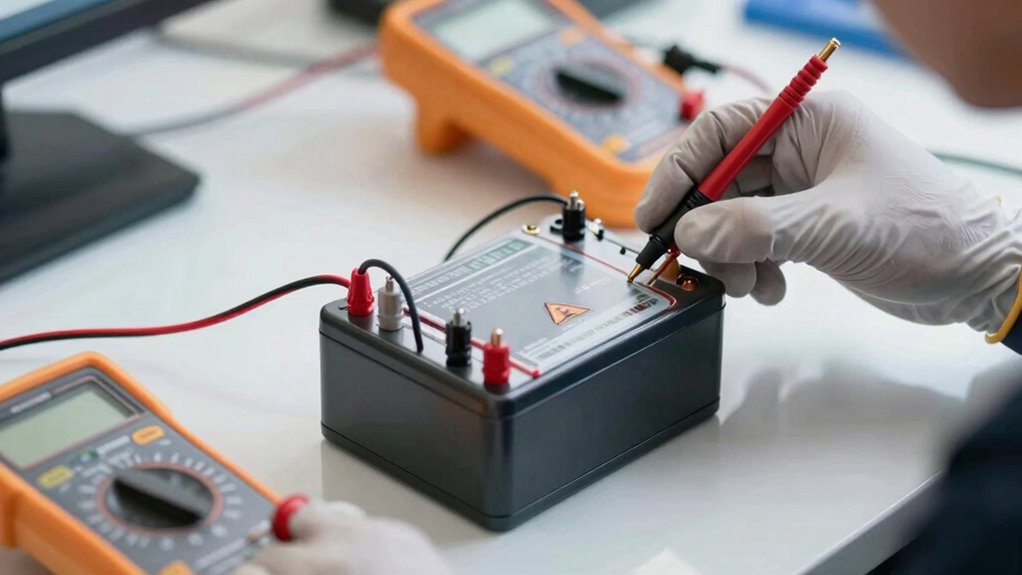
First, understanding your battery’s longevity is essential. Batteries don’t last forever; they gradually lose their ability to hold a charge over time. Regular inspections can catch diminishing performance early, saving you from unexpected failures. With simple inspection tools like a multimeter or a dedicated battery tester, you can easily check the voltage and overall health of your battery. These tools provide quick, accurate readings that tell you whether your battery is performing within safe limits or if it’s time for a replacement. Recognizing the early warning signs can make a significant difference in maintenance timing.
Regular battery checks with simple tools help prevent unexpected failures and extend battery life.
Establishing a routine inspection schedule is crucial. Every few months, or more frequently if your vehicle is in heavy use, take a few minutes to test your battery’s voltage. A healthy car battery usually reads around 12.6 volts or higher when the engine is off. If your readings start to dip below that, especially below 12.4 volts, it’s a sign that your battery might be nearing the end of its life or needs maintenance. Additionally, pay attention to physical signs like corrosion on the terminals, swelling, or leaks, which can also indicate that your battery is deteriorating.
Using inspection tools properly can help you identify issues early. For example, a multimeter allows you to check the voltage with precision, while a specific battery tester can measure cold cranking amps and overall capacity. These insights enable you to take action before your battery fails completely. You might find it’s just a matter of cleaning corrosion or tightening connections, or it could be time to replace the battery altogether. The goal is to catch problems early, rather than waiting until you’re stranded with a dead battery.
Furthermore, understanding the performance deterioration of batteries can help you better anticipate when a replacement might be needed, ultimately saving you time and money. In essence, making battery inspections a regular habit isn’t complicated, and it pays off in peace of mind. You avoid the inconvenience of unexpected failures and prolong your battery’s lifespan. With a few simple tools and an attentive approach, you create a proactive habit that keeps your vehicle running smoothly and prevents those dreaded bad surprises on the road.
As an affiliate, we earn on qualifying purchases.
Frequently Asked Questions
How Often Should I Inspect My Car Battery?
You should inspect your car battery every three to six months to guarantee peak battery lifespan. During inspections, check for corrosion, loose connections, and fluid levels if applicable. Keep an eye on charging methods and signs of weak performance, like slow starting. Regular inspections help catch issues early, preventing unexpected breakdowns and extending your battery’s life. Consistent checks keep your vehicle reliable and your trips worry-free.
What Tools Do I Need for a Proper Battery Check?
Think of yourself as a battery detective. You’ll need a multimeter to check voltage levels, gloves for safety, and a wire brush for cleaning terminals. These tools assist in battery maintenance and guarantee your charging procedures are on point. Regular inspections with them help spot issues early, much like a detective catching clues before a crime. Stay vigilant, and your battery will serve you reliably, avoiding unexpected breakdowns.
Can I Inspect My Battery Without Technical Knowledge?
Yes, you can perform DIY inspections without technical knowledge. Focus on simple battery maintenance tasks like checking for corrosion, ensuring terminals are tight, and looking for visible damage. Use basic tools like a flashlight and a clean cloth. Regularly inspecting your battery helps catch issues early, preventing surprises. Remember, consistent DIY inspections keep your battery in good shape, extending its lifespan and ensuring reliable vehicle performance.
What Signs Indicate My Battery Needs Replacement?
When your battery shows signs of fatigue, like corrosion around the terminals or your car struggles to start, it’s time to contemplate a replacement. If you notice dimming headlights or erratic alternator performance, these subtle hints suggest your battery is nearing the end of its life. Don’t ignore these signs—they’re gentle reminders that your vehicle needs a fresh, reliable power source to keep running smoothly.
Is It Safe to Check My Battery Myself?
Yes, it’s safe to check your battery yourself if you follow proper safety precautions. During battery maintenance, wear gloves and goggles to protect against acid splashes, and verify the vehicle is off. Check for corrosion, loose connections, or leaks carefully. Avoid touching the terminals with metal tools directly. If you’re unsure or uncomfortable, it’s best to have a professional handle the inspection. Safety always comes first in battery maintenance.
As an affiliate, we earn on qualifying purchases.
Conclusion
Make battery inspections your trusty lighthouse, guiding you safely through the stormy seas of unexpected breakdowns. By checking your battery regularly, you’re steering clear of rough waters and steering into smooth sailing. Think of it as planting a seed that grows into a fortress, protecting your journey from sudden surprises. Embrace this habit, and let it be the steady heartbeat of your vehicle’s health—keeping you powered up and worry-free, mile after mile.
automotive battery corrosion cleaner
As an affiliate, we earn on qualifying purchases.
As an affiliate, we earn on qualifying purchases.
As an affiliate, we earn on qualifying purchases.
Halloween Picks
halloween
As an affiliate, we earn on qualifying purchases.