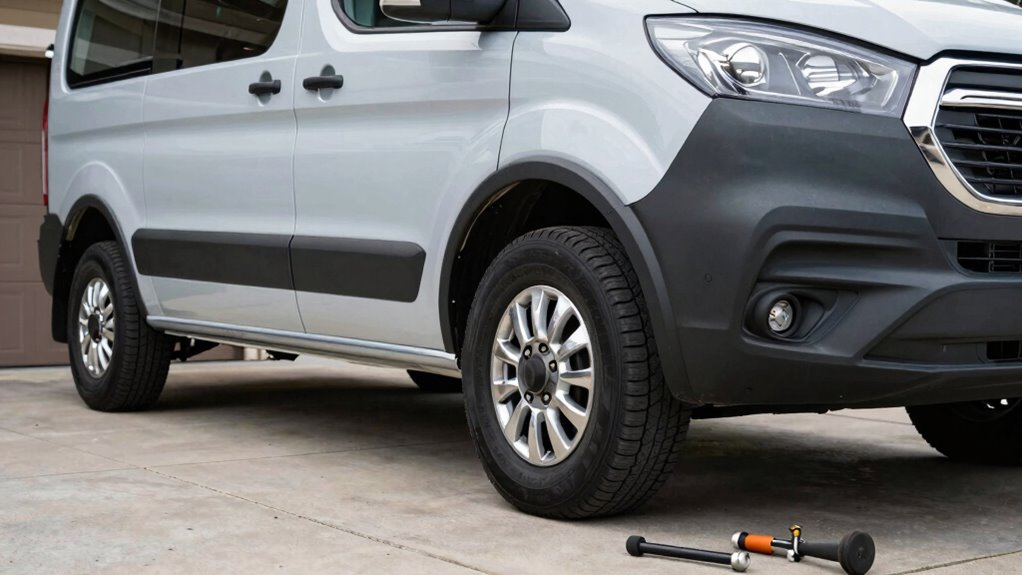

Many van owners delay tire rotation, often skipping the recommended interval of every 5,000 to 7,000 miles. This habit leads to uneven tire wear, reducing lifespan and hurting vehicle handling and safety. Neglecting regular rotation can also cause increased fuel use and higher repair costs over time. Staying consistent with tire checks and rotations helps prevent these issues. Keep going, and you’ll discover how proper maintenance can save you both money and trouble.

Get business pricing on garage and car supplies
- Business-only prices and quantity discounts
- Tax-exempt purchasing
- Multiple users, one account, clear invoices
Key Takeaways
- Many van owners delay regular tire rotations beyond the recommended 5,000-7,000 miles, risking uneven tire wear.
- Neglecting to rotate tires promptly can lead to premature tire replacement and increased costs.
- Van owners often postpone rotation during busy schedules, ignoring the safety and efficiency benefits.
- Delaying tire rotation can cause handling issues and reduce fuel efficiency over time.
- Many overlook inspecting for damage or alignment issues during skipped rotations, risking vehicle safety.

Have you established a regular tire rotation habit for your van? If not, you’re missing out on a simple yet essential step that can extend your tires’ lifespan and improve overall safety. Many van owners delay this task, thinking it’s unnecessary or that it can wait indefinitely. However, neglecting to rotate your tires regularly can lead to uneven wear, which not only shortens your tires’ longevity but also affects your vehicle’s handling and fuel efficiency. When you rotate your tires, you help guarantee even wear across all four, maintaining ideal tire pressure and performance. Proper tire pressure is critical because under-inflated or over-inflated tires can cause uneven tread wear, increased rolling resistance, and even tire blowouts. Regular tire rotation allows you to catch these issues early, preventing sudden failures that could compromise your safety. Additionally, consistent tire rotation contributes to maintaining tire pressure, which is vital for optimal vehicle operation. Beyond tire pressure, neglecting tire rotation can indirectly impact brake maintenance. When tires wear unevenly, your braking system has to work harder to stop the vehicle, especially if one tire is considerably worn down compared to the others. This increased strain can accelerate brake pad and rotor wear, leading to more frequent brake repairs and higher maintenance costs. By sticking to a consistent tire rotation schedule, you minimize uneven tire wear and reduce the undue stress on your braking system. This interconnected maintenance approach not only saves you money over time but also ensures your van performs reliably on the road. Many van owners overlook the importance of timing when it comes to tire rotation. Most manufacturers recommend rotating tires every 5,000 to 7,000 miles, but this can vary based on driving habits and road conditions. You should also check your tire pressure monthly and before long trips, adjusting as needed to keep the tires properly inflated. When you rotate your tires, it’s also a good time to inspect for other issues like sidewall damage, embedded debris, or uneven tread wear patterns that could be signs of alignment problems. Regular monitoring vehicle components can help you maintain optimal performance and safety on all your journeys. Incorporating scheduled maintenance can further ensure that your tires and other critical parts remain in top condition. Staying proactive with tire care not only extends your tires’ lifespan but also promotes greener driving by reducing waste and conserving resources. Regularly performing these checks can also help you identify early warning signs of more serious issues, saving you money and preventing breakdowns.
Products Worth Considering

Innova 5610 OBD2 Bidirectional Scan Tool

Chemical Guys 14-Piece Arsenal Builder Car Wash Kit with Foam Blaster

DEWALT 20V MAX Drill and Impact Driver Combo Kit (DCK240C2)
As an affiliate, we earn on qualifying purchases.
Frequently Asked Questions
How Often Should Van Tires Be Rotated for Optimal Performance?
You should rotate your van tires every 5,000 to 7,500 miles for maximum performance. Regular tire balancing guarantees even wear, while checking tread depth helps you monitor tire health. Don’t delay rotation, as uneven wear can compromise safety and reduce fuel efficiency. By staying consistent with these practices, you’ll extend your tires’ lifespan and maintain smooth handling on the road.
Can Uneven Tire Wear Affect Van Safety and Handling?
Uneven tire wear can considerably affect your van’s safety and handling by disrupting tire balance and reducing road grip. When tires are unevenly worn, you may experience poor steering response, vibrations, and decreased traction, especially in wet conditions. Regularly rotating your tires helps maintain even wear, preserving proper tire balance and ensuring optimum road grip, which ultimately keeps you safer and improves your van’s overall performance.
What Signs Indicate It’s Time for a Tire Rotation?
You should consider a tire rotation when you notice uneven tread depth or a drop in tire pressure across your van’s tires. If the tread looks more worn on one side or the tires are losing pressure faster than usual, it’s time to rotate them. Regularly check your tire pressure and tread depth to catch these signs early, helping you maintain safe handling and extend your tires’ lifespan.
Does Tire Rotation Improve Fuel Efficiency in Vans?
Did you know that proper tire maintenance can boost your van’s fuel efficiency by up to 3%? Tire rotation, combined with regular tire balancing and wheel alignment, helps guarantee even wear and peak performance. When you keep these in check, your tires roll smoothly, reducing drag and improving fuel economy. So, yes, tire rotation directly contributes to better fuel efficiency, saving you money on fuel and extending your tires’ lifespan.
Are There Specific Rotation Patterns for Different Van Models?
Yes, there are specific rotation patterns for different van models. Your van’s model specifications influence the recommended rotation pattern variations, ensuring even tire wear and ideal performance. Always check your owner’s manual or consult a mechanic to follow the correct pattern. Using the right rotation method helps extend tire life and maintain safety, especially since van models vary in weight distribution and axle configurations that impact rotation needs.
Conclusion
Don’t let your van’s tires become rebels refusing to rotate—they’re the unsung heroes of your daily drive. Regular tire rotation keeps them balanced and ready to roll, preventing uneven wear that can lead to costly repairs. Think of it as giving your van a wellness check-up; it’s a small habit that pays big dividends. Stay proactive, rotate those tires, and keep your journey smooth as a well-oiled machine—your van will thank you with every mile.