
When you get emissions inspections, your vehicle’s OBD readiness monitors need to be “ready” to pass. These monitors check critical systems like sensors and the catalytic converter to ensure they work properly. If they haven’t completed their self-checks, your vehicle might fail the test. To fix this, you need to drive enough to complete diagnostics and address any issues. Keep exploring to find out how to get your vehicle prepared for inspection smoothly.

Get business pricing on garage and car supplies
- Business-only prices and quantity discounts
- Tax-exempt purchasing
- Multiple users, one account, clear invoices
Key Takeaways
- Emissions inspections verify if a vehicle’s emissions control systems meet environmental standards using OBD data.
- OBD readiness monitors must complete self-checks after specific driving patterns to qualify for emissions testing.
- An “unready” OBD monitor indicates unresolved issues, which can cause emissions test failure.
- Common causes of unready monitors include faulty sensors, loose gas caps, or incomplete drive cycles.
- Proper maintenance and completing required driving cycles help set OBD monitors to “ready” for inspection.
Understanding emissions inspections and OBD monitors is crucial for guaranteeing your vehicle meets environmental standards and runs efficiently. When you take your car for an emissions test, you’re checking that it produces pollutants within the limits set by your state or local regulations. These inspections help prevent excessive emissions from harming the environment and ensure your vehicle isn’t contributing to air quality problems.
Emissions inspections ensure your vehicle meets environmental standards and runs efficiently.
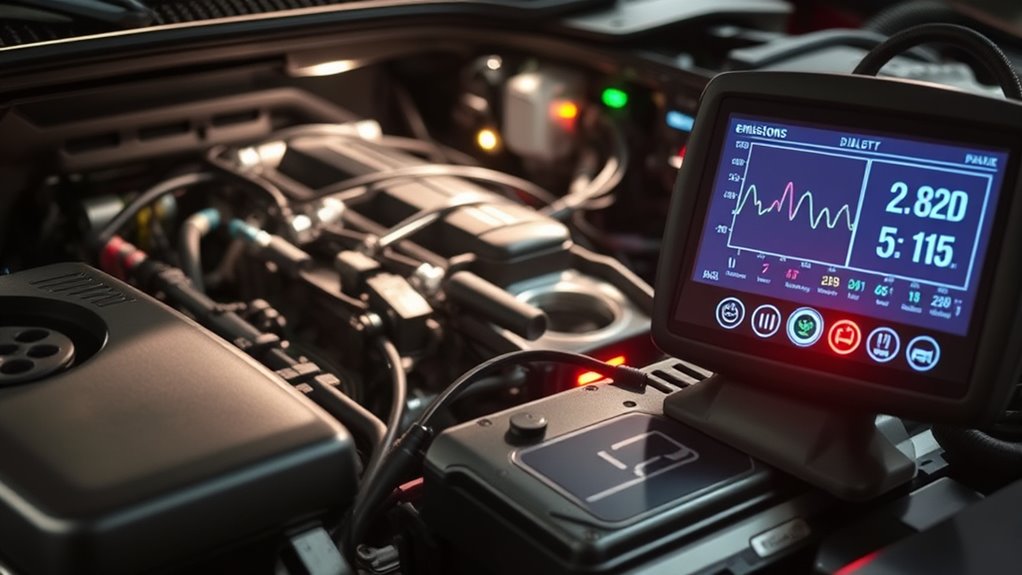
The process often involves connecting a scanner to your car’s onboard diagnostic system, which reads data from various sensors that monitor engine performance and emissions control devices. If your vehicle passes, it indicates that your emissions control systems are functioning properly. If it doesn’t, you might need repairs or further diagnostics before your vehicle can be registered or licensed again.
Your vehicle’s onboard diagnostic (OBD) system plays a crucial role in this process. It constantly monitors critical components like the catalytic converter, oxygen sensors, and fuel system to ensure everything operates within the designated parameters. OBD monitors are designed to detect malfunctions that could lead to increased emissions or engine problems. Additionally, these systems help ensure your vehicle complies with reliable backup power standards, which is vital for environmental safety.
When issues arise, the system triggers a warning light on your dashboard—commonly the check engine light—alerting you to potential problems. These monitors also keep track of whether your vehicle’s emission control systems are ready for inspection, a concept known as OBD readiness. Before an emissions test, you need to ensure these monitors are set to “ready,” meaning the system has completed its self-checks after your last drive cycle.
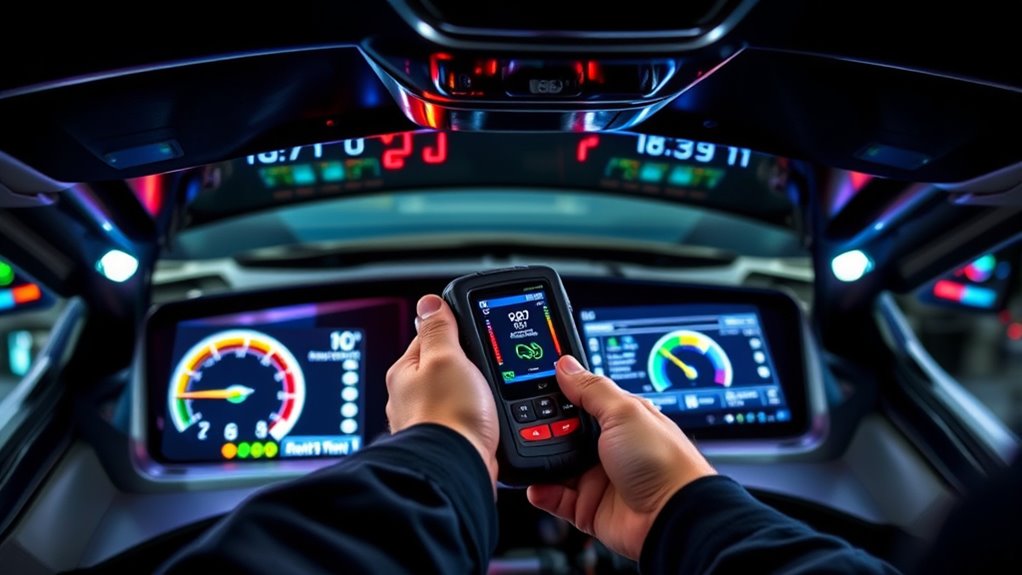
You can verify your vehicle’s OBD readiness status with a scanner or by visiting a mechanic. If the monitors aren’t ready, the test may be invalid, and you might have to drive your vehicle through specific patterns to complete the self-checks. This process involves driving at different speeds and conditions to allow the system to run its diagnostics.
If your vehicle has unresolved issues, the monitors won’t set to “ready,” and the emissions test could fail. In that case, you’ll need to address the underlying problems—like a faulty oxygen sensor or a loose gas cap—before attempting the test again. Keeping your vehicle’s emissions systems well-maintained not only helps you pass inspections but also improves fuel efficiency, reduces pollution, and extends engine life.
Regularly checking your OBD system and addressing any issues promptly ensures your vehicle remains compliant and runs smoothly.
Frequently Asked Questions
How Often Should I Get My Vehicle Inspected for Emissions?
You should get your vehicle inspected for emissions once a year or as required by your state’s regulations. Check your local DMV or transportation agency’s guidelines to verify the specific schedule, as it can vary depending on your location and vehicle age.
Regular inspections help ensure your vehicle runs efficiently, reduces harmful emissions, and keeps you compliant with legal requirements. Staying on top of this prevents fines and vehicle issues down the line.
What Causes OBD Readiness Monitors to Stay Incomplete?
Your OBD readiness monitors stay incomplete because the vehicle hasn’t completed certain drive cycles needed for testing. This can happen if you haven’t driven enough, recently cleared the codes, or if there’s a malfunction in the emissions system.
Sometimes, short trips or irregular driving patterns prevent monitors from completing. To fix this, drive your vehicle through the recommended drive cycles, and verify all systems are functioning correctly.
Can I Pass Emissions Tests With a Malfunctioning OBD System?
You typically can’t pass emissions tests with a malfunctioning OBD system because the system needs to be fully functional to verify your vehicle’s emissions status.
If the OBD system isn’t ready or shows a malfunction, the test will likely fail.
To increase your chances, get your vehicle inspected and repaired first, ensuring all monitors are complete and the system is working correctly before heading to the inspection station.
Are There Any Legal Penalties for Emissions Test Failures?
Yes, you can face legal penalties if your vehicle fails emissions tests. These penalties may include fines, vehicle registration delays, or even suspension of your driver’s license until repairs are made.
Some states require emissions tests for renewal, so failing could temporarily prevent you from legally driving your vehicle. To avoid penalties, it’s best to guarantee your vehicle passes inspections or promptly address any issues causing failures.
How Long Does It Take for OBD Monitors to Reset After Repairs?
After repairs, OBD monitors typically reset within a few days to a week, but it can take longer depending on your driving habits.
Imagine the moment when your vehicle finally clears its readiness status—it’s a subtle change, almost like a secret handshake with your car.
To speed up the process, make certain you drive consistently and complete the necessary driving cycles.
Patience is key; soon, your vehicle will be ready for inspection.
Conclusion
Now that you understand how emissions inspections and OBD monitors work, think about what’s really at stake. Your vehicle’s health, your safety, and the environment all depend on these systems functioning properly. But what if a hidden issue lurks beneath the surface, waiting to surprise you? Stay vigilant, keep your vehicle in check, and remember—ignoring the signs could lead to unexpected consequences when you least expect them. The choice is yours.
Halloween Picks
halloween
As an affiliate, we earn on qualifying purchases.