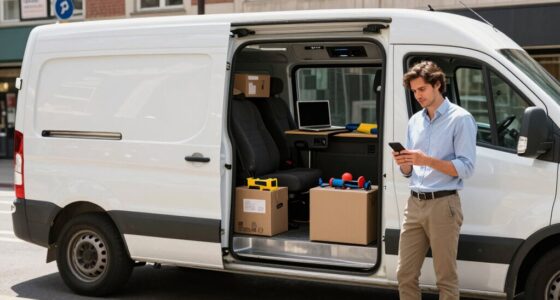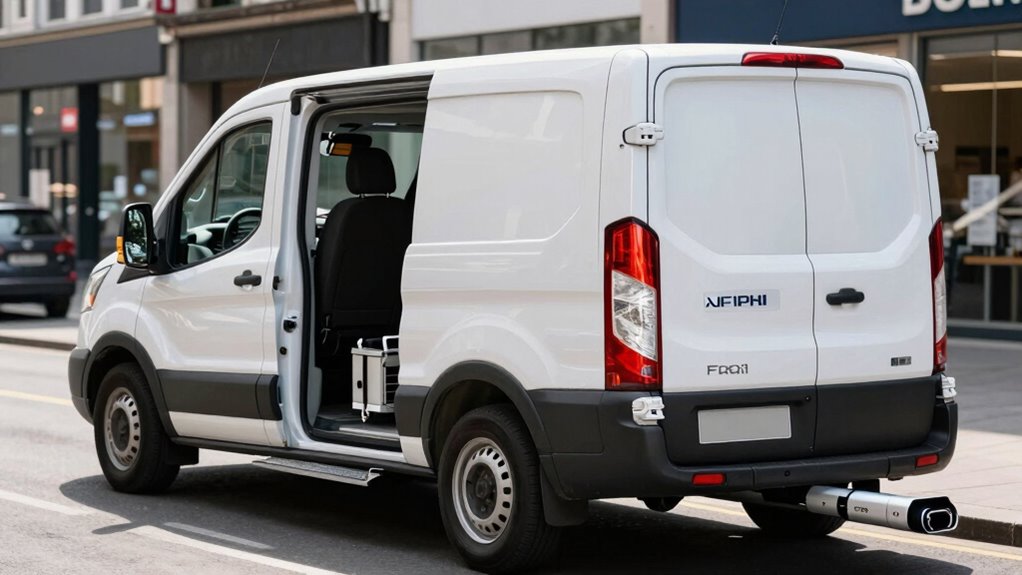

When towing with your Ford Transit, your license requirements depend on your vehicle’s weight class and regional regulations. If your trailer exceeds certain weight limits—often around 10,000 pounds—you might need a commercial driver’s license (CDL) or special permits. Smaller trailers usually require only a standard license. Towing rules can vary by region, so understanding your local laws is essential. Keep exploring to learn more about how these factors affect your towing capabilities and licenses.
Key Takeaways
- Ford Transit’s towing capacity depends on its weight classification and configuration, affecting license and permit requirements.
- Towing above certain weight thresholds (e.g., 10,000 lbs) may require a commercial driver’s license (CDL).
- Regional towing regulations vary, with some areas requiring permits or special licensing for heavier loads.
- Proper vehicle maintenance and adherence to manufacturer specifications are essential for legal and safe towing.
- Towing accessories like durable hitches and safety equipment help ensure compliance and safety during towing operations.

If you’re contemplating towing with a Ford Transit, you’re making a smart choice thanks to its impressive payload capacity and robust engine options. Before you hit the road, though, it’s vital to understand how vehicle weight classifications and tow truck licensing requirements play a role in safe and legal towing. Vehicle weight classifications categorize vehicles based on their weight, typically separating light-duty, medium-duty, and heavy-duty vehicles. The Ford Transit generally falls into the light or medium-duty class, depending on the specific model and configuration. Knowing where your Transit fits helps determine the maximum trailer weight you can tow legally and safely.
Ford Transit models typically fall into light or medium-duty categories, influencing their towing capacity and legal limits.
Towing regulations are often closely linked to these vehicle weight classifications. For instance, lighter vehicles might be restricted to trailers under a certain weight to prevent damage or unsafe handling. Conversely, medium-duty models can usually tow heavier loads but still have limits that shouldn’t be exceeded. To stay compliant, you should always check the manufacturer’s specifications for your particular Transit model. This includes the Gross Vehicle Weight Rating (GVWR) and Gross Combined Weight Rating (GCWR), which indicate the maximum combined weight of your vehicle and trailer. Staying within these limits ensures your vehicle operates safely and legally. Additionally, many regions have specific guidelines for towing capacity that can influence your choice of trailer or load.
Moreover, understanding the vehicle’s weight classification can help you select appropriate towing equipment and safety accessories, ensuring optimal performance and compliance. Another vital aspect to contemplate is tow truck licensing requirements, which vary by state or region. If you’re planning to tow commercially or professionally, you might need specialized licenses or certifications. Many jurisdictions require tow truck operators to hold a commercial driver’s license (CDL) if they’re towing above certain weight thresholds—often around 10,000 pounds or more. Even if you’re towing for personal use, some regions may have specific permits or registration requirements for heavier trailers. Failing to adhere to these licensing rules can lead to fines, penalties, or even insurance issues if an accident occurs.
Understanding the intersection of vehicle weight classifications and licensing rules helps you tow responsibly. It’s not just about legality; it’s also about safety and protecting your investment. Always verify your vehicle’s weight ratings and check local regulations before towing. Properly evaluating your Ford Transit’s capabilities and complying with licensing requirements ensures you can tow confidently without risking damage, legal trouble, or unsafe conditions. Additionally, considering the use of Suprem fabric in your vehicle’s upholstery or accessories could contribute to increased durability and comfort during your towing adventures. Being aware of vehicle weight limits can also help you avoid overloading and potential mechanical issues, which is crucial for long-term vehicle health.
Furthermore, maintaining accurate records of your towing capacity and adhering to regulatory guidelines will help you stay compliant and prepared for inspections or audits. In the end, knowing these details gives you peace of mind, allowing you to focus on your journey rather than worrying about compliance issues.
Ford Transit towing hitch
As an affiliate, we earn on qualifying purchases.
As an affiliate, we earn on qualifying purchases.
Frequently Asked Questions
Can I Tow a Trailer Overnight With a Transit?
Yes, you can tow a trailer overnight with a Transit if you meet the trailer weight and license requirements. Make sure your trailer’s weight doesn’t surpass the limits specified for your license class. If it does, you’ll need the appropriate license to tow overnight legally. Always double-check local regulations, and guarantee your vehicle and trailer are properly equipped and insured for safe towing.
What Safety Equipment Is Required for Towing With a Transit?
You need to cover all your bases when towing with a Transit. Safety equipment requirements include proper lighting, reflective triangles, and a working brake controller. Make certain your trailer has functional brake lights, turn signals, and reflectors. Towing safety regulations emphasize secure load distribution and regular inspection of safety gear. By following these guidelines, you’ll stay on the right side of the law and ensure a safe journey—don’t put the cart before the horse.
Are There Specific Routes Restricted for Towing With a Transit?
You should check for any special route restrictions or transit towing zones before towing with your transit. Some routes, especially in urban areas or near bridges and tunnels, may restrict or prohibit towing vehicles. Always review local traffic regulations and signage to make certain you’re compliant. If you’re unsure, contact local authorities or transportation departments. Staying informed helps you avoid fines and ensures a safe towing experience.
How Does Towing Affect My Transit’s Fuel Economy?
Towing turns your Transit into a modern-day Hercules, impacting your fuel efficiency like a heavy load on Atlas’s shoulders. As you tow, expect your fuel economy to decrease due to increased towing weight, which makes the engine work harder. The heavier the load, the more fuel you’ll burn. Keep an eye on your fuel consumption, and plan for that extra fuel to keep your journey smooth and efficient.
Is Additional Insurance Needed When Towing With a Transit?
Yes, you may need additional towing insurance with your Transit. It’s essential to verify your current coverage requirements because standard auto insurance might not fully cover towing activities. Towing insurance can help protect you from potential liabilities and damages. Always verify with your insurer whether your existing policy includes towing coverage or if you should add a specific towing insurance policy to ensure you’re adequately protected.
heavy-duty trailer brake controller
As an affiliate, we earn on qualifying purchases.
As an affiliate, we earn on qualifying purchases.
Conclusion
Towing with a Transit combines power with responsibility. You hold the weight of safety and legality in your hands, balancing technical rules with everyday needs. While the regulations may seem strict, they’re designed to protect you and others on the road. Embrace the knowledge, stay compliant, and enjoy the freedom of towing. Because with the right license and understanding, you’re not just moving trailers—you’re confidently steering every mile ahead.
trailer safety chains for Ford Transit
As an affiliate, we earn on qualifying purchases.
As an affiliate, we earn on qualifying purchases.
commercial towing license guide
As an affiliate, we earn on qualifying purchases.
As an affiliate, we earn on qualifying purchases.