In the US, you must stop at weigh stations if your van exceeds 10,000 pounds gross weight, though specific rules can vary by state. Be sure to know your vehicle’s weight and cargo limits beforehand, as overloading risks fines, impoundment, and safety hazards. Weigh station signals indicate when to stop, and scales check your compliance. Staying within legal limits is vital, and understanding the rules will help you avoid delays and penalties—learn more below.
Key Takeaways
- Most US states require commercial vans over 10,000 lbs gross weight to stop at weigh stations.
- Signage indicates when vans must stop; failure can lead to fines or vehicle impoundment.
- Knowing your van’s weight and cargo load helps ensure compliance with state-specific weight limits.
- Weigh stations use large scales, and overloading can result in penalties and safety risks.
- Pre-clearance systems exist but do not replace mandatory weigh station inspections.
If you’re driving a van, understanding weigh station and scale rules is vital to stay compliant on the road. These regulations help promote safety, prevent fines, and keep traffic flowing smoothly. Before hitting the highway, it’s essential to know when you’ll encounter weigh stations and what rules apply to your vehicle.
In the United States, most states require commercial vehicles, including vans hauling cargo, to stop at weigh stations if their weight exceeds certain thresholds. Typically, if your van’s gross weight exceeds 10,000 pounds, you’ll need to stop at these stations. Some states have different weight limits or require exemptions for certain types of cargo, so it’s wise to check the specific rules of each state you plan to drive through.
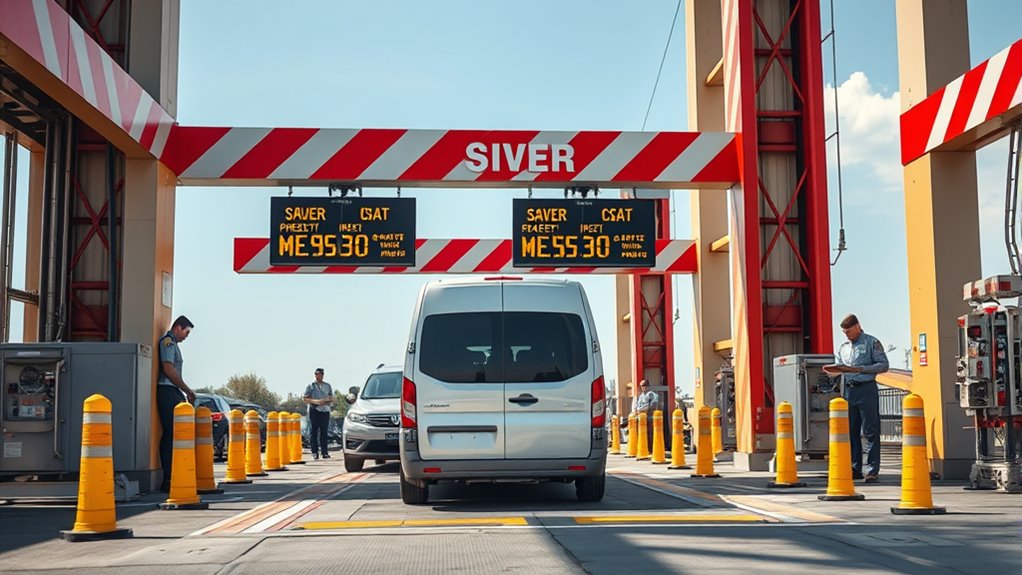
When approaching a weigh station, look for signage indicating whether you need to stop. Many stations are staffed with officials who’ll weigh your vehicle and cargo using large scales, either on the ground or integrated into the roadway. Some scales are portable or mobile, especially in areas where traffic is lighter or for special inspections.
If your van is over the weight limit, you must pull onto the scale and have your vehicle inspected. Failing to do so can lead to hefty fines, vehicle impoundment, or even being shut down from further travel until your load is compliant.
Knowing your vehicle’s weight is vital before you start your trip. You should weigh your van and cargo beforehand using a certified scale, or keep detailed records of your vehicle’s tare weight and the weight of your cargo. This way, you can determine if you’re approaching or exceeding the legal limits.
Overloading not only risks fines but also endangers you and other drivers by impairing vehicle handling, braking, and stability. If you find yourself heavily loaded, consider redistributing cargo or reducing weight to stay within legal limits.
Some states offer pre-clearance programs or allow for weigh-in-motion systems, which let you get an idea of your vehicle’s weight without stopping. However, these aren’t substitutes for actual weigh station inspections. Always comply with posted signs, and be prepared to stop if required.
Additionally, being aware of scale rules helps ensure your vehicle remains compliant and prevents unexpected stops or penalties during your trip.
Frequently Asked Questions
Are Weigh Station Rules the Same in All US States?
No, weigh station rules vary from state to state. You need to check each state’s specific regulations to guarantee compliance.
Some states have strict rules for vans, including weight limits and inspection procedures, while others are more lenient.
Always plan ahead before crossing state lines to avoid fines or delays. You’re responsible for understanding and following these rules to keep your trip smooth and legal.
Can I Bypass a Weigh Station if I Have a Commercial License?
Did you know that over 80% of commercial vehicles are inspected at weigh stations?
You can often bypass a weigh station with a valid commercial license, but rules vary by state. Always carry your license and relevant permits, and check local regulations before traveling.
Some states have reciprocity agreements, making bypass options easier.
Stay informed, as non-compliance can lead to hefty fines or vehicle inspections.
What Are the Penalties for Overweight Vans at Scale Stations?
If you’re overweight at a scale station, you face fines that can range from hundreds to thousands of dollars depending on how much you’re over the limit.
You might also be required to offload excess cargo, which causes delays and additional costs.
Repeated violations can lead to license suspension or even legal action.
To avoid penalties, always guarantee your van’s weight complies with state and federal regulations before hitting the road.
Do Electric Vans Have Different Weigh Station Requirements?
Electric vans generally follow the same weigh station requirements as traditional vans. You need to verify they don’t exceed weight limits, as overloading can lead to penalties or delays.
Some states might have specific rules for electric vehicles, especially regarding battery weight or charging equipment. Always check local regulations before your trip, and make sure your vehicle’s weight is accurately recorded to avoid fines or inspection issues.
How Often Should I Check My Van’s Weight Before Trips?
You should check your van’s weight before each trip, especially if you’ve added or removed cargo. Regularly weighing your van helps make certain you stay within legal limits and avoid fines or safety issues.
Use a portable scale or visit a weigh station if you’re unsure. By maintaining accurate weight checks, you keep your vehicle safe, compliant, and prevent damage caused by overloading.
It’s a simple, proactive step for smooth travels.
Conclusion
So, next time you think about skipping a weigh station, remember—you might just save time, but the scales are always watching. It’s ironic how those tiny checkpoints keep your giant van in check, yet many drivers still try to dodge them. Maybe it’s time to embrace the rules, or face the unexpected weigh-in. After all, avoiding scale rules might seem easier, until you realize some things are better measured than ignored.