
As a van owner, you can take advantage of several tax breaks, starting with Section 179 deductions that let you write off the full cost of qualifying vehicles in one year, which is great for fleet upgrades or expansions. You may also qualify for electric vehicle (EV) tax credits, reducing the higher upfront costs of eco-friendly vans. Plus, owning a fleet can give you access to insurance discounts and make fleet management more affordable. If you’re interested, there’s plenty more to explore to maximize your savings.
Key Takeaways
- Section 179 allows full immediate deduction of qualifying vans used for business in the purchase year.
- Electric vans may qualify for federal and state EV tax credits to offset higher upfront costs.
- Fleet ownership enables bulk insurance discounts, reducing overall vehicle operating expenses.
- Staying informed on vehicle incentives maximizes financial benefits and supports sustainable fleet transitions.
- Proper vehicle maintenance and safety features can qualify vans for additional insurance discounts.
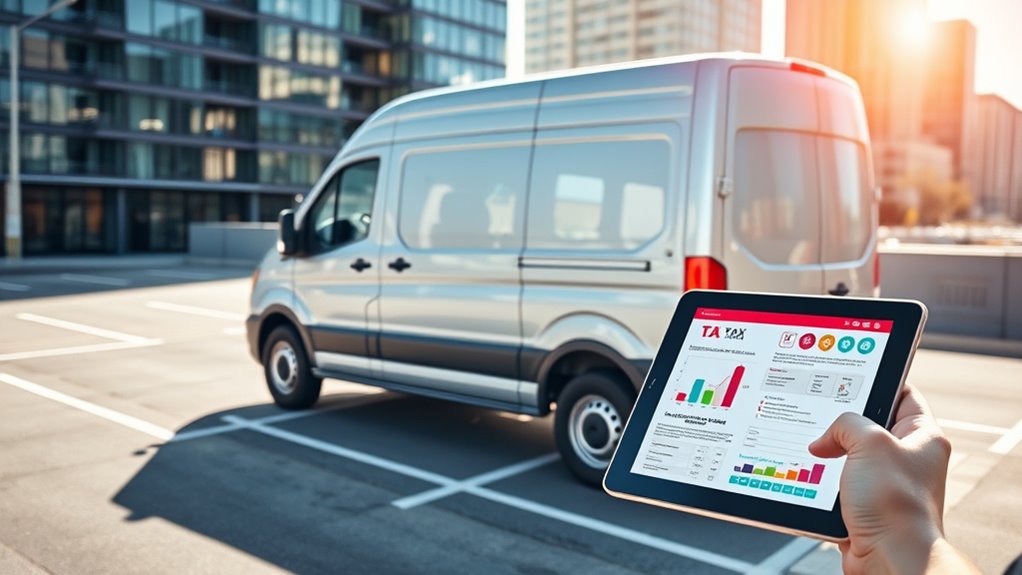
If you own a van, you might be eligible for tax breaks that can help reduce your overall tax bill. One of the most significant advantages is leveraging Section 179 deductions, which allow you to write off the full cost of qualifying vehicles in the year you purchase them. This is especially useful if your van is used for business purposes, as it can lead to substantial savings upfront. When managing a fleet of vehicles, incorporating tax strategies like Section 179 can make a big difference, helping you reinvest those savings into expanding or maintaining your business. Additionally, owning a commercial van often means you can take advantage of fleet management benefits, which can include bulk insurance discounts. These discounts lower your insurance costs per vehicle, reducing your operating expenses and improving your bottom line.
Beyond immediate deductions, if your van is an electric vehicle (EV), you might qualify for federal and state EV tax credits. These credits can substantially offset the higher initial purchase price of an electric van, making it more financially feasible. Plus, electric vans contribute to your company’s sustainability efforts, which can be a selling point for clients and partners. Many states also offer additional incentives for electric vehicle owners, further enhancing the financial appeal. Transitioning to EVs for your fleet not only taps into these tax benefits but also aligns with growing environmental regulations and consumer preferences. Staying informed about vehicle technology advancements can help you maximize your investment in modern vans and related equipment. Researching electric vehicle incentives is also crucial to ensure you’re taking full advantage of available programs. Exploring sustainable fleet options can further support your eco-friendly initiatives and potential tax benefits. Moreover, keeping up with industry regulations can ensure your fleet remains compliant while optimizing financial incentives.
Insurance discounts are another perk that can help you save money on your van ownership costs. Commercial insurers often provide discounts for fleet vehicles that are well-maintained and have safety features, which many newer vans include. You should regularly review your insurance policies to guarantee you’re getting the best rates available, especially if you’re insuring multiple vehicles. Combining your insurance policies or bundling them with other business coverage can maximize discounts, providing ongoing savings that add up over time.
Frequently Asked Questions
Can Personal Van Use Qualify for Tax Deductions?
You can qualify for tax deductions if you use your personal van for business purposes. Keep in mind, only the business-related portion of expenses like van insurance and vehicle maintenance is deductible. Track your mileage and expenses carefully, and consider using the IRS standard mileage rate or actual costs. This way, you maximize your deductions while ensuring you’re compliant with tax laws.
Are There Specific Van Models Eligible for Tax Credits?
Like a key opening a door, certain van models are eligible for tax credits, primarily electric or plug-in hybrid vans. To qualify, your van must meet specific model specifications, including weight and fuel type. Check whether your van’s make and model fall under manufacturer eligibility lists for EV credits. Staying informed guarantees your van’s eligibility, helping you maximize deductions while aligning with current tax policies.
How Do I Claim EV Tax Credits for My Van?
To claim EV tax credits for your van, first guarantee it meets electric vehicle eligibility criteria, including manufacturer and model specifications. Then, complete the tax credit application when filing your taxes, providing documentation like the vehicle’s purchase invoice and Manufacturer’s Certificate of Origin. Make sure you qualify for the credit, and consult IRS guidelines or a tax professional to maximize your benefits.
What Are the Deadlines for Claiming These Tax Breaks?
Think of your tax deadline as a ticking clock, urging you to act before time runs out. You need to file your taxes by the IRS deadline, usually April 15th, unless you get an extension. Keep in mind, documentation requirements like purchase receipts and EV registration info are essential. Missing these deadlines or documentation can cause your tax breaks to slip through your fingers like grains of sand.
Do Lease Vans Qualify for the Same Tax Benefits?
Lease vans generally don’t qualify for the same tax benefits as purchasing vans because your lease agreement means you’re not the owner. Instead, you usually deduct your lease payments, which can reduce your tax liability. However, the specific benefits depend on your lease terms and local tax laws. Always review your lease agreement and consult a tax professional to maximize your deductions and understand how it impacts your tax liability.
Conclusion
With these tax breaks, van ownership becomes more affordable and rewarding. Don’t let the complexity of deductions or credits hold you back—taking advantage of Section 179 and EV incentives can substantially lower your costs. Even if you’re unsure about the paperwork, the savings are worth it. Immerse yourself confidently, knowing you’re making smart financial choices while enjoying the benefits of your van. Start exploring these options today and see how much you could save!