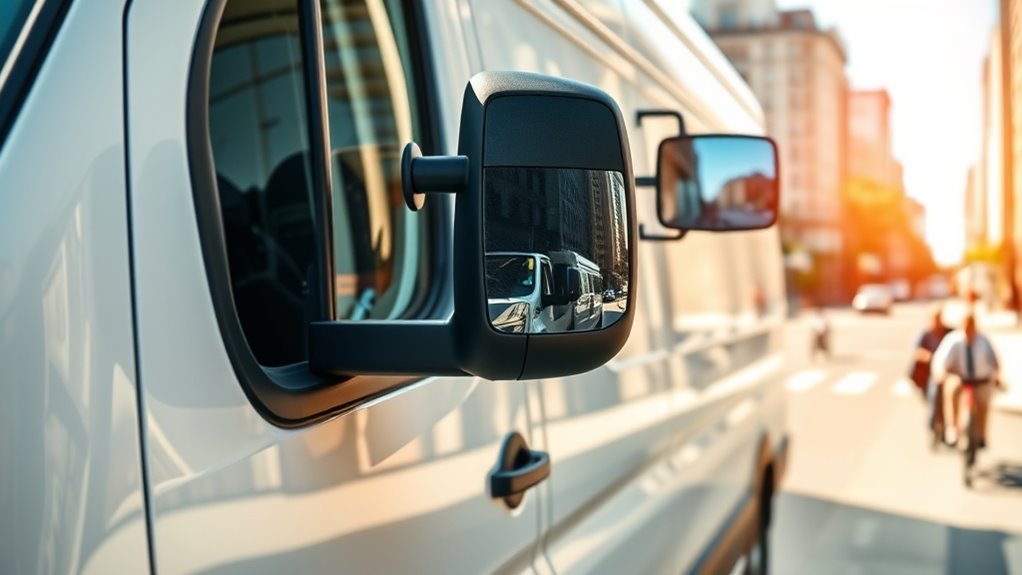

To stay safe in large vans, make sure your mirrors are properly adjusted to fully cover adjacent lanes and eliminate blind spots, using convex mirrors for a wider view. Always perform thorough visual checks before lane changes or turns, taking shoulder glances to catch anything mirrors might miss. Be especially cautious of blind spots near front and rear overhangs where pedestrians or cyclists can be hidden. For extra safety, consider electronic detection aids. Keep learning more tips for safer driving ahead.

Get garage and car supplies delivered free — and shop member deals
- Fast, free delivery on millions of items
- Access to Prime Big Deal Days deals on October 6–7
- Prime Video, Amazon Music and more included
Key Takeaways
- Properly adjust side and convex mirrors to maximize coverage and minimize blind spots around large vans.
- Always perform visual shoulder checks in addition to mirror use before lane changes or turns.
- Be aware of larger blind spots caused by van size, especially near front and rear overhangs.
- Use electronic aids like blind-spot detection systems or cameras to enhance visibility and alertness.
- Regularly maintain and update mirror settings and electronic safety features to ensure optimal blind-spot awareness.

Large vans pose unique challenges when it comes to visibility, especially in blind spots where other vehicles or pedestrians can easily go unnoticed. As a van driver, you need to be constantly aware that your mirrors alone mightn’t provide a complete picture of your surroundings. These vehicles are considerably bigger than standard cars, which means your blind spots are larger and more dangerous if not managed properly. It’s easy to assume that mirrors will do all the work, but the reality is that relying solely on them can lead to costly accidents or injuries.
To avoid this, you must develop a habit of thorough visual checks before changing lanes, turning, or merging. Incorporating proper mirror adjustment techniques and habits can significantly improve your awareness and safety.
Develop a routine of comprehensive visual checks before lane changes, turns, or merges for safer driving.
Your side mirrors, while essential, often have blind spots that aren’t visible from the driver’s seat. Adjust your mirrors correctly so you have the best possible view of adjacent lanes. Remember, the side mirrors should be angled outward enough to eliminate the blind spots next to the van, but not so much that they create new blind spots behind the vehicle. Incorporate the use of convex mirrors where possible — these expand your field of view and make it easier to spot smaller objects or pedestrians lurking in the blind spots.
Keep in mind, however, that convex mirrors can distort distances, so always double-check with a quick glance over your shoulder.
Your rearview mirror is equally critical, especially when backing up or monitoring traffic behind you. But don’t be lulled into complacency by the mirror alone. Use quick glances over your shoulder to confirm what you see in your mirrors, particularly when making lane changes or turning. This habit helps you catch anything that might’ve slipped into your blind spots.
Pedestrians, especially children or cyclists, can be difficult to see from your seat, so always check blind spots thoroughly before maneuvering. Remember, large vans have a bigger front and rear overhang, which can block your view of objects or people close to the front or back of the vehicle.
In addition, consider installing additional blind-spot detection systems or cameras if your van isn’t already equipped. These electronic aids can provide real-time alerts, greatly reducing the risk of oversight.
Ultimately, staying vigilant and proactive about your visibility isn’t just about following safety protocols — it’s about protecting yourself, your passengers, and everyone around you. Regularly adjusting your mirrors, using supplementary aids, and making visual checks a habit ensures you can navigate even the most complex traffic situations with confidence.
As an affiliate, we earn on qualifying purchases.
Frequently Asked Questions
How Often Should I Adjust My Mirrors for Optimal Blind-Spot Coverage?
You should adjust your mirrors every time you get into your van or notice your view is blocked. Make small tweaks until you see the lanes beside and behind you clearly, minimizing blind spots.
Regularly checking and readjusting ensures ideal coverage, especially before changing lanes or merging.
Staying proactive with mirror adjustments keeps you aware of your surroundings and helps prevent accidents, making your driving safer and more confident.
Are There Specific Mirror Types Recommended for Large Van Blind Spots?
For large van blind spots, consider convex mirrors and wide-angle mirrors. Convex mirrors expand your visual scope, helping you see more of your surroundings, while wide-angle mirrors provide a broader perspective of your blind spots.
You might also try stick-on or clip-on extensions to augment coverage. Regularly adjusting and maintaining these mirrors ensures clear, consistent coverage, preventing surprises and promoting safer driving.
How Can I Train New Drivers to Improve Blind-Spot Awareness?
You can train new drivers to improve blind-spot awareness by conducting hands-on exercises, such as quick lane changes and blind-spot checks before turning or merging.
Encourage them to use all mirrors effectively and turn their heads to physically check blind spots regularly.
Incorporate real-world scenarios and feedback sessions, emphasizing the importance of constant vigilance.
Reinforce good habits with consistent practice and positive reinforcement to build confidence and awareness.
What Are the Legal Requirements for Mirror Use on Large Vans?
You must verify your large van has the required mirrors, including side mirrors that provide clear views of both sides and the rear.
Federal and state laws often mandate inspection and maintenance of these mirrors to keep them in good condition.
You’re responsible for making sure the mirrors are properly adjusted before driving and that they’re free of obstructions, ensuring compliance and safety on the road.
Can Advanced Camera Systems Replace Traditional Mirrors Effectively?
Imagine a clear, wide-angle lens capturing every shadow and movement around your van. Advanced camera systems can effectively replace traditional mirrors, providing a broader, unobstructed view and eliminating blind spots.
You’ll see more with less effort, especially in tight spots or bad weather. While they enhance safety, always stay aware of system limitations and keep backups like traditional mirrors until technology is fully reliable and legal for your vehicle.
blind spot detection system for vans
As an affiliate, we earn on qualifying purchases.
As an affiliate, we earn on qualifying purchases.
Conclusion
By regularly checking your mirrors and being aware of your blind spots, you can substantially reduce the risk of accidents with your large van. Remember, your mirrors are your eyes on the road—are you truly maximizing their potential? Staying vigilant isn’t just about avoiding penalties; it’s about protecting yourself, your passengers, and everyone around you. So, next time you get behind the wheel, ask yourself: are you doing everything you can to see what’s around you?
As an affiliate, we earn on qualifying purchases.
As an affiliate, we earn on qualifying purchases.
Halloween Picks
halloween
As an affiliate, we earn on qualifying purchases.