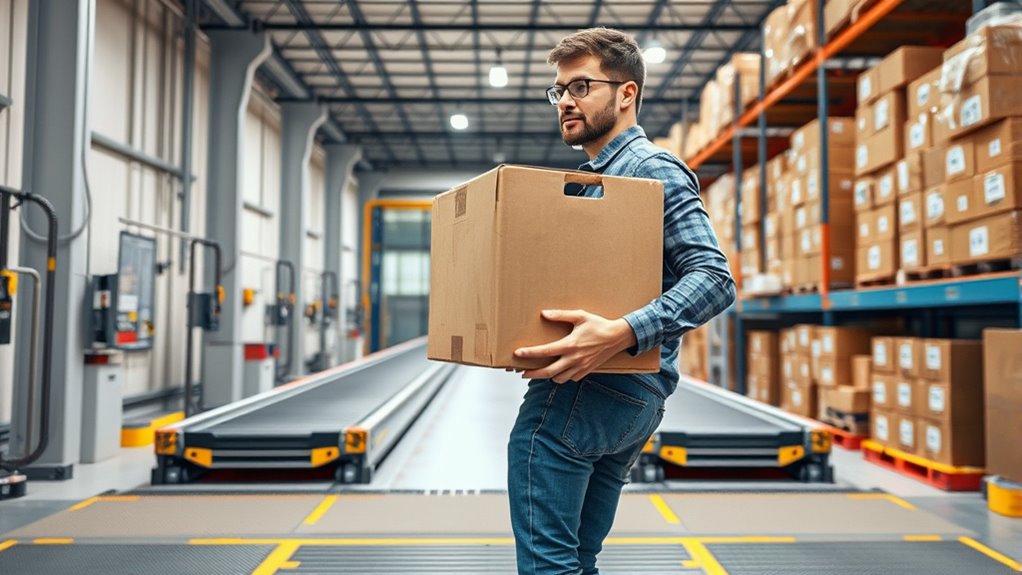

To load and unload safely, focus on proper ergonomics and body mechanics. Keep your back straight, bend at your hips and knees, and hold items close to your body to reduce strain. Use your legs for lifting and avoid twisting your torso. Employ mechanical aids when possible, keep pathways clear, and wear protective gear. Prioritizing these practices helps prevent injuries and long-term health issues—continue to explore how proper techniques can protect you on the job.
Key Takeaways
- Use proper lifting techniques: bend at hips and knees, keep back straight, and hold loads close to the body.
- Plan your workflow by keeping pathways clear and objects at waist level to reduce reaching and bending.
- Utilize mechanical aids like dollies or forklifts for heavy or awkward loads to prevent strain.
- Wear appropriate PPE such as gloves and steel-toed boots to protect against injuries during loading/unloading.
- Take regular breaks to stretch and assess loads, minimizing muscle fatigue and preventing musculoskeletal issues.
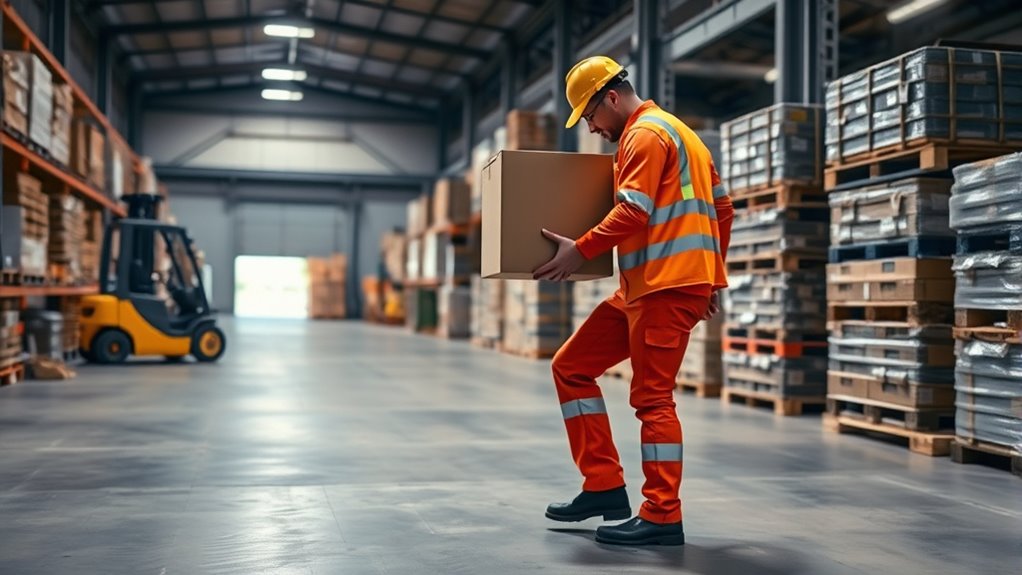
Loading and unloading cargo might seem straightforward, but it involves significant safety risks if not done properly. Each time you handle heavy or awkward items, you’re exposed to potential injuries that can affect your back, shoulders, or joints. To keep yourself safe, you need to pay close attention to ergonomics—the science of designing tasks to fit the human body—and injury prevention strategies.
When you focus on proper techniques, you reduce strain and prevent long-term musculoskeletal issues that could sideline you from work or cause chronic pain.
One of the most important aspects of ergonomic safety during loading and unloading is maintaining proper posture. You should keep your back straight, bend at your hips and knees rather than your waist, and hold items close to your body. This approach minimizes the strain on your spine and reduces the risk of back injuries.
Maintaining proper posture reduces strain and prevents back injuries during loading and unloading.
Always test the weight of an object before lifting; if it feels too heavy or awkward, ask for help or use mechanical aids like dollies or forklifts. Rushing or trying to lift alone can lead to sudden strains or falls, so take your time and assess each load carefully.
Your foot placement also matters. Stand with your feet shoulder-width apart to provide a stable base. When lifting, avoid twisting your torso; instead, pivot your feet to turn your body as needed. This technique prevents torque on your spine and helps you maintain balance.
When pushing or pulling cargo, use your legs rather than your back to generate force. This not only makes the task easier but also spares your back from unnecessary stress. Remember, if an object is too bulky or heavy, don’t attempt to maneuver it alone—get assistance or use equipment designed for heavy loads.
In addition to proper lifting techniques, planning your workflow plays a vital role. Clear pathways free of obstacles allow you to move smoothly and avoid tripping hazards. Position objects at waist level whenever possible, so you don’t have to reach or bend excessively.
Take breaks frequently to stretch and loosen stiff muscles, especially during extended shifts. Wearing appropriate personal protective equipment, such as gloves and steel-toed boots, also safeguards you against injuries from accidental drops or impacts.
Additionally, understanding the importance of ergonomics in injury prevention helps reinforce the need for proper body mechanics during cargo handling. Ultimately, your awareness and adherence to ergonomic principles make a significant difference. By consciously applying safe loading and unloading practices, you protect yourself from immediate injuries and help prevent long-term musculoskeletal problems.
It’s not just about getting the job done—it’s about doing it safely, efficiently, and with respect for your body’s limits. Prioritize these safety measures every time you handle cargo, and you’ll reduce risks while maintaining your health and well-being on the job.
Frequently Asked Questions
What Are the Most Common Injuries During Loading and Unloading?
You’re most likely to experience strains and sprains, especially in your back, shoulders, and arms, during loading and unloading. Overexertion from lifting heavy or awkward items can cause muscle injuries.
You might also suffer from slips, trips, or falls if surfaces are slippery or cluttered. Repetitive motions can lead to joint and tendon issues, and improper technique increases the risk of serious injuries.
Staying mindful and using proper ergonomics helps prevent these hazards.
How Often Should Ergonomic Assessments Be Conducted?
You should conduct ergonomic assessments at least annually, or more frequently if your work environment or processes change. Regular assessments help identify potential hazards early and guarantee proper techniques are followed.
In high-risk tasks or if injuries occur, increase the frequency. By staying proactive, you minimize injury risks, improve worker comfort, and maintain a safer, more efficient loading and unloading process.
Are There Specific Training Programs for Safe Handling?
Think of training programs as your safety compass—they guide your every move. Yes, there are specific programs designed for safe handling, focusing on proper lifting techniques, posture, and equipment use.
These programs often include hands-on sessions and visual aids to reinforce learning. By participating actively, you reduce injury risks and improve efficiency.
What Equipment Can Reduce Strain During Loading?
You can reduce strain during loading by using equipment like pallet jacks, hand trucks, and forklifts. These tools help you move heavy or bulky items efficiently, minimizing physical effort and preventing injuries.
Adjustable height workbenches and conveyor belts also ease the lifting process, guaranteeing you maintain proper posture.
Always inspect and maintain equipment regularly, and ensure you’re trained to operate it safely for maximum injury prevention.
How Do Weather Conditions Affect Safe Unloading Procedures?
Weather conditions considerably impact safe unloading procedures. When it’s rain or snow, you should guarantee surfaces are dry and slip-resistant to prevent falls.
Cold weather can make materials more brittle, so handle them carefully.
Wind can shift loads unexpectedly, so secure everything tightly.
Always adjust your approach based on the weather, wear appropriate gear, and take extra precautions to maintain safety and prevent injuries during unloading in adverse conditions.
Conclusion
By mastering proper ergonomics and injury prevention techniques, you can turn loading and unloading from a risky chore into a safe, effortless task—almost like having a superpower. Prioritize your safety, stay aware of your body’s limits, and use the right tools. Remember, a small change today can save you from a hospital visit tomorrow. Don’t let injury slow you down—make safety your superpower and keep yourself unstoppable!