If your vehicle breaks down, stay alert to hazards like traffic or fire. Safely exit the vehicle if it’s safe, and move to a secure spot away from traffic. Use hazard lights, and set up warning triangles or flares behind your vehicle to alert approaching drivers. Call for assistance and remain calm while waiting. Following these steps guarantees your safety; discovering more about effective roadside procedures will prepare you better for emergencies.
Key Takeaways
- Stay alert to surroundings and hazards, and assess if remaining in the vehicle is safer than exiting.
- Exit the vehicle cautiously, checking for traffic, and move to a safe area away from the road.
- Use warning devices like reflective triangles, flares, and hazard lights to alert approaching traffic.
- Call emergency services or roadside assistance, providing clear location details, and stay inside if possible.
- Remain calm, follow safety protocols, and stay alert until help arrives to prevent further accidents.

When your vehicle breaks down unexpectedly, knowing how to handle the situation can make all the difference. Your first priority is ensuring vehicle safety for yourself and others on the road. Recognize the hazards around you by staying alert to your surroundings. Look out for approaching vehicles, changing weather conditions, or any obstacles that could pose a danger. Quickly assess the situation and determine if it’s safe to stay in your vehicle or if you need to exit. If you’re on a busy road or freeway, it’s usually safest to remain inside your car with your seatbelt on until help arrives, unless there’s an immediate threat like fire or leaking fuel.
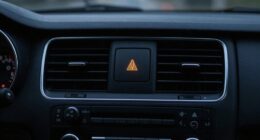
Once you decide to exit the vehicle, do so cautiously, always checking for traffic. When you step out, move to a safe location away from the flow of traffic, preferably behind a guardrail or on the shoulder if it’s wide enough. Use your hazard lights immediately to alert other drivers that your vehicle isn’t moving. This simple step plays a crucial role in hazard recognition, making it clear to approaching traffic that there’s a problem ahead. If you have reflective warning triangles or flares, set them up a safe distance behind your vehicle—at least 10 to 15 feet on the side of the road—and further if traffic is heavy or speeds are high. This visibility helps other drivers recognize the hazard early, giving them ample time to slow down or change lanes.
Your next move should be to call for roadside assistance or emergency services, providing clear details about your location and the nature of the breakdown. While waiting, stay inside your vehicle if possible, especially in extreme weather or on high-speed roads, to avoid unnecessary exposure to danger. Keep your seatbelt fastened and remain calm. If you need to walk for help, do so only if it’s safe and you’re confident about your surroundings, always sticking to areas away from traffic and visible areas. Remember, hazard recognition is key to avoiding further accidents, and maintaining vehicle safety involves following these steps systematically. Being prepared and alert helps you manage the situation effectively, reducing stress and protecting everyone involved. Your quick, cautious actions can turn a potentially dangerous breakdown into a manageable emergency, keeping you safe until help arrives. Additionally, understanding the principles of Free Floating can help in assessing and navigating unpredictable roadside scenarios more effectively. Developing an energetic alignment can also support maintaining calmness and clarity during stressful roadside emergencies, improving your decision-making under pressure. Practicing these safety protocols regularly can enhance your emergency preparedness and response efficiency.

WORKKOOL 3 Pack Foldable Warning Reflective Triangles with Carrying Case, Heavy Base Roadside Triangles for Vehicles Breakdown, Safty Reflector DOT Approved(Sand Filled)…
- Durable Material: High-quality, waterproof plastic construction
- Enhanced Visibility: Large reflective surface for wide viewing angle
- Portable Design: Lightweight with carrying case and handle
As an affiliate, we earn on qualifying purchases.
As an affiliate, we earn on qualifying purchases.
Frequently Asked Questions
How Can I Prevent My Vehicle From Breaking Down Unexpectedly?
You can prevent your vehicle from breaking down unexpectedly by maintaining regular vehicle maintenance and adopting good driving habits. Check your engine oil, coolant, and tire pressure often to keep everything running smoothly. Avoid aggressive driving, which strains your engine and other components. Schedule periodic inspections with a mechanic, and pay attention to warning lights. These steps help guarantee your vehicle stays reliable and minimizes the chances of unexpected breakdowns.
What Should I Do if I’M Stranded in an Unsafe Area?
If you’re stranded in an unsafe area, think of it as a storm you need to navigate carefully. Move to a well-lit, populated spot if possible, and stay aware of your surroundings. Prioritize urban safety by keeping emergency contacts handy and calling for help. Lock your doors, avoid risky areas, and stay calm. Your quick thinking and vigilance can turn a perilous situation into a safer one.
Are There Specific Items I Should Keep in My Emergency Kit?
You should keep essential items like a first aid kit and reflective triangles in your emergency kit. The first aid kit helps treat minor injuries, while reflective triangles increase your vehicle’s visibility, especially at night or in bad weather. Make sure these items are easily accessible and in good condition. Carrying them guarantees you’re prepared to handle emergencies safely and can alert other drivers to your presence.
How Can I Assist a Disabled Vehicle Without Risking Injury?
When assisting a disabled vehicle, you should prioritize safety first. Use your emergency kit to set up warning triangles and wear reflective gear. To perform a vehicle jump start, make sure both vehicles are off, then connect cables in the correct order. For tire change safety, loosen lug nuts before lifting, and use a jack on a flat, stable surface. Stay alert, keep a safe distance, and avoid rushing to prevent injury.
When Should I Call Roadside Assistance Instead of Attempting Repairs?
You should call roadside assistance instead of attempting repairs when you’re unsure about the problem or if it involves complex issues like engine trouble or brake failures. Rely on your vehicle insurance coverage for roadside diagnostics and support. Attempting repairs without proper knowledge can be dangerous, so it’s safer to wait for trained professionals who have the right tools and expertise to fix your vehicle safely.

HLauto 1002L Emergency Strobe Traffic Advisor Light Bar: 40 LED Dash Safety Warning Flashing Light, Front/Rear Windshield Visor for Construction Vehicle, Tow/Plow Truck (2×10.7inch, Amber White)
- More LEDs for Better Brightness: 40 high-intensity LEDs with magnifying lens
- Easy Installation: Includes adjustable suction cups and long cable
- Multiple Flashing Modes: 26 patterns with memory recall
As an affiliate, we earn on qualifying purchases.
As an affiliate, we earn on qualifying purchases.
Conclusion
Remember, staying calm and following these steps is like steering a ship through rough waters—you’ll navigate safely if you keep your course steady. I once saw a driver change a tire in heavy rain, confident and focused, turning a stressful situation into a manageable one. Just like that driver, you can handle roadside emergencies by staying prepared and composed. Your safety depends on it, so trust these procedures and stay safe on every journey.

emergency roadside reflective triangles warning Safety Kit for vehicle
- High Reflective Warning Triangle: Made of highly reflective material with case
- LED Road Flare Emergency Light: Includes 2 LED flares for visibility
- Portable Emergency Kit: Contains 3 warning triangles and 2 LED lights in a durable bag
As an affiliate, we earn on qualifying purchases.
As an affiliate, we earn on qualifying purchases.
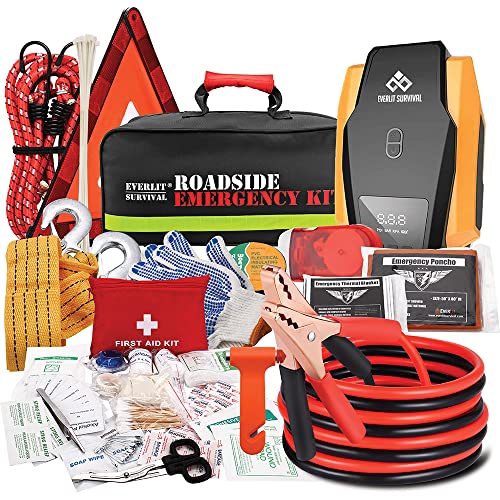
Everlit Survival Car Emergency Kit, Roadside Safety Tool Kit with Gloves,Digital Auto Air Compressor Tire Inflator, First Aid Kit, 12 Feet Jumper Cable, Tow Strap, Flashlight for Women, Men, Teenagers
- Roadside Assistance Kit: Includes essential emergency tools and accessories
- Digital Tire Inflator: Inflates tires quickly with auto shutoff feature
- LED Light and Nozzles: Provides illumination and versatile inflation options
As an affiliate, we earn on qualifying purchases.
As an affiliate, we earn on qualifying purchases.