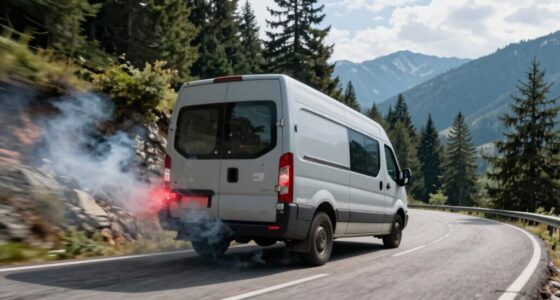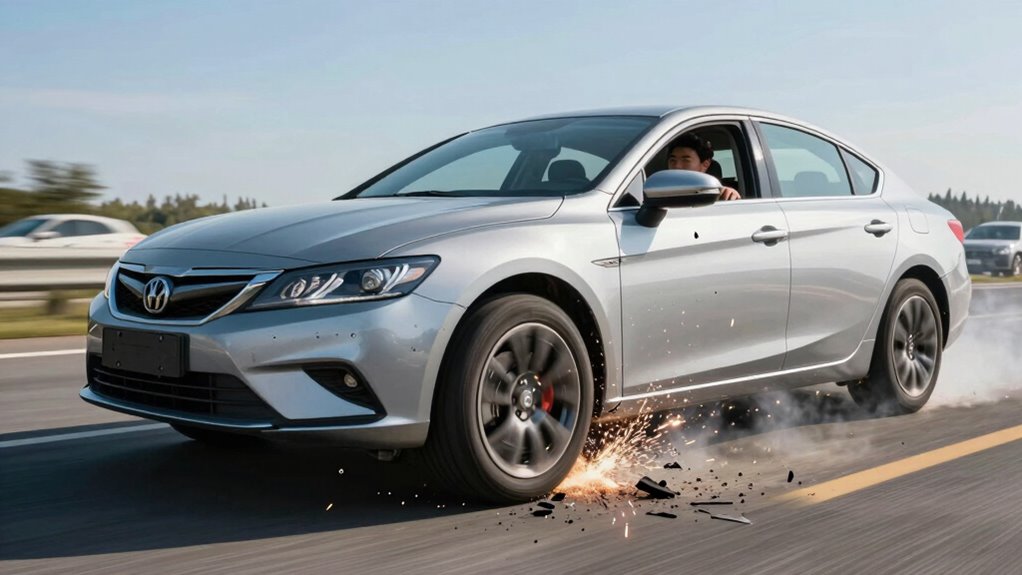

To prevent dangerous tire blowouts at highway speeds, regularly inspect your tires for wear, cracks, and bulges, and keep them properly inflated. Avoid sudden braking and steer smoothly if a blowout occurs, gently easing off the accelerator and steering to the shoulder. Turn on hazard lights to alert others. Staying calm and knowing these quick steps can make a big difference—continue to explore how to better protect yourself on the road.
Key Takeaways
- Regularly inspect tires for wear, cracks, bulges, and maintain proper pressure to prevent blowouts at highway speeds.
- Use connected tire sensors or check tire pressure frequently, especially before long trips, to detect early issues.
- Maintain steady hands on the wheel, avoid sudden braking, and steer smoothly during a blowout to retain control.
- Turn on hazard lights immediately, gradually slow down, and carefully steer to the shoulder or safe area.
- Keep an emergency kit and practice emergency procedures to respond effectively and ensure safety during tire blowouts.

Experiencing a tire blowout while driving at highway speeds can be sudden and frightening, often catching drivers off guard. In that split second, your instinct might be to panic, but staying calm is essential. One of the best ways to reduce the risk of a blowout is through regular tire inspection. Before hitting the road, take a few minutes to check your tires for signs of wear, such as balding tread, cracks, or bulges. Proper tire maintenance not only prolongs tire life but also helps you catch issues early, preventing blowouts caused by underlying damage or weak spots. Maintaining correct tire pressure is equally important because under-inflated or over-inflated tires can increase the chance of a blowout. Make it a habit to check your tire pressure regularly, especially before long trips, and verify it matches your vehicle manufacturer’s recommended levels. Incorporating connected tire sensors can provide real-time alerts about tire conditions, further enhancing safety. Emergency preparedness plays a significant role in safely handling a blowout when it occurs. It’s wise to keep your hands firmly on the wheel and your eyes on the road as you feel the sudden loss of pressure. Resist the urge to brake suddenly; instead, gently ease off the accelerator and steer smoothly to maintain control of your vehicle. Once you’ve slowed down enough, carefully signal and steer towards the shoulder or a safe area away from traffic. If you’ve practiced emergency drills, you’ll respond more effectively. Having an emergency kit in your vehicle—complete with items like a flashlight, reflective triangles, and basic tools—can make a big difference in unforeseen situations. Remember, your preparedness can reduce panic and help you stay focused on controlling the vehicle. Being aware of roadside safety measures can further improve your response during an emergency. Knowing what to do ahead of time is part of being prepared. If you experience a blowout, avoid the temptation to slam on the brakes, as this can cause you to lose control. Instead, maintain a steady grip on the steering wheel, gradually slow down, and steer to the side of the road. Once stopped, turn on your hazard lights immediately to alert other drivers. If you’re comfortable, change the tire yourself, but only if conditions are safe and you have the necessary tools. Otherwise, calling for roadside assistance is the safest move. Being proactive about tire inspection and emergency preparedness doesn’t just protect your vehicle; it can mean the difference between a safe stop and a serious accident. Always remember, staying calm, vigilant, and prepared ensures you’re ready to handle a blowout effectively. Additionally, understanding tire failure mechanisms can help you recognize early warning signs and prevent emergencies before they happen. Regularly checking tire tread depth is another way to identify tires that are nearing the end of their safe lifespan and reduce the likelihood of blowouts.
Frequently Asked Questions
How Do Tire Blowouts Affect Vehicle Longevity?
Tire blowouts can shorten your vehicle’s longevity by causing uneven tire wear and potential suspension issues. When a blowout occurs, it stresses your suspension system and can lead to misalignment or damage over time. You might also notice increased tire wear if you don’t address underlying issues. Regular maintenance, proper tire inflation, and timely replacements help prevent blowouts, ensuring your vehicle stays in good shape longer.
Are Certain Car Models More Prone to Blowouts at High Speeds?
Certain car models are more prone to blowouts at high speeds due to their vehicle design and tire manufacturing. You might notice that sports cars with lower profiles, heavier trucks, or vehicles with uneven weight distribution often face higher risks. These models typically have tires that are more sensitive to road conditions and wear. Regular maintenance and choosing tires suited for your vehicle’s design can substantially reduce your chances of blowouts.
What Are the Legal Implications After a Blowout Accident?
After a blowout accident, you could face legal liability if you’re found negligent, such as ignoring maintenance or tire warnings. Your insurance claims may be affected depending on fault and coverage limits. It’s essential to gather evidence and cooperate with authorities. Consulting a legal expert can help you understand your rights and responsibilities. Staying proactive about vehicle maintenance reduces legal risks and protects you financially after an accident.
How Does Tire Age Influence Blowout Risk?
Imagine your tire as a once-robust shield now weathered by time. As it ages, rubber deterioration weakens its structure, increasing blowout risk. Tire aging accelerates the breakdown of essential materials, making your tires more brittle and prone to failure. Regularly check the age of your tires, especially after six years, and replace them if they show signs of wear or cracking. Staying proactive helps you avoid sudden blowouts on the highway.
Can Aftermarket Tires Prevent Blowouts Better Than OEM Tires?
Yes, aftermarket tires can often prevent blowouts better than OEM tires due to their higher tire quality and design improvements. You benefit from aftermarket benefits like enhanced durability, better tread patterns, and superior materials that reduce the risk of blowouts at highway speeds. However, always choose reputable brands and guarantee proper installation to maximize safety, as even the best tires won’t prevent blowouts if not maintained properly.
Conclusion
While tire blowouts can be frightening, remember that staying calm and following proper emergency procedures can keep you safe. Some might think it’s impossible to avoid a blowout, but regular tire maintenance and checking air pressure go a long way. By staying alert and prepared, you can handle unexpected situations confidently. Don’t let fear hold you back—trust your skills, keep your cool, and get to safety. Your calm reaction makes all the difference.