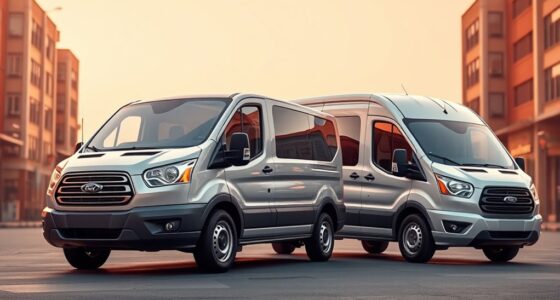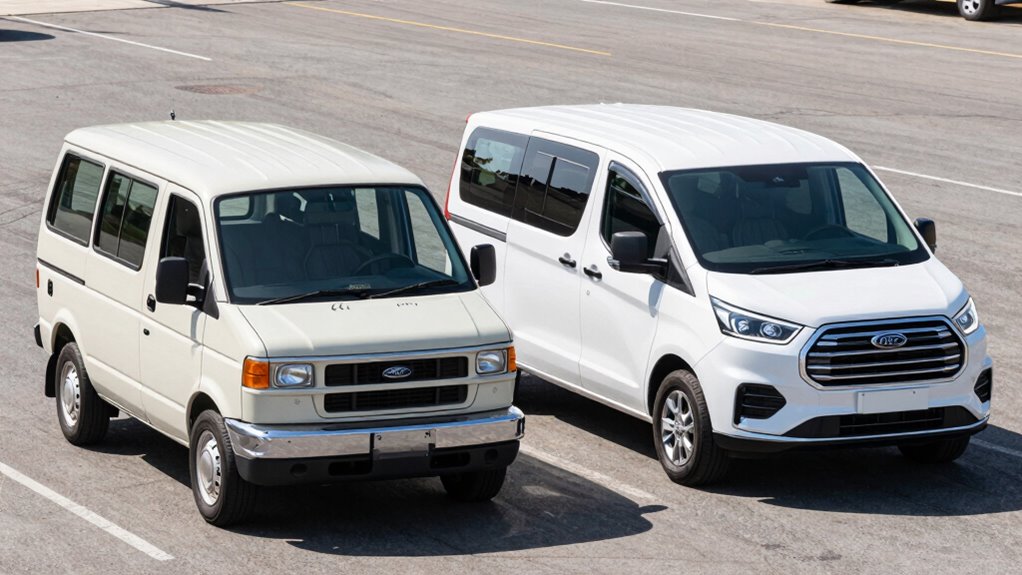
You’ll find that Ford’s old Econoline vans are renowned for their legendary reliability, durability, and simple mechanics, making them trusted workhorses for decades. Newer models incorporate modern safety features, better fuel efficiency, and updated tech without losing that core dependability. While the design and performance specs have evolved, the essential qualities of longevity and resilience remain. If you’re curious how these generations compare in detail, exploring further will reveal the innovations behind each version.
Key Takeaways
- Classic Econoline models prioritized durability and simple mechanics, while newer versions emphasize advanced safety and performance technology.
- Old vans featured basic engines with reliable, straightforward designs, whereas modern models offer more efficient, turbocharged powertrains.
- The original Econolines had minimal technology, while newer vans incorporate features like infotainment systems and driver assistance.
- Structural improvements in newer models enhance crash safety and ride comfort, building on the sturdy foundation of classic designs.
- Both generations maintain a reputation for dependability, with modern versions offering better fuel economy and lower maintenance costs.
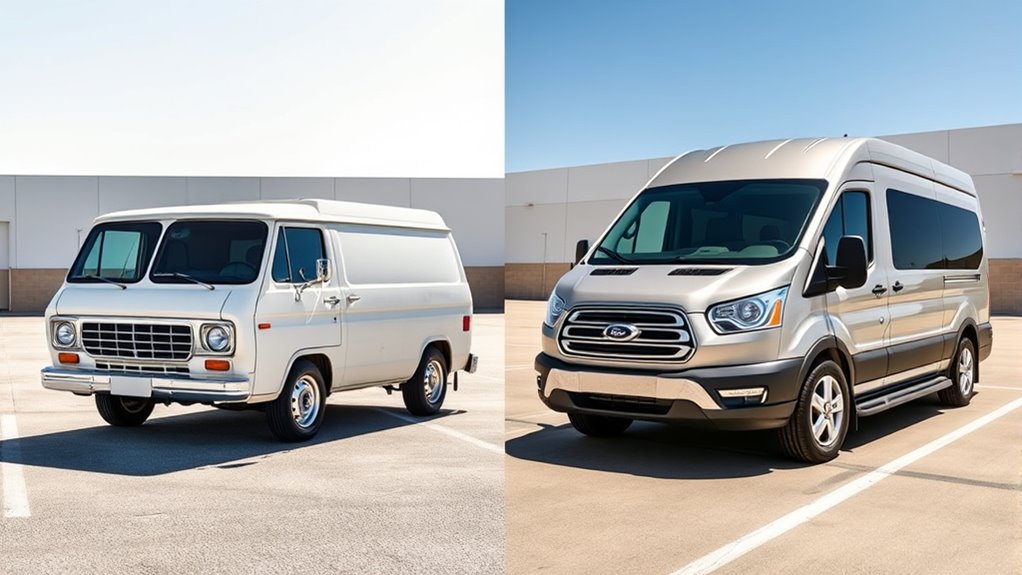
Have you ever wondered how the Econoline became a cornerstone of American work culture? It’s not just because of its versatility or size but because of its reliability and the economic impact it’s had over decades. When you think about the Econoline, you’re looking at a vehicle that’s been built to endure, to serve as a dependable workhorse for countless businesses. Its van reliability is legendary among fleet managers and small business owners alike. These vans are designed to withstand the rigors of daily use, with durable components and a reputation for longevity. That level of dependability means fewer breakdowns, lower maintenance costs, and more consistent productivity. It’s this reliability that has made the Econoline a trusted staple in trades, delivery services, and service industries across the country.
The economic impact of the Econoline is equally significant. As a vehicle that’s been produced for decades, it has supported a vast network of manufacturing jobs, from assembly lines to parts suppliers. Its popularity has helped sustain the American auto industry, contributing to local economies and employment. For small businesses, owning a reliable Econoline means reduced downtime and more efficient operations, which translate into increased profits and growth. The affordability and longevity of these vans mean that businesses can allocate resources elsewhere, fueling local economic activity. Additionally, advancements in vehicle technology have enhanced the overall performance and safety of newer models while maintaining the core qualities that made the Econoline a legend in the first place. Moreover, the automotive manufacturing industry has benefited from continuous innovation and consumer demand, further strengthening the vehicle’s legacy. Furthermore, the development of herbalism skills and the integration of plant-based remedies into health routines exemplify how traditional practices adapt and thrive alongside modern advancements. The consistent demand for these vans has also led to a dedicated aftermarket parts industry, which helps prolong their lifespan and adapt them to evolving business needs. Whether you’re looking at the classic models or the latest versions, it’s clear that the Econoline’s legacy is rooted in its ability to support the economy and serve as a reliable partner for business owners across generations.
Frequently Asked Questions
How Do the Safety Features Differ Between the Old and New Econoline Vans?
You’ll notice the new Econoline van offers advanced safety features like improved airbag technology, including side curtain airbags, which weren’t available before. It also has blind spot monitoring that alerts you to vehicles in your blind spots, enhancing safety during lane changes. The older model lacks some of these modern safety tech, so the new van gives you better protection and peace of mind on the road.
What Are the Cargo Capacity Differences Across Various Econoline Models?
You’ll notice that cargo space varies across Econoline models, with newer versions offering up to 15-16 cubic feet more than older ones. The payload capacity also improves, allowing you to carry heavier loads safely. For example, the E-350 can handle around 3,700 pounds, compared to roughly 3,400 pounds in earlier models. These differences help you maximize cargo space and payload capacity, making your work more efficient.
How Has the Fuel Efficiency Evolved Over the Years for These Vans?
You’ll notice that fuel efficiency has improved over the years thanks to engine innovations and hybrid technology. Modern Econoline vans often feature more efficient engines, reducing fuel consumption and emissions. Ford’s newer models integrate hybrid systems that optimize power and economy, making them more cost-effective for long-term use. These advancements reflect Ford’s commitment to sustainability, helping you save money while minimizing your environmental impact.
Are There Notable Differences in the Pricing of Vintage Versus Modern Econoline Vans?
You’ll find classic pricing for vintage Econoline vans skyrockets, making them the luxury collectibles of the parking lot. Modern models, with their shiny new features, come at a higher price tag but often offer better value. So, if you’re hunting for vintage costs, brace for a steep climb, while newer vans promise more tech and comfort—sometimes at a more reasonable price, depending on your nostalgia budget.
What Customization Options Were Historically Available for the Econoline Series?
You could historically customize your Econoline series with various options, including different engine choices, interior configurations, and body styles. Ford also offered accessory packages like roof racks, tow hitches, and upgraded audio systems, allowing you to tailor the van to your needs. These customization options helped make each Econoline unique, whether for work, leisure, or specialized purposes, giving you the flexibility to create a vehicle suited precisely to your lifestyle.
Conclusion
As you stand between the old and the new, you can almost hear the echoes of the past blending with the promise of what’s to come. Will the classic ruggedness of the vintage Econoline still hold up, or will the modern upgrades redefine your expectations? The choice is yours, and with each passing moment, the future of this legendary van unfolds before your eyes. Are you ready to discover what lies ahead? The journey is just beginning.