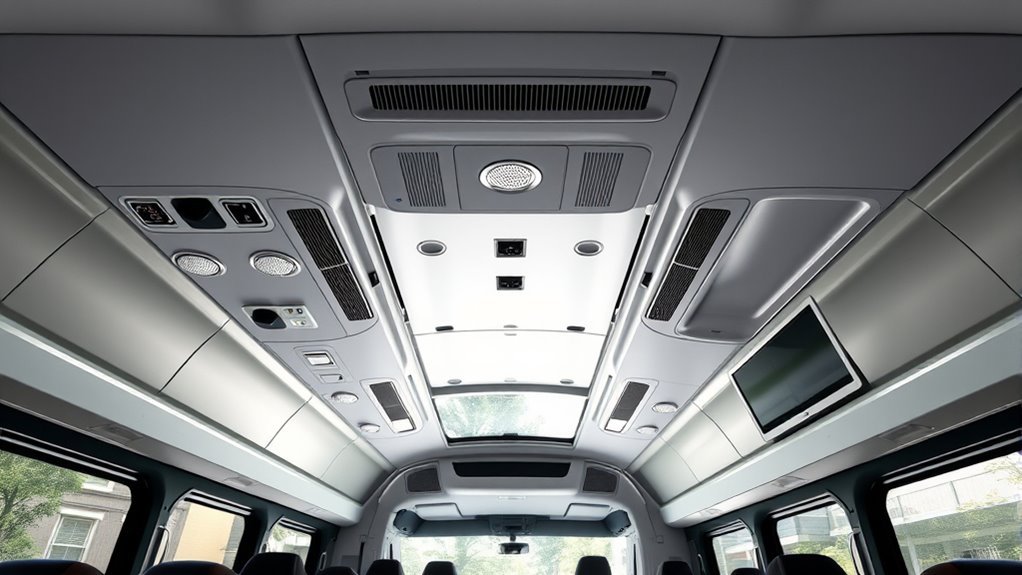

Transit vans come in low, medium, and high roof options, each offering different interior heights and dimensions suited for cargo, conversions, or accessibility. Low roofs measure roughly 57 inches high, medium roofs provide about 72 inches, and high roofs almost reach 81.5 inches. Your choice affects cargo space, headroom, and ease of access. If you want to know how these variations impact your usage, keep exploring the details behind each roof type.

Get business pricing on garage and car supplies
- Business-only prices and quantity discounts
- Tax-exempt purchasing
- Multiple users, one account, clear invoices
Key Takeaways
- Low roof models have an interior height of approximately 56.9 inches, suitable for minimal standing room.
- Medium roof versions offer about 72 inches of interior height, balancing space and vehicle aerodynamics.
- High roof configurations provide roughly 81.5 inches of interior height, ideal for standing and increased cargo capacity.
- Exterior heights are approximately 82.2 inches (low), 8 ft 5 in (medium), and 9 ft 2 in (high), affecting accessibility and clearance.
- Interior volume varies with roof height, with high roofs offering up to 15.1 cubic meters for larger cargo or conversions.
Overview of Transit Roof Height Categories

Understanding the different roof height categories of Ford Transit vans is essential for choosing the right model for your needs. Transit vans come in three main roof height options: Low Roof, Medium Roof, and High Roof. Low Roof models stand just under 7 feet tall, around 82.2 inches, making them easy to park in standard garages. Medium Roof vans measure about 8 feet 5 inches, offering a balance of headroom and exterior height. High Roof versions are the tallest, near 9 feet 2 inches, providing ample standing room for most adults. These categories are primarily distinguished by their exterior heights, which markedly influence usability, clearance, and interior space. Interior height varies significantly, influencing comfort and suitability for conversions or van life, and these variations can greatly impact conversion potential and overall functionality. Additionally, the choice of roof height can affect fuel efficiency, as taller models may experience slightly increased wind resistance. Width remains consistent across all options, but the vertical dimensions vary widely, impacting how you’ll use each model.
Interior Space and Load Capacity Based on Roof Types

The interior space of Ford Transit vans varies considerably with roof height, directly affecting your ability to stand, work, and load cargo comfortably. Low roof models offer about 56.9 inches of interior height, limiting standing and working space. Medium roofs provide approximately 72 inches, enabling most people to stand comfortably and increasing utility for conversions. High roof versions deliver roughly 81.5 inches, ideal for full standing and working inside. The interior width remains consistent at 54.8 inches between wheel wells, with length depending on chassis—ranging from about 126 to 172 inches. Higher roofs not only boost vertical space but also impact load capacity, with larger models offering up to 15.1 cubic meters of volume. Overall, roof height substantially influences interior comfort, load flexibility, and cargo potential. Interior volume varies significantly based on roof height and chassis length, affecting how much cargo can be carried and how the space is utilized. Additionally, understanding the market factors that influence vehicle value can help in making informed decisions when choosing a Transit model. Recognizing the impact of roof design on load capacity can assist in optimizing cargo space for specific needs. Moreover, diversification of investments in vehicle types can be a strategic approach to maximize utility and resale value.
Accessibility and Practical Considerations for Different Roof Heights
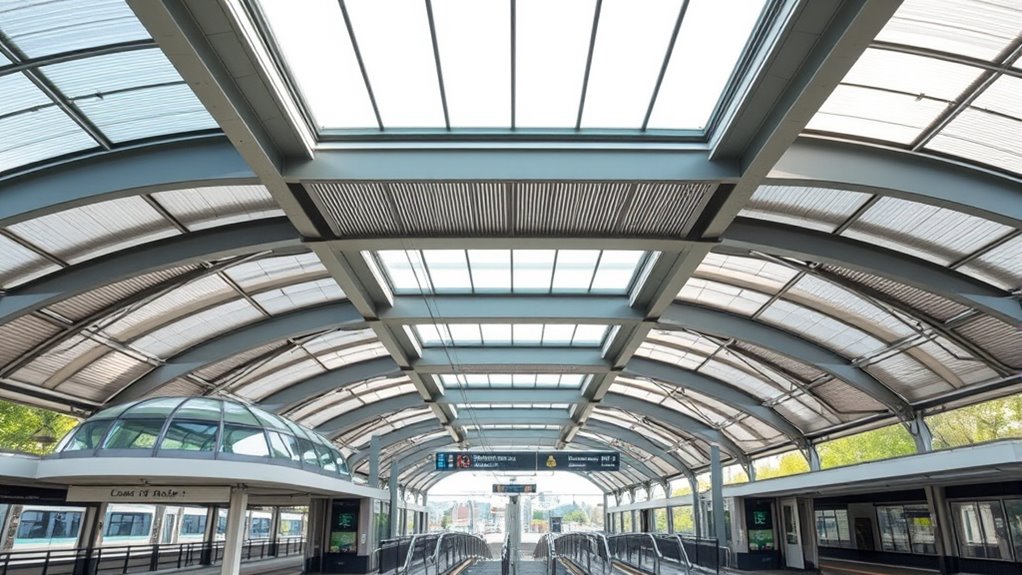
Choosing the right roof height for your transit vehicle directly affects accessibility features and boarding ease. Lower roof heights, often due to external clearance limits, can restrict interior headroom and door height, making boarding more challenging for wheelchair users and those with mobility aids. Higher roofs generally provide better interior volume, facilitating easier movement and accessibility, including the installation of lifts or ramps that meet ADA standards. Medium roof heights strike a balance, offering sufficient clearance without compromising vehicle design. Roof height also impacts practical concerns like fuel efficiency and climate control. When designing or selecting a vehicle, consider how roof height influences door accessibility, securement space, and boarding area dimensions. Ensuring compatibility with accessibility requirements helps create a safer, more inclusive transit experience for all passengers. Proper roof height also affects the vehicle’s overall structural integrity and its ability to meet safety standards during operation. Additionally, selecting an appropriate roof height can influence the vehicle’s interior layout and overall passenger comfort. Considering interior space is essential for accommodating various passenger needs and ensuring a comfortable ride for everyone, while understanding how different roof heights can also impact accessibility features is crucial for inclusive design.
Frequently Asked Questions
How Do Roof Heights Impact Vehicle Aerodynamics and Fuel Efficiency?
You’ll notice that higher roof heights increase your vehicle’s frontal area, boosting aerodynamic drag and lowering fuel efficiency. As the roof height rises, it forces your engine to work harder, especially at highway speeds, reducing mileage by up to 15%. Additionally, larger roofs destabilize handling and make you more sensitive to crosswinds. To improve fuel economy, consider aerodynamic modifications like roof deflectors, which help minimize drag regardless of roof height.
Are High-Roof Vans Suitable for Urban Parking and Clearance Restrictions?
High-roof vans aren’t ideal for urban parking due to their increased height, which often exceeds typical garage clearances of 2.0 to 2.2 meters. You might struggle to find suitable parking spots, especially underground or multi-story garages. To avoid issues, plan routes carefully, opt for open or street parking, and measure your vehicle’s height with roof accessories before entering urban areas. This proactive approach helps prevent damage and parking fines.
What Are the Safety Considerations for Different Interior Heights During Accidents?
Think of your vehicle as a safety fortress. With low interior heights, you risk limited headroom and poor restraint deployment, increasing injury severity during crashes. Medium heights offer a balanced space that improves occupant control and reduces contact injuries. High interiors, while offering more space, raise the center of gravity, risking rollover and vertical impacts. So, choosing the right height influences your safety shield, making it essential to match interior design with crash risks.
How Does Roof Height Influence the Installation of HVAC or Other Rooftop Equipment?
Roof height greatly affects how you install HVAC or rooftop equipment. With higher roofs, you gain more space for larger units, easier maintenance access, and better airflow, boosting performance. Low roofs, however, require compact units and make servicing more challenging. Medium roofs offer a balance, providing enough room for standard units and maintenance. Overall, higher roofs simplify installation, improve efficiency, and facilitate upkeep, while lower roofs need careful planning for space and access constraints.
Can Interior Height Variations Accommodate Specialized Equipment or Custom Modifications?
Yes, interior height variations can accommodate specialized equipment and custom modifications. With higher ceilings, you can install large medical devices, communication systems, or multiple workstations without cramping space. Imagine easily fitting wheelchair lifts or bulky tech gear, making your vehicle more versatile. Just keep in mind that increasing interior height might impact stability and weight, so plan your modifications carefully to guarantee safety and compliance while maximizing functional space.
Conclusion
Choosing the right transit roof height depends on your needs and how you plan to use your vehicle. Whether you opt for low, medium, or high, understanding the interior space and practical considerations guarantees you make an informed decision. Remember, the right fit can make all the difference—it’s not just about the height, but how well it works for you. Sometimes, you have to look beyond the surface to find the best solution for your journey ahead.
Halloween Picks
halloween
As an affiliate, we earn on qualifying purchases.