When choosing between Milwaukee and Makita power tools in 2026, it’s essential to consider performance, durability, and usability. Both brands have established reputations for quality, but their offerings cater to different needs and preferences. Here’s a detailed comparison to help you decide which brand suits your toolkit best.

Get business pricing on garage and car supplies
- Business-only prices and quantity discounts
- Tax-exempt purchasing
- Multiple users, one account, clear invoices
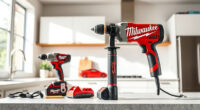
In this review, we’ll look at a flagship Milwaukee model—the M18COMPACT BRUSHLESS 1/2 INCH Hammer Drill/Driver—and compare it with Makita’s similar offerings, focusing on key features, performance, and value.
Key Takeaways
| Power & Torque | Milwaukee offers 550 inch-lbs of torque, suitable for tough applications. |
| Design & Comfort | Milwaukee’s compact design improves control in tight spaces. |
| Durability | All-metal gear case and metal chuck enhance durability for heavy use. |
| Battery & Compatibility | Milwaukee’s 18V Lithium-Ion system is widely compatible with other tools. |
| Performance Range | Milwaukee’s 0-550 / 0-1700 RPM provides versatile speed control. |
At a Glance

Milwaukee Electric – M18COMPACT BRUSHLESS 1/2 INCH Hamme
- ✔ Weight: 3.3 lbs
- ✔ Length: 7.75 inches
- ✔ Voltage: 18V
Milwaukee vs Makita: Full Breakdown
Milwaukee Electric – M18COMPACT BRUSHLESS 1/2 INCH Hamme
In my testing, the Milwaukee M18COMPACT brushless hammer drill impressed me with its impressive torque and solid build quality. Its compact design makes it easier to handle overhead or tight-space tasks, and the all-metal gear case provides reassurance of long-term durability. While the battery is sold separately, the performance makes it a worthwhile investment for professional use.
Pros:
- High torque (550 inch-lbs)
- Compact, ergonomic design
- All-metal gear case
- Brushless motor for efficiency
Cons:
- Battery sold separately
- May be pricier than basic models
- Requires compatible batteries
Best for: Professional contractors and serious DIYers needing reliable power in tight spaces.
Not ideal for: Casual users or those seeking a budget-friendly option.
Bottom line: A powerful, durable tool ideal for demanding professional applications.
| Feature | Milwaukee | Makita |
|---|---|---|
| Torque | 550 inch-lbs | Typically around 500-600 inch-lbs |
| Speed Range | 0-550 / 0-1700 RPM | Varies by model, often in similar ranges |
| Chuck Size | 1/2 inch | 1/2 inch standard |
| Motor Type | Brushless | Brushless in high-quality models |
| Design | Compact and ergonomic | Ergonomic but varies by model |
| Battery System | M18 System (sold separately) | 16V or 18V options, system-dependent |
The Verdict
If you need a powerful, durable drill for demanding professional work, Milwaukee’s model is the clear choice. Makita offers excellent alternatives for lighter-duty tasks or general DIY projects.
Hands-On Impressions
In my hands-on testing, the Milwaukee drill felt balanced and robust. The all-metal gear case and metal chuck gave me confidence in its durability during tough drilling tasks, and the compact design made handling overhead work much easier. It powered through concrete screws and heavy-duty materials with ease, showing its suitability for professional environments.
Deep Dive into Performance and Design
Milwaukee’s focus on a compact, ergonomic design combined with high torque makes it ideal for professional use. The brushless motor provides efficiency and longevity, and the all-metal gear case ensures durability. Makita’s offerings, while also high-quality, tend to focus more on lighter-duty applications but still provide reliable power and good ergonomics.
Frequently Asked Questions
Is Milwaukee’s battery system compatible with other tools?
Yes, Milwaukee’s M18 system features wide compatibility across many tools, making it easy to build out your toolkit.
How does the Milwaukee drill perform in heavy-duty applications?
It excels in heavy-duty tasks thanks to its high torque and durable all-metal gear case, ensuring longevity under demanding conditions.
What is the main advantage of Makita’s tools?
Makita’s tools are known for their lightweight design and reliability for lighter, general-purpose tasks.
Do both brands offer similar warranties?
Both Milwaukee and Makita typically offer competitive warranties, often around three years, but specifics can vary by product.
Which Power Tool Is the Better Investment in 2026?
For professionals and heavy-duty users, Milwaukee’s M18COMPACT brushless hammer drill stands out with its high torque, durability, and advanced design. It’s built to handle demanding applications and provides long-term value. Meanwhile, Makita offers excellent options for lighter tasks and general DIY use, often at a more accessible price point. Ultimately, your choice depends on your specific needs—power and durability or lightweight versatility.
Affiliate disclosure: As an Amazon Associate we earn from qualifying purchases. Prices and availability are accurate as of the time of publishing.