If your TPMS light stays on despite adjusting tire pressures, start by checking the sensor batteries and wiring connections for corrosion or damage, as these can prevent proper communication. Use a diagnostic scanner to read fault codes that may point to faulty sensors or modules. Sometimes, sensors need reprogramming or replacement. If you want to learn more about troubleshooting and fixing the issue effectively, keep going to find detailed guidance.
Key Takeaways
- Use a diagnostic scanner to read fault codes and identify specific sensor or module issues.
- Check and replace dead or weak sensor batteries to ensure proper signal transmission.
- Inspect valve stems and wiring harnesses for corrosion, damage, or loose connections.
- Re-inflate tires to manufacturer-recommended PSI and reset the system if possible.
- Consider professional testing or replacing faulty sensors and modules for a lasting fix.
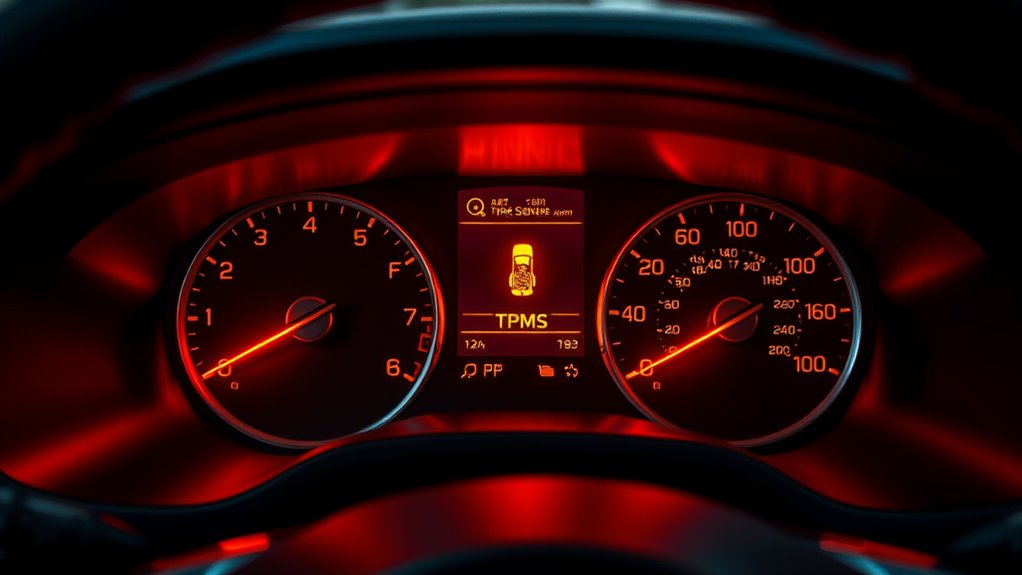
If your TPMS (Tire Pressure Monitoring System) light stays on despite checking your tire pressures, it can be frustrating and confusing. You might think everything’s fine with your tires, but the warning remains. This often indicates an issue beyond just low or uneven tire pressure. The problem usually lies within the sensors or the system module itself.
A persistent TPMS warning often signals sensor or module issues beyond just tire pressure.
Your first step is to verify that each tire’s pressure matches the manufacturer’s recommended levels. Use a reliable tire pressure gauge and ensure all tires, including the spare if equipped, are inflated correctly. Sometimes, a simple re-inflation resets the sensor signals, causing the light to turn off. However, if the light persists after confirming proper inflation, it’s likely a sensor or module problem.
Next, consider the sensors mounted on each tire’s valve stem. These sensors contain batteries that transmit pressure data to your vehicle’s computer. Over time, these batteries can weaken or die, especially if the sensor is old. When a sensor’s battery fails, it can’t send signals, triggering the warning light. You might notice the light stays on even after re-inflating tires.
In such cases, the sensors need testing or replacement. Some vehicles allow you to reprogram or reset the sensors via the vehicle’s scan tool or onboard system. If you have access to a diagnostic scanner, use it to check for sensor fault codes. These codes can pinpoint whether a specific sensor is malfunctioning or if the entire system needs attention.
Sometimes, the problem isn’t with the sensors but with the module that receives and interprets their signals. Corrosion, dirt, or wiring issues can disrupt communication between sensors and the module. Inspect the valve stems for corrosion or damage and clean or replace as necessary. Check the wiring harnesses connecting the sensors to the vehicle’s electronic system for loose or damaged wires. Additionally, sensor integrity is crucial, as damaged or faulty sensors can cause persistent warning lights even if the system appears intact.
If you’re not comfortable doing this yourself, a mechanic can perform a system scan to identify faults. They can also reset the system, which may turn off the warning light temporarily. But if the sensors or module are faulty, replacing the sensors or repairing the wiring might be necessary for a long-term fix.
Ultimately, persistent TPMS warning lights point to sensor or module issues rather than tire pressure problems. Addressing these requires a combination of proper diagnostics, sensor testing, and sometimes replacement. Regular maintenance and sensor checks can prevent these issues from recurring, ensuring your safety without the annoyance of a constant warning light.
If you’re unsure or unable to resolve the problem yourself, visiting a professional is the best way to get the system working correctly again.
Frequently Asked Questions
Can a Low Battery Cause the TPMS Light to Stay On?
Yes, a low battery can cause the TPMS light to stay on. When your tire pressure monitoring system‘s sensor battery weakens, it may fail to send accurate signals, triggering the warning light.
You should check the sensor batteries or have a professional inspect the system. Replacing the batteries or fixing the sensor can turn the light off and guarantee your tire pressure readings are accurate, keeping you safe on the road.
How Long Should It Take for the TPMS Light to Reset After Fixing a Sensor?
Once you’ve fixed or replaced a sensor, it typically takes about 10 to 30 minutes of driving for the TPMS light to reset.
During this time, your vehicle’s system recalibrates and detects the new sensor signals.
To speed up the process, make sure you’re driving at a steady speed on a highway or open road.
If the light stays on longer, consider manually resetting the system or consulting your vehicle’s manual.
Is It Safe to Drive With the TPMS Light On?
Driving with the TPMS light on is like steering a ship through fog—you can do it, but it’s not ideal. It’s generally safe for short trips, but you should address the issue promptly.
The warning indicates low tire pressure or sensor problems that could affect vehicle handling or fuel efficiency. Check your tires and get the system inspected soon to guarantee safe driving and prevent potential tire damage or blowouts.
Will Disconnecting the Battery Reset the TPMS System?
Yes, disconnecting the battery can reset the TPMS system. When you do this, you interrupt the power supply, which may clear any stored error codes and reset the sensors.
To do this safely, turn off your vehicle, disconnect the negative terminal of the battery, wait a few minutes, then reconnect it.
Keep in mind, some vehicles may require a specific reset procedure, so check your owner’s manual.
How Often Should TPMS Sensors Be Replaced?
You should replace your TPMS sensors every 5 to 7 years, or when they stop functioning properly.
Signs include inconsistent readings, a warning light that won’t turn off, or damaged sensors from corrosion or impact.
It’s essential to monitor your sensors regularly and replace them as needed to guarantee accurate tire pressure readings and maintain safety.
If in doubt, consult a professional to evaluate whether replacement is necessary.
Conclusion
If your TPMS light won’t turn off, it’s likely due to sensor or module issues that need checking. Did you know that about 30% of tire pressure sensor failures are caused by faulty batteries? Regular maintenance and timely replacements can save you from unexpected alerts and guarantee your safety on the road. Don’t ignore the warning—address it promptly to keep your vehicle running smoothly and avoid costly repairs down the line.