
To guarantee safe use and maintenance of your ladder rack, always follow the manufacturer’s installation and inspection guidelines. Check that all bolts and fasteners are tight, look for signs of wear or damage, and remove rust or debris regularly. Properly load and secure ladders and tools to prevent shifting during transport. Routine maintenance and adherence to safety practices reduce the risk of accidents. Keep exploring to learn more essential tips for safe and effective ladder rack use.
Key Takeaways
- Verify proper installation and secure all mounting hardware before use.
- Conduct thorough pre-use inspections for damage and wear.
- Distribute loads evenly and secure tools to prevent shifting during transport.
- Perform routine maintenance, including cleaning and tightening fasteners.
- Follow manufacturer safety guidelines and use appropriate protective gear.
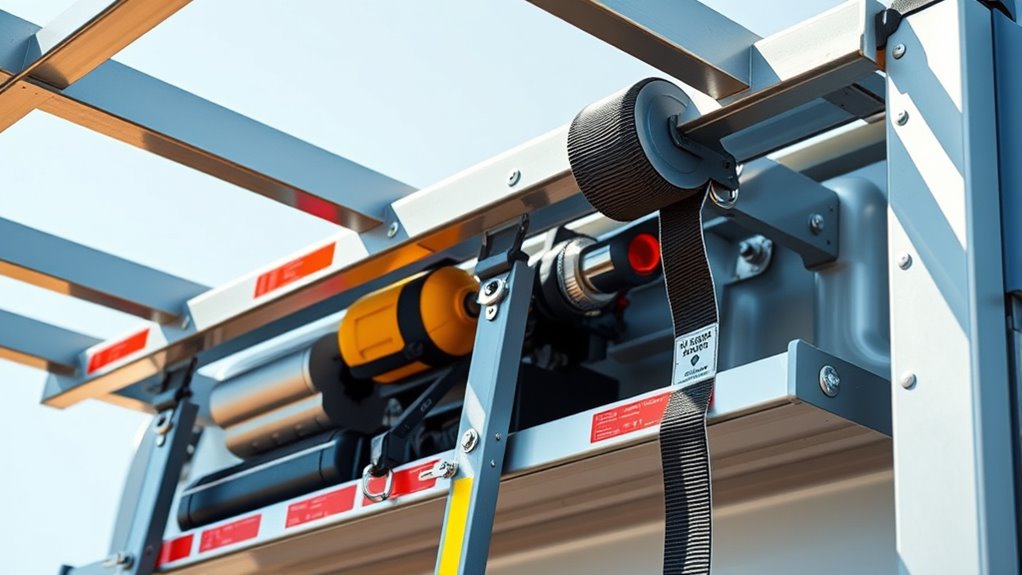
Using a ladder rack safely and properly maintaining it are essential for preventing accidents and guaranteeing its longevity. When you handle your ladder rack with care, you reduce the risk of falls, equipment damage, and costly repairs.
To start, always verify that your ladder rack is installed securely according to the manufacturer’s instructions. Check that all mounting brackets, bolts, and fasteners are tight and free from corrosion or damage. Loose or worn components can cause the rack to become unstable, especially when loaded with heavy or awkward items.
Always ensure your ladder rack is securely installed and all components are tight and corrosion-free.
Before each use, inspect the rack thoroughly for signs of wear, cracks, or deformation. Address any issues immediately to avoid accidents that could result from equipment failure.
When loading your ladder rack, distribute weight evenly across the platform. Avoid overloading beyond the manufacturer’s specified weight limit, as excessive weight can strain the mounting points and compromise stability. Secure your ladders or tools firmly to prevent shifting during transit. Use proper straps, tie-downs, or bungee cords designed for such purposes. Remember, an unstable load can fall off the rack, creating hazards for you and others on the road.
When placing ladders on the rack, ensure they’re positioned securely with their weight balanced to prevent tipping or sliding. Always double-check that everything is fastened tightly before driving or moving the vehicle.
Routine maintenance is just as critical as proper use. Regularly clean the rack to remove dirt, mud, and debris that can cause corrosion or weaken components over time. Apply a protective coating or lubricant to moving parts, hinges, and locks to keep them functioning smoothly. Periodically tighten bolts and fasteners, especially after rough trips or heavy loads. Additionally, using proper inspection techniques can help identify potential issues before they lead to failure.
If you notice rust, cracks, or bent parts, replace or repair the damaged components promptly. This proactive approach minimizes the risk of sudden failure that might lead to accidents or dropped loads, both of which can cause injuries or damage.
Additionally, always follow safety guidelines related to your specific ladder rack model. Use safety gear like gloves and eye protection during inspections and maintenance. Never attempt to modify or alter your rack without consulting the manufacturer’s instructions, as improper adjustments can compromise safety and void warranties.
Frequently Asked Questions
How Often Should Ladder Racks Be Inspected for Safety?
You should inspect your ladder racks at least once a month to guarantee safety. Before each use, check for any signs of damage, loose bolts, or corrosion.
Regular inspections help catch issues early, preventing accidents or equipment failure. If you notice any problems, address them immediately before using the rack again.
Consistent maintenance keeps your ladder racks in good condition and ensures safe, reliable operation whenever you need them.
What Are the Signs of a Damaged or Worn Ladder Rack?
You should look for signs like cracks, rust, or corrosion on the frame, which indicate damage. Check for bent or broken bars, loose or missing bolts, and any wobbling or instability when you shake the rack.
Worn or frayed straps or fasteners also show wear. If you notice any of these issues, stop use immediately and repair or replace the rack to guarantee your safety.
Can Ladder Racks Be Used on All Vehicle Types?
Ever wondered if ladder racks fit every vehicle? Not quite. You can’t use them on all vehicle types because size, weight capacity, and mounting options vary.
For example, trucks and vans often support ladder racks, but smaller cars usually don’t. Always check the manufacturer’s specs and your vehicle’s compatibility before installing.
Using the right rack guarantees safety and prevents damage. So, always verify compatibility first.
What Is the Maximum Weight Capacity for Most Ladder Racks?
Most ladder racks can hold between 250 and 500 pounds. However, it’s essential to verify the specific weight capacity for your model.
Always refer to the manufacturer’s guidelines to ensure safe use and avoid overloading, which can cause accidents or damage.
Distribute the weight evenly across the rack and secure your ladders properly before driving.
Regularly inspect the rack for signs of wear or damage to maintain safety.
Are There Specific Cleaning Products Recommended for Maintenance?
You should use mild soap and water or a non-abrasive cleaner for maintenance.
Did you know that using harsh chemicals can degrade your ladder rack’s material, reducing its lifespan by up to 30%?
Always avoid bleach, solvents, or abrasive scrubbers. Instead, opt for soft cloths or sponges.
Regular cleaning keeps your rack in top shape, ensuring safety and extending its durability.
Conclusion
By following these safety guidelines, you’ll keep your ladder rack in top shape and avoid accidents. Think of proper use and maintenance as the heartbeat of your safety routine—pumping life into every job. When you regularly check and handle your ladder rack with care, you’re building a sturdy foundation that supports your work like an unshakable mountain. Stay vigilant, stay safe, and let your commitment to maintenance be the steady rhythm guiding you every step of the way.