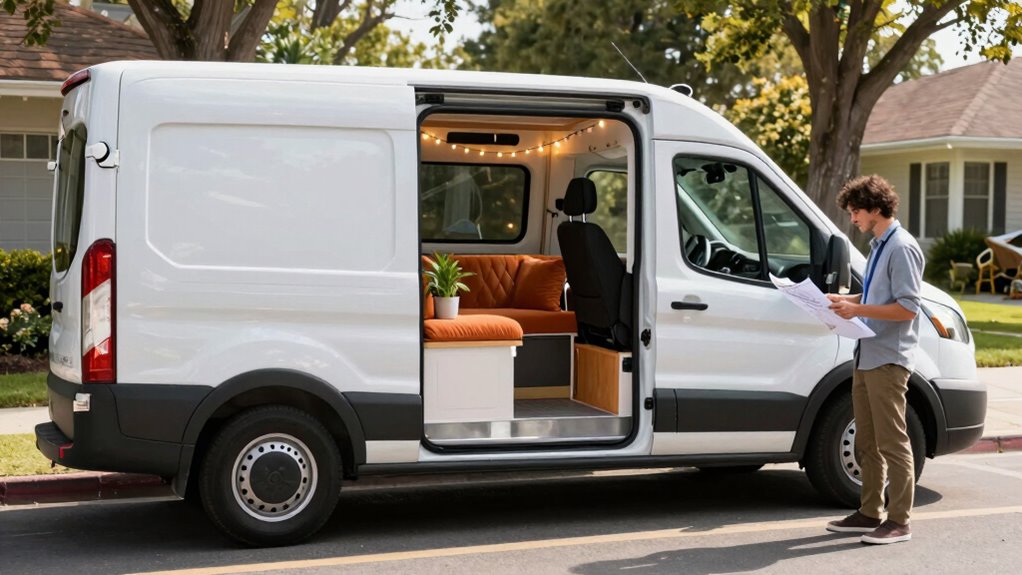

Jumping into a Ford Transit conversion too early, before finishing essential planning, insulation, and solar setup, can cause big headaches later. Skipping these steps risks costly rework, uncomfortable interiors, and inefficient energy systems. You might find yourself with limited space for electrical wiring or poor insulation that affects comfort. To avoid setbacks, it’s best to prioritize proper planning first. Keep exploring, and you’ll discover how thoughtful early steps can make your build smoother and more successful.

Get business pricing on garage and car supplies
- Business-only prices and quantity discounts
- Tax-exempt purchasing
- Multiple users, one account, clear invoices
Key Takeaways
- Installing solar panels before proper interior insulation can complicate wiring and limit placement options.
- Rushing to convert without thorough planning risks needing costly rework later.
- Early solar decisions may lead to improper positioning if insulation and interior layout aren’t finalized.
- Prioritizing solar installation too early can hinder optimal insulation and interior comfort features.
- Premature conversion steps may compromise system efficiency and overall vehicle insulation quality.
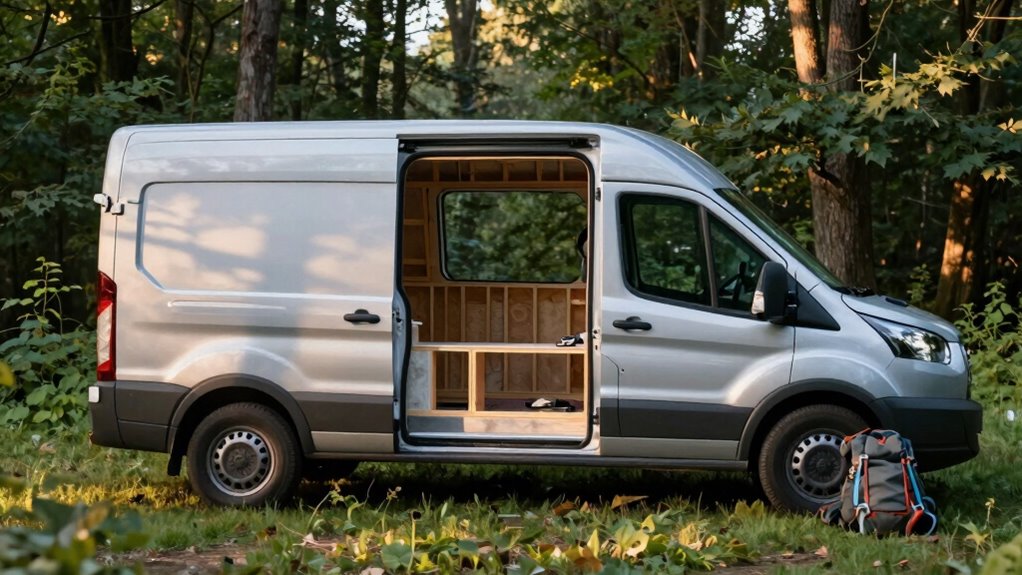
Deciding to convert a Ford Transit into a camper or mobile workspace is an exciting step that requires careful planning. You’re eager to transform the vehicle into a personalized space, but it’s essential to consider the foundational details early on. One of the first decisions involves the interior insulation. Proper insulation isn’t just about comfort; it’s about maintaining a stable temperature and reducing noise. You’ll want to choose materials that are lightweight yet effective at keeping your space warm in winter and cool in summer. Ignoring this step can lead to discomfort and higher energy costs later, especially if you plan on adding features like a solar installation. A well-insulated interior ensures your power systems, like solar panels, operate efficiently and keep your living or working environment comfortable.
Prioritize insulation early for comfort, energy efficiency, and seamless solar integration in your van conversion.
Many owners jump into installing solar panels early, thinking it’s a straightforward upgrade. While solar installation is an excellent way to generate off-grid power, it’s wise to consider your overall design. You’ll need to plan where panels will go, how they’ll connect to batteries, and how your electrical system will be wired. Installing solar too late can complicate interior modifications and limit panel placement options. It’s best to incorporate your solar setup during the initial build phase, especially once you’ve decided on your insulation and wall finishes. This way, you can run wiring discreetly behind insulation and panels, avoiding unnecessary rework. Plus, early planning for solar helps you determine your energy needs, ensuring your system is appropriately sized to support appliances, lighting, and other devices. Additionally, understanding the importance of proper planning can help you avoid costly mistakes and rework during the build process. Being aware of the sequence of installation steps can also contribute to a more efficient conversion process.
Some owners get carried away with the fun parts—like choosing furniture or installing gadgets—and overlook these technical essentials. But skipping or delaying interior insulation and solar installation can cause headaches down the road. A comprehensive plan that includes these critical steps can prevent setbacks and ensure your build stays on track. If you’re eager to hit the road, remember that a solid foundation makes your entire conversion more reliable and enjoyable. Investing time in these early steps ensures your camper or workspace is comfortable, energy-efficient, and ready for adventures. It’s tempting to rush through the process, but patience now saves you time and money later. Starting with a clear interior insulation strategy can also streamline your workflow and reduce the risk of redoing work later on.
Ultimately, the decision to focus on interior insulation and solar installation early on sets the stage for a successful conversion. It’s about creating a space that’s comfortable, self-sufficient, and built to last. When you prioritize these elements from the start, you’re more likely to enjoy your van life or mobile work setup without unexpected setbacks. This approach makes the entire project smoother and more rewarding, turning your vision into a practical, cozy reality.
van insulation kit for Ford Transit
As an affiliate, we earn on qualifying purchases.
As an affiliate, we earn on qualifying purchases.
Frequently Asked Questions
How Long Does a Ford Transit Conversion Typically Take?
A Ford Transit conversion usually takes between 2 to 4 weeks, depending on your plans. You’ll spend time on interior insulation to keep things comfortable and on electrical wiring to power your appliances. If you do most of the work yourself, it might be quicker, but hiring pros could extend the timeline. Planning ahead helps make certain you stay on schedule and get all features installed properly.
What Are the Hidden Costs of a Transit Conversion?
When converting your Ford Transit, hidden costs can catch you off guard, like upgrading interior insulation or adding electrical wiring. These essentials often require extra materials and labor, which you didn’t initially budget for. You might also need to think about costs for tools, permits, or unforeseen repairs. Planning ahead and researching these potential expenses helps you avoid surprises and keeps your conversion project on track financially.
Can I Convert a Used Ford Transit Myself?
Yes, you can convert a used Ford Transit yourself, but beware of DIY pitfalls like lacking proper knowledge or tools. You must also consider conversion legality, as some modifications might not meet local regulations. Before starting, research your area’s rules and plan thoroughly. Doing it yourself can save money, but make certain you’re prepared for the work and potential legal hurdles to avoid costly mistakes later.
Which Ford Transit Models Are Best for Conversions?
You should consider the Ford Transit models like the High Roof and Extended Length versions for conversions. These models offer more interior space for installing insulation and creating a comfortable living area. Their roof height makes solar panel installation easier, maximizing energy efficiency. Opting for these models simplifies your project, providing ample room for interior insulation and solar panels, ensuring a functional and enjoyable camper conversion.
How Does the Conversion Affect Vehicle Warranty Coverage?
Conversion can impact your vehicle’s warranty coverage, especially regarding warranty implications of aftermarket modifications. If you install aftermarket modifications, Ford may deny warranty claims related to those modifications or their effects. It’s essential to review your warranty terms and consult with your dealer before starting a conversion. Proper documentation and professional installation can help protect your warranty, but be aware that some modifications might still void certain coverage.
As an affiliate, we earn on qualifying purchases.
Conclusion
Ultimately, deciding to convert your Ford Transit feels like planting a seed—you’re enthusiastic to watch it grow into a cozy home on wheels. Rushing into the conversion might be like watering that seed too soon, risking stunting its growth. Take your time, weigh your options, and let patience be your guiding sunlight. When the time is right, your transformed van will shine brighter than a star, ready to carry your adventures far and wide.
van electrical wiring kit for solar system
As an affiliate, we earn on qualifying purchases.
As an affiliate, we earn on qualifying purchases.
camper van interior insulation materials
As an affiliate, we earn on qualifying purchases.
As an affiliate, we earn on qualifying purchases.
Halloween Picks
halloween
As an affiliate, we earn on qualifying purchases.