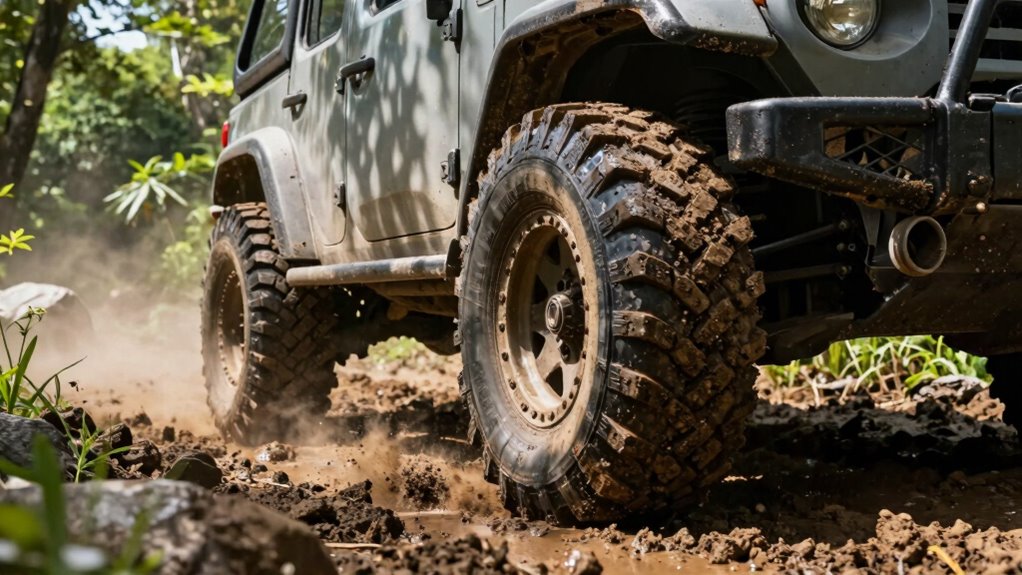

The reality of off-road tires is that no single tread pattern performs perfectly in all terrains. Aggressive treads shed mud and debris but can be noisy and less fuel-efficient on hard surfaces. Adjusting tire pressure for different conditions improves traction and lifespan. Your vehicle’s performance depends on matching tire construction and inflation to the terrain, load, and weather. If you want to understand how to optimize your off-road transit, there’s more to discover below.

Get business pricing on garage and car supplies
- Business-only prices and quantity discounts
- Tax-exempt purchasing
- Multiple users, one account, clear invoices
Key Takeaways
- Tire reality involves matching tread pattern and construction to specific terrain for optimal off-road performance.
- Aggressive treads improve mud and debris shedding but can reduce fuel efficiency and increase noise.
- Proper tire inflation tailored to terrain enhances traction, durability, and safety during off-road transit.
- No single tread pattern suits all conditions; adjusting tires based on terrain improves overall handling.
- Understanding tire construction and wear characteristics extends tire lifespan and performance in diverse environments.
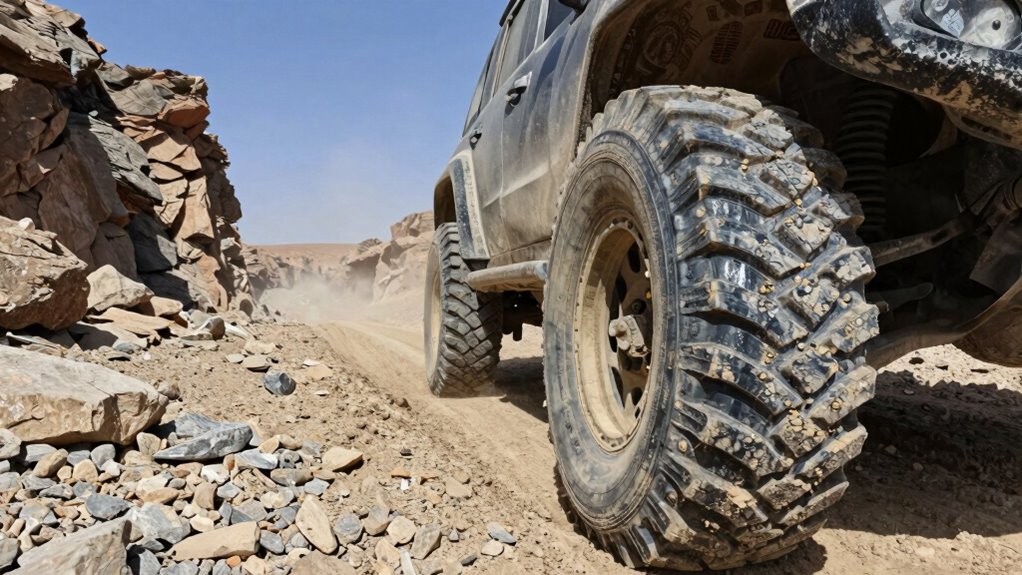
Tread patterns play a vital role in how your tires perform off-road. Manufacturer specs often highlight certain tread designs optimized for specific conditions, but real-world use shows that no single pattern performs perfectly everywhere. Deep, aggressive treads with large voids are excellent at shedding mud and debris, giving you better traction in sticky or loose environments. However, they can be noisy and less efficient on hard surfaces, increasing rolling resistance. On the other hand, tires with more continuous, less aggressive tread patterns can offer smoother rides and better fuel efficiency but may struggle in muddy or loose terrain. You might find that switching between different tread patterns based on the terrain enhances your overall experience, but this isn’t always practical. Additionally, understanding the tire construction can help you choose the best tires for your specific needs. Recognizing that terrain adaptability is crucial can help you select tires that perform well across varying conditions. Moreover, considering the wear characteristics of tires can help you select ones that last longer under off-road stresses. Ultimately, the performance of off-road transit tires hinges on how you manage tire inflation and select tread patterns suitable for specific conditions. Manufacturers may advertise impressive capabilities, but the reality is that you often need to make adjustments to get best results. Tire inflation should be tailored to terrain, load, and weather conditions, not just blindly followed from a chart. Tread patterns, while designed for particular environments, can sometimes be less effective if not matched to the terrain you’re facing. Your best approach involves understanding these elements and being willing to adapt, rather than relying solely on manufacturer claims. This way, you’ll improve traction, reduce wear, and guarantee a safer, more efficient off-road transit experience.
As an affiliate, we earn on qualifying purchases.
Frequently Asked Questions
How Do Tire Pressure Changes Affect Off-Road Vehicle Performance?
Lower tire pressure improves off-road durability by increasing grip and cushioning your vehicle against rough terrain. It allows the tires to conform to uneven surfaces, enhancing traction and stability. However, too little pressure risks tire damage or blowouts, while too much reduces off-road performance. You need to find the right balance, adjusting tire pressure based on terrain to optimize performance and protect your tires during off-road adventures.
What Are the Best Tire Types for Different Off-Road Terrains?
You’ll love the rugged grip of mud-terrain tires, their bold tire color standing out against earthy browns, perfect for rocky trails. For sandy dunes, look for tires with wider spacing and strong tire branding, offering flotation. All-terrain tires balance versatility, with durable sidewalls suited for mixed surfaces. Your choice depends on terrain; select tires that match your adventure, ensuring your vehicle’s performance and durability shine through every dirt, gravel, or mud patch.
How Often Should Off-Road Tires Be Rotated or Replaced?
You should rotate your off-road tires every 5,000 to 7,000 miles to guarantee even tread wear and maintain proper tire alignment. Regularly inspect for signs of uneven tread wear, which indicates alignment issues or the need for replacement. Replace tires when tread depth drops below 4/32 inch or if you notice cracks, bulges, or punctures. Proper maintenance helps extend tire life and keeps your off-road adventures safe.
What Maintenance Tips Ensure Longer Tire Lifespan?
Maintaining your tires is like tending a garden—you need consistent care. To guarantee longer tire lifespan, regularly check and maintain proper tire inflation, as under- or over-inflation can cause uneven wear. Rotate tires frequently to promote tread durability, especially after off-road adventures. Keep your tires clean, inspect for damage, and avoid harsh braking. Proper storage in a cool, dry place also helps preserve their condition, extending their usable life.
How Do Tire Tread Patterns Influence Off-Road Traction?
Tire tread patterns greatly influence off-road traction by channeling mud, water, and debris away, which enhances grip. Deep tread depth provides better traction on uneven surfaces and reduces tire wear, extending lifespan. Aggressive, knobby patterns excel on loose terrain like mud and sand, while smoother patterns suit rocky or hard-packed surfaces. Choosing the right tread pattern based on terrain guarantees ideal traction and minimizes tire wear during off-road adventures.
adjustable tire pressure gauge for off-road vehicles
As an affiliate, we earn on qualifying purchases.
As an affiliate, we earn on qualifying purchases.
Conclusion
Exploring off-road transit isn’t just about rugged tires; it’s about understanding their true limits. You need to choose wisely, knowing that even the toughest tires can face challenges like a delicate dancer in a storm. When you respect tire reality, your adventures become smoother, safer, and more enjoyable. So, gear up with the right tires and embrace the wild terrain—because, just like a trusted friend, they’ll be your steadfast companion through every muddy, rocky, thrilling mile ahead.
off-road tire tread pattern selection
As an affiliate, we earn on qualifying purchases.
As an affiliate, we earn on qualifying purchases.
heavy-duty off-road tires for SUVs
As an affiliate, we earn on qualifying purchases.
As an affiliate, we earn on qualifying purchases.
Halloween Picks
halloween
As an affiliate, we earn on qualifying purchases.