
As a camper builder, you need to weigh the space-saving benefits of rooftop AC units against their high power demands, especially when off-grid. Good insulation reduces cooling needs and helps manage energy consumption, but poor insulation increases strain on your system. Larger units need stronger solar and battery setups, which can be costly and complex. To create an efficient, comfortable camper, understanding these tradeoffs is essential—keep going to discover how to balance them effectively.

Get business pricing on garage and car supplies
- Business-only prices and quantity discounts
- Tax-exempt purchasing
- Multiple users, one account, clear invoices
Key Takeaways
- Larger rooftop AC units improve cooling but significantly increase power consumption, challenging solar and battery capacity.
- Good insulation reduces cooling needs, minimizing energy use and making rooftop AC operation more feasible off-grid.
- Proper airflow, shading, and unobstructed placement enhance rooftop AC efficiency and reduce energy demands.
- Balancing AC size, insulation quality, and power setup is essential for reliable off-grid camping comfort.
- Upgrading solar and battery systems is often necessary to support high-power rooftop AC units effectively.

When choosing an air conditioning system for your camper, rooftop units often seem like the best option, but they come with important tradeoffs to take into account. These units are popular because they’re integrated into the roof, saving interior space and providing a sleek look. However, their efficiency depends heavily on other factors, especially how well your camper is insulated and your access to power sources like solar power. If you plan to rely on solar panels to keep your camper cool, rooftop AC units can be a challenge, as they tend to draw a substantial amount of electricity. Without a robust solar setup and battery bank, running these units can quickly drain your power, leaving you uncomfortable during extended stays off-grid.
To mitigate this, you’ll want to focus on effective insulation techniques inside your camper. Good insulation reduces heat transfer, helping your camper stay cool longer without overworking your AC system. Materials like foam board, spray foam, or reflective insulation can greatly lower the internal temperature, meaning your rooftop unit doesn’t have to run constantly. The better insulated your camper is, the less strain you put on your power sources, especially if you’re relying on solar power. This balance is vital because a poorly insulated camper paired with a high-draw AC unit can quickly deplete your energy reserves, forcing you to choose between running your AC or conserving power for other essentials.
Another factor is how rooftop units impact your solar setup. Since these units are often larger and draw more current, you might need to upgrade your solar panels and batteries to handle the increased load. This can be an expensive upgrade, but it’s necessary if you want reliable cooling without sacrificing your off-grid independence. You’ll also need to consider airflow and shading around the rooftop unit, as obstructed vents can reduce efficiency and cause the system to work harder, further increasing power consumption. Additionally, understanding the power consumption of rooftop AC units is crucial for planning your energy needs effectively, especially when considering off-grid camping. Properly managing energy consumption is essential for maintaining off-grid comfort and efficiency. Recognizing the importance of solar power integration can help you optimize your setup for maximum performance.
In the end, the decision to install a rooftop AC depends on your camping style and energy management. If you’re committed to solar power and want to stay off-grid for extended periods, investing in thorough insulation and a suitable power setup is essential. Recognize that rooftop units offer convenience and space savings but require careful planning to make sure they don’t compromise your comfort or energy independence. Balancing these factors will help you make an informed choice that aligns with your camping needs.
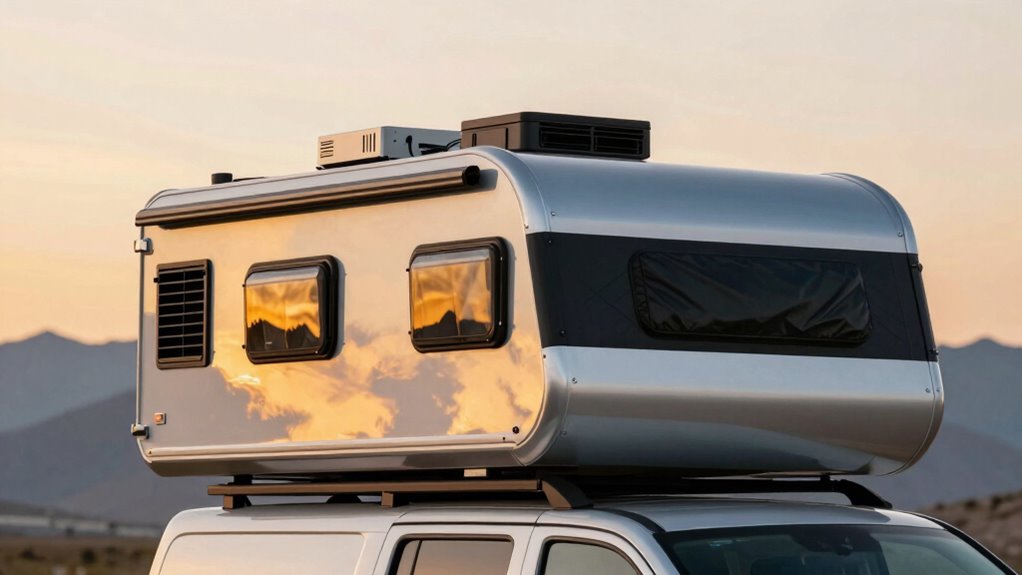
Rooftop camper air conditioner unit
As an affiliate, we earn on qualifying purchases.
As an affiliate, we earn on qualifying purchases.
Frequently Asked Questions
How Does Roof Material Affect AC Installation?
Roof material greatly impacts AC installation because it influences insulation quality and weight support. A sturdy, well-insulated roof ensures efficient cooling and prevents heat transfer, making your AC more effective. Lightweight materials can simplify installation but may compromise insulation, while heavier options offer better insulation but require stronger support structures. Consider your roof’s material to balance ease of installation, insulation, and durability, ultimately optimizing your camper’s cooling performance.
What Maintenance Is Required for Rooftop AC Units?
You should clean the filters monthly and inspect the coils annually to keep your rooftop AC running efficiently. Recharging refrigerant types as needed guarantees ideal cooling, especially since some refrigerants are more environmentally friendly. Also, monitor noise levels; quieter units often require less maintenance and are more comfortable. Regular upkeep helps prevent breakdowns, extends lifespan, and keeps your camper cool and comfortable during trips.
Are Rooftop AC Units Energy-Efficient for Campers?
Rooftop AC units can be quite energy-efficient for campers, especially if you choose models with a good balance of energy consumption and cooling capacity. They use less power compared to larger systems, making them ideal for limited energy sources like batteries or solar power. However, their efficiency depends on proper sizing and maintenance. Ensuring your unit is well-maintained helps maximize cooling capacity while minimizing energy use, keeping your camper comfortable and cost-effective.
How Does Camper Size Influence AC Choice?
Your camper size directly influences your AC choice because larger campers require units with higher cooling capacity. You need to take into account insulation requirements, as well-insulated campers retain cool air longer, allowing for a smaller unit. Ventilation considerations also matter; proper airflow ensures efficient cooling. Smaller campers might need a compact unit, while bigger ones demand more powerful ACs. Always balance size, insulation, and ventilation for maximum comfort and energy efficiency.
Can Rooftop AC Units Be Used in All Weather Conditions?
Rooftop AC units can generally be used in various weather conditions, but extreme temperatures or heavy rain might pose challenges. When considering solar power, make sure your setup can support the AC’s energy needs, especially in hot weather. Also, think about noise levels, as some units can be loud, which might impact comfort during rainstorms or chilly nights. Proper insulation and weatherproofing help maximize performance in all conditions.
solar compatible RV air conditioner
As an affiliate, we earn on qualifying purchases.
As an affiliate, we earn on qualifying purchases.
Conclusion
In the world of camper building, balancing budget and brilliance can be a challenging dance. By understanding the rooftop AC tradeoff, you’ll make smarter, smoother decisions that suit your space and style. Remember, weighing watts against wages and comfort against cost creates a clear path to cooler, calmer adventures. So, seize the knowledge, streamline your choices, and set the stage for a serene, summer-ready sanctuary on wheels. Your perfect camper comfort is well within your reach!
insulation materials for camper van
As an affiliate, we earn on qualifying purchases.
As an affiliate, we earn on qualifying purchases.
high capacity RV solar panel kit
As an affiliate, we earn on qualifying purchases.
As an affiliate, we earn on qualifying purchases.
Halloween Picks
halloween
As an affiliate, we earn on qualifying purchases.