
TL;DR
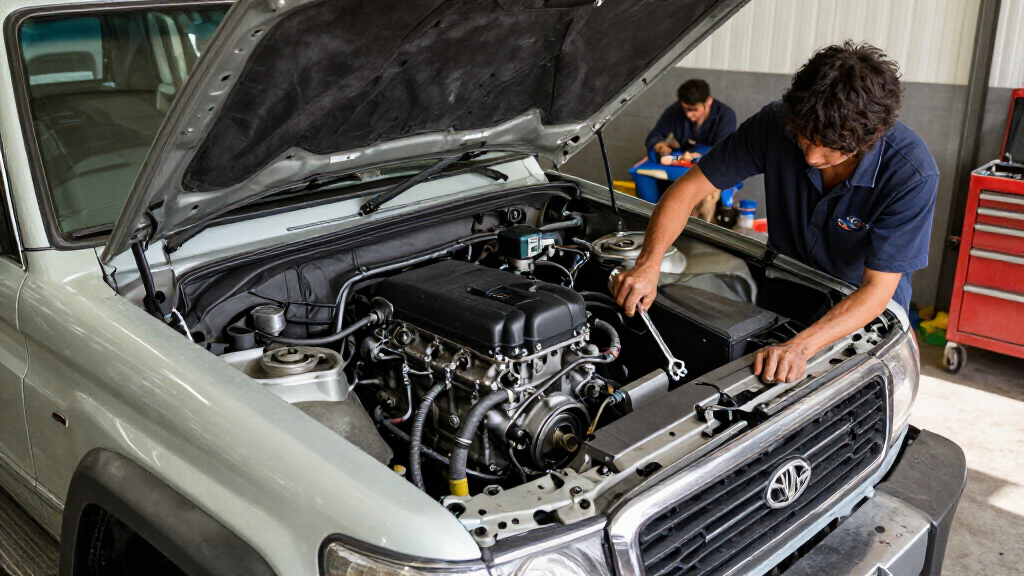
A Land Cruiser featured by The Drive has been fitted with a Yanmar 6LP marine diesel, a 4.2-liter, 24-valve inline-six related to a factory Toyota engine. The builder reports 320 horsepower and a 0–60 mph time of 8.8 seconds, compared with 16 seconds for the original engine; independent testing details were not provided.
A builder featured by Rare Vehicles in Action has installed a Yanmar 6LP marine diesel in an 80-Series Toyota Land Cruiser, reporting 320 horsepower—about twice the output of the vehicle’s original 12-valve diesel. The conversion matters because it adapts a boat engine related to a factory Land Cruiser powerplant, while the reported acceleration figures suggest a major performance change for a large, slow-moving SUV.

Get business pricing on garage and car supplies
- Business-only prices and quantity discounts
- Tax-exempt purchasing
- Multiple users, one account, clear invoices
The Yanmar 6LP is a 4.2-liter, 24-valve inline-six described in The Drive’s report as a marine version of the 1HD-FT turbodiesel that was briefly offered in the 80-Series. The vehicle already had a factory 4.2-liter turbodiesel, but the original engine used 12 valves. The builder says the replacement produces 320 horsepower, roughly double the stock engine’s output.
The report gives a claimed 0–60 mph time of 8.8 seconds, compared with 16 seconds for the original setup. The builder said that run was made with the stock air intake, which they described as restrictive. The source does not provide test conditions, instrumentation, or an independent verification of the power and acceleration figures, so they should be treated as reported build claims.
Making the marine engine fit required several changes. The seawater cooling pump was removed and a Toyota cooling system installed; Toyota parts also replaced the Yanmar oil sump and pickup to provide clearance. The injector pump was swapped because the Yanmar unit lacked a threaded boss for the tachometer connection. The engine drives a Toyota H152 five-speed manual gearbox, which the report says lets the Land Cruiser travel at 60 mph at about 1,600 rpm.
A Marine Engine, Adapted for Road Use
The build shows how an engine intended for a boat can serve in a road vehicle when it shares a close relationship with an automotive engine. Here, the connection to Toyota’s own 4.2-liter diesel family gives the swap a foundation, but the cooling, lubrication, and instrumentation changes illustrate that a marine engine is not automatically a drop-in replacement.
For readers interested in older 4x4s, the reported power gain is striking against the 80-Series’ reputation for durability rather than speed. The result also highlights a practical distinction: the engine’s reported output is only one part of a usable conversion. Gearbox pairing, cooling, clearance, and the condition of the rest of the vehicle all matter. The Drive reports that this Land Cruiser also received a rebuilt front axle, corrosion repairs, electrical work, and a new exhaust.
Products Worth Considering

Vantrue N4 Pro S 4K 3-Channel Dash Cam with Triple STARVIS 2 Sensors

NOCO Boost GB70 2000A 12V Lithium Jump Starter

NOCO Boost Air AX65 2000A 12V Jump Starter with Air Compressor and Tire Inflator
As an affiliate, we earn on qualifying purchases.
From Factory Diesel to 6LP
The 80-Series Land Cruiser was offered with several engines depending on market. The particular vehicle in this report had a factory 4.2-liter turbodiesel, and the Yanmar replacement belongs to a related engine family. The swap is therefore different from fitting an unrelated boat engine: the marine unit is described as a descendant or marine counterpart of a diesel that Toyota itself used in the model.
The project was featured on the Rare Vehicles in Action YouTube channel and covered by The Drive. According to the report, the Land Cruiser had covered about 200,000 miles with its original owner before the restoration and conversion work. That history provides context for the broader refurbishment, but the source does not give a full build date or a detailed service record.
“The engine produces 320 horsepower.”
— Rare Vehicles in Action builder, as described by The Drive
Performance Figures Need Verification
The source does not say whether the 320-horsepower figure comes from a dyno, a manufacturer rating, or another calculation. It also gives no details on the surface, vehicle load, measurement equipment, or repeatability of the reported 0–60 mph run. The comparison with the original 16-second time is reported, but the source does not establish that both figures were measured under the same conditions.
Other details are also absent, including the exact model year, the full cost of the conversion, fuel economy, emissions compliance, and long-term reliability. The report says the vehicle was thoroughly refurbished and had roughly 200,000 miles on it before the work, but does not document how far it has driven since the engine swap.
Further Testing Would Clarify Results
The immediate next step for readers seeking a firmer performance comparison would be published test details or independent measurements of the engine and vehicle. A verified dyno result, repeatable acceleration testing, and information on the Land Cruiser’s final weight and gearing would help establish how much of the reported improvement comes from the engine itself.
The source does not announce a future test, sale, or additional development for the vehicle. For now, the build stands as a documented example of a marine-derived diesel conversion, with its headline performance figures attributed to the builder rather than independently confirmed.
Key Questions
What engine was installed in the Land Cruiser?
The build uses a Yanmar 6LP, a 4.2-liter, 24-valve marine turbodiesel inline-six related to Toyota’s 1HD-FT engine.
How much power does the converted Land Cruiser reportedly make?
The builder reports 320 horsepower, about twice the output of the original 12-valve diesel. The source does not provide independent dyno confirmation.
How quick is it from zero to 60 mph?
The reported time is 8.8 seconds, compared with 16 seconds for the original setup. The report does not give testing conditions or confirm that the figures were measured in the same way.
Did the marine engine fit without modifications?
No. The builder replaced the seawater cooling pump with Toyota cooling components and fitted Toyota oil-pan and injector-pump parts to address clearance and tachometer connection needs.
Is the conversion a factory-supported Toyota setup?
The report describes a custom conversion, not a factory Toyota configuration. It does not provide details about certification, emissions compliance, or road-legal status.
Source: thedrive.com