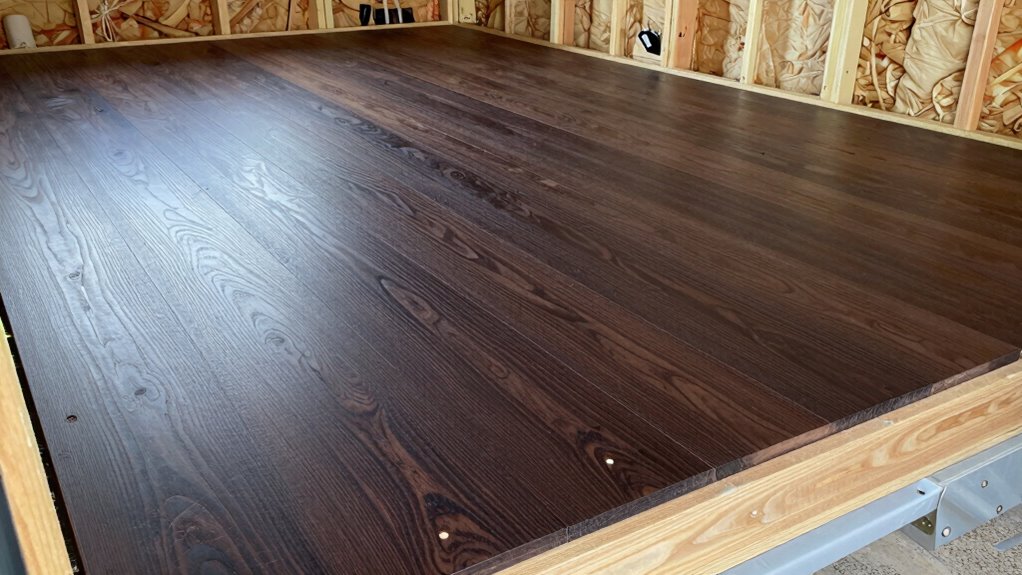

To construct a durable van floor, start by selecting a sturdy subfloor like plywood or oriented strand board (OSB) that’s thick enough to support weight and withstand moisture. Pair it with durable, insulating top layers such as vinyl, laminate, or wood for comfort and longevity. Make certain your subfloor is properly sealed and supported to prevent sagging or water damage. Keep exploring further to discover the best combination of materials for your climate and needs.
Key Takeaways
- Choose a durable, moisture-resistant subfloor material like plywood or OSB for stability and longevity.
- Insulate beneath the subfloor using foam board or rigid insulation to improve thermal performance.
- Ensure a tight, gap-free fit of the subfloor to prevent movement and reduce heat transfer.
- Seal seams and edges with appropriate tape or sealant to prevent air and moisture infiltration.
- Use a strong, waterproof flooring material such as vinyl, laminate, or rubber for long-lasting, solid coverage.

Choosing the right insulation depends on your specific needs, but making sure that your subfloor is well-insulated is critical for long-term comfort and energy efficiency. Additionally, proper insulation installation ensures maximum thermal performance and reduces heat transfer through the floor. Incorporating insulation installation techniques can help optimize your van’s overall insulation effectiveness.
Frequently Asked Questions
How Do I Prevent Moisture Buildup Under My Van Floor?
To prevent moisture buildup under your van floor, you should improve ventilation strategies by installing vents or fans to promote airflow. Additionally, use a moisture barrier like a vapor barrier or plastic sheeting beneath the subfloor to block moisture from seeping in. Regularly inspect for leaks or condensation, and consider adding insulation that resists moisture to keep the area dry and prevent mold growth.
What Are the Best Insulation Options for Van Flooring?
You should choose insulation like foam board or spray foam for your van flooring, as they offer excellent thermal and soundproofing qualities. Add soundproofing materials like mass-loaded vinyl or rubber mats to reduce noise. For a decorative finish, install vinyl or laminate flooring over the insulation. This combination keeps your van warm, quiet, and stylish, making your traveling experience more comfortable and enjoyable.
Can I Install Heated Flooring in a Van?
Yes, you can install heated floors in a van. You should choose heated flooring options compatible with van insulation, such as electric in-floor heating mats or hydronic systems. make certain your van insulation is sufficient to retain heat and protect the system. Proper installation is key; consider professional help to integrate the heating system seamlessly and safely, providing cozy warmth during cold trips.
How Do I Repair Damaged Subfloor Sections?
Imagine your van’s subfloor as a sturdy foundation suddenly marred by damaged sections. To repair, you start by removing the compromised area with a circular saw, then clean and level the exposed subfloor. Cut a matching piece of plywood, secure it with screws, and seal the joints with construction adhesive. Sand the repair smooth, ensuring a seamless surface ready for your new flooring, restoring strength and durability.
What Are Eco-Friendly Flooring Alternatives for Vans?
You can opt for eco-friendly flooring alternatives like sustainable materials such as cork, bamboo, or reclaimed wood, which are renewable and environmentally gentle. Recycled flooring made from repurposed wood or rubber also works great, reducing waste and lowering your carbon footprint. These options are durable, lightweight, and easy to install, making them ideal for van conversions while supporting sustainability efforts.
Conclusion
Choosing the right flooring and subfloor sets the foundation for your van’s comfort and durability. With careful planning and quality materials, you’ll create a space that feels solid and inviting. Remember, isn’t it worth investing in a floor that’ll support your adventures for years to come? Your van is more than just a vehicle—it’s your home on wheels, so make sure every step you take is built on a strong, reliable foundation.