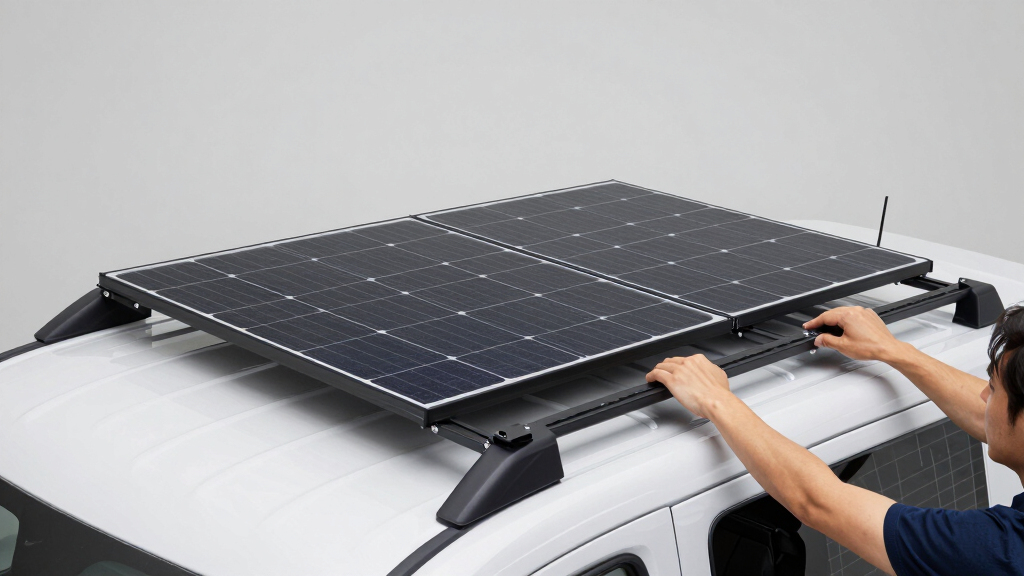

When selecting the best Ford Transit solar power kit, the goal is reliable, efficient energy generation tailored to van life. The Renogy 400W Premium Solar Kit stands out as the top overall choice for its high capacity and advanced MPPT controller, ideal for those with demanding power needs. For budget-conscious buyers, the SOLPERK 20W Solar Panel Kit offers a simple, compact solution, though it sacrifices some capacity. The main tradeoffs involve balancing power output, ease of installation, and cost. Continue reading for a detailed breakdown that will help you pick the right setup for your Ford Transit.

Get business pricing on garage and car supplies
- Business-only prices and quantity discounts
- Tax-exempt purchasing
- Multiple users, one account, clear invoices
Complete the kit


Key Takeaways
- High-capacity kits like the Renogy 400W provide more power but come with higher cost and complexity.
- MPPT charge controllers outperform PWM systems in efficiency, especially in variable sunlight conditions.
- Compact kits such as the SOLPERK 20W are ideal for minimal power needs or as supplementary charging sources.
- Battery options, especially lithium-based, significantly influence the overall system performance and longevity.
- Ease of installation varies widely; kits with pre-wired components save time but may limit customization.
| Renogy 400W Premium Solar Kit with 40A MPPT Charge Controller |  | Best Overall for High Efficiency and Remote Monitoring | Max Battery Voltage: 32V | Efficiency: High Efficiency | Maximum Voltage: 12 volts | VIEW LATEST PRICE | See Our Full Breakdown |
| 12V Solar Battery Charger 20W Solar Panel Kit |  | Best for Basic, Small-Scale Off-Grid Power | Power: 20W | Voltage: 12V | Material: Monocrystalline silicon | VIEW LATEST PRICE | See Our Full Breakdown |
| ECO-WORTHY 200 Watts 12V/24V Solar Panel Kit with Monocrystalline Panels and 30A PWM Charge Controller |  | Best for Versatile Off-Grid Applications | Power: 200 Watts | Voltage: 12V/24V | Panel Type: Monocrystalline | VIEW LATEST PRICE | See Our Full Breakdown |
| Renogy 100W 12V Solar Panel Starter Kit with 30A PWM Controller |  | Best for Beginners and Small-Scale Setups | Power: 100W | Voltage: 12V | Controller: 30A PWM | VIEW LATEST PRICE | See Our Full Breakdown |
| Go Power Overlander 200W 12V Solar Panel Charging Kit |  | Best for RV Power Maintenance and Expandability | Power Output: 200W | Amperage: 9.6A | Controller: 30A PWM with Bluetooth | VIEW LATEST PRICE | See Our Full Breakdown |
| SOLPERK 20W 12V Solar Panel Kit with Charge Controller and Mounting Bracket |  | Best for Small-Scale Charging and Maintenance | Efficiency: 21%-30% | Amperage Capacity: 8 A | Maximum Voltage: 12 volts | VIEW LATEST PRICE | See Our Full Breakdown |
| 100W 12V Solar Power Kit with 20Ah LiFePO4 Battery, Monocrystalline Panel, and PWM Charge Controller |  | Best for Moderate Off-Grid Power with Reliable Storage | Battery: 12V 20Ah LiFePO4 Lithium | Solar Panel: 100W Monocrystalline | Charge Controller: 10A PWM | VIEW LATEST PRICE | See Our Full Breakdown |
| 200W 12V Solar Power Kit with Lithium Batteries and MPPT Charge Controller |  | Best for High-Capacity Off-Grid Power and Smart Monitoring | Batteries: 2 x 12V 20Ah LiFePO4 | Solar Panels: 2 x 100W Monocrystalline | Charge Controller: 20A MPPT with Bluetooth | VIEW LATEST PRICE | See Our Full Breakdown |
More Details on Our Top Picks
Renogy 400W Premium Solar Kit with 40A MPPT Charge Controller
This kit stands out for its high-efficiency monocrystalline panels and a powerful 40A MPPT charge controller with Bluetooth, making it ideal for those who want maximum energy output and easy system management. Compared with the ECO-WORTHY 200W kit, the Renogy system offers superior efficiency and a more advanced monitoring interface, though it is heavier and more complex to install. Its sturdy build and safety features make it well-suited for off-grid applications that demand reliable, long-term performance. The main tradeoff is its weight and focus on 12V off-grid setups—it’s not compatible with grid-tied systems or larger 48V arrays. This kit makes the most sense for serious off-grid users who prioritize efficiency and remote control.
Pros:- High-efficiency monocrystalline panels for maximum power generation
- Bluetooth-enabled MPPT charge controller for remote monitoring
- Sturdy, easy-to-setup components with comprehensive safety features
Cons:- Heavy weight may require multiple installers
- Limited to 12V systems, not suitable for larger or grid-tied setups
Best for: Experienced off-grid enthusiasts seeking high efficiency and remote system management
Not ideal for: Casual users or those with limited installation experience, due to weight and setup complexity
- Max Battery Voltage:32V
- Efficiency:High Efficiency
- Maximum Voltage:12 volts
- Maximum Power:100 watts
- Special Features:Bluetooth monitoring, MPPT technology
- Output Voltage:12 volts
- Connector Type:MC4
- Item Dimensions:41.8″L x 20.9″W x 1.38″H
- Item Weight:56.4 pounds
Our verdict“This kit is best suited for experienced users who want top-tier efficiency and remote system control in off-grid applications.”
12V Solar Battery Charger 20W Solar Panel Kit
This compact kit offers a straightforward 20W monocrystalline panel with a built-in 10A charge controller, making it perfect for small-scale, mobile, or backup power needs. Unlike the larger and more advanced Renogy or ECO-WORTHY kits, it delivers just enough power for minimal loads or maintaining small batteries. Its waterproof and weather-resistant design ensures durability in outdoor conditions, but the limited 20W output means it won’t meet high energy demands—making it less suitable for larger RV or camper setups. The adjustable mounting bracket adds convenience, but users should be prepared for some technical setup to optimize performance. This makes it ideal for casual users or those wanting an easy, portable solar solution.
Pros:- High-efficiency monocrystalline cells for better output
- Weatherproof and durable for outdoor use
- Adjustable mounting for sun tracking
Cons:- Limited to 20W, not suitable for high energy needs
- No included battery or additional accessories
Best for: Casual users needing a simple, portable solar panel for small batteries or trickle charging
Not ideal for: High-demand applications or larger RV setups requiring more power than 20W
- Power:20W
- Voltage:12V
- Material:Monocrystalline silicon
- Frame:Corrosion-resistant aluminum
- Charge Controller:10A with LCD
- Adjustable Bracket:360°
Our verdict“This kit suits small-scale, portable solar needs but isn’t meant for high-power or large RV systems.”
ECO-WORTHY 200 Watts 12V/24V Solar Panel Kit with Monocrystalline Panels and 30A PWM Charge Controller
This kit provides a balanced combination of high-efficiency monocrystalline panels and a robust 30A PWM controller, making it a versatile choice for RVs, boats, or backup power. Compared to the Renogy 400W kit, it offers a slightly lower maximum wattage but includes full accessories for straightforward installation. Its durable aluminum frame and weather-resistant design make it suitable for outdoor, long-term use in various climates. The ability to support series or parallel configurations for 12V or 24V systems adds flexibility. The main tradeoff is its limited power capacity—200W may be insufficient for larger energy needs, and its one-year warranty is less comprehensive than premium options. It works well for moderate off-grid setups where durability matters more than maximum capacity.
Pros:- High-efficiency monocrystalline panels up to 21.5%
- Complete kit with mounting and connection accessories
- Supports series/parallel for flexible voltages
Cons:- Limited to 200W total capacity, may not meet high power needs
- One-year warranty limits long-term peace of mind
Best for: Moderate off-grid users needing reliable, versatile solar for RVs or backup systems
Not ideal for: High-energy-demand setups or those seeking advanced monitoring features
- Power:200 Watts
- Voltage:12V/24V
- Panel Type:Monocrystalline
- Efficiency:Up to 21.5%
- Frame Material:Aluminum alloy
- Wind Resistance:2400 Pa
- Snow Load:5400 Pa
- Includes:2 panels, mounting brackets, charge controller, cables
Our verdict“Ideal for users requiring durable, flexible solar for moderate off-grid applications, but not for high-capacity needs.”
Renogy 100W 12V Solar Panel Starter Kit with 30A PWM Controller
This starter kit offers an easy entry point into solar power with a 100W monocrystalline panel and a reliable 30A PWM controller. Compared to larger kits like ECO-WORTHY or Go Power, it provides sufficient power for small projects or battery maintenance, with straightforward wiring and safety features. Its high efficiency (22.5%) ensures good performance even in less-than-ideal sunlight. The weather resistance and certifications add confidence for outdoor use, but the limited expansion potential—up to 400W with more panels—and shorter warranty durations make it less appealing for long-term or larger-scale systems. This kit makes the most sense for beginners or small off-grid projects where simplicity and reliability are priorities.
Pros:- High cell efficiency at 22.5%
- Weather-resistant with multiple safety certifications
- Easy-to-install with remote Bluetooth monitoring option
Cons:- Limited expansion options beyond 400W
- Shorter warranty compared to premium kits
Best for: Beginners and small-scale solar users new to off-grid energy systems
Not ideal for: Power users or those needing expandable, high-capacity solutions
- Power:100W
- Voltage:12V
- Controller:30A PWM
- Cell Efficiency:22.5%
- Weather Resistance:UL and IEC certified
- Monitoring:Optional Bluetooth
- Warranty:10 years for panel, 2 years for controller
Our verdict“Best suited for beginners or small-scale applications needing straightforward, reliable solar power.”
Go Power Overlander 200W 12V Solar Panel Charging Kit
The Go Power Overlander kit provides 200W of power, making it a strong choice for maintaining RV batteries during extended trips. Its Bluetooth-enabled PWM controller simplifies monitoring, and the panels are built for durability with a 25-year output warranty. Compared with the ECO-WORTHY 200W kit, the Go Power system emphasizes ease of use and expandability, supporting systems up to 600W, making it suitable for those planning future capacity upgrades. However, it requires some installation knowledge and the basic kit is limited to 200W without additional panels. Its focus on RV applications and easy expandability makes it appealing for campers who want reliable power with room for growth.
Pros:- High power output ideal for RV battery maintenance
- Durable panels with a 25-year output warranty
- Expandable system to up to 600W
Cons:- Requires installation and basic electrical knowledge
- Limited to 200W in the standard kit
Best for: RV travelers and campers seeking a reliable, expandable solar solution
Not ideal for: Users with fixed, large-scale off-grid setups or requiring grid-tie options
- Power Output:200W
- Amperage:9.6A
- Controller:30A PWM with Bluetooth
- Cable Length:2x 25ft
- Expandable System:Supports up to 600W
Our verdict“This kit is perfect for RV users wanting a dependable, expandable solar charging system for extended trips.”
SOLPERK 20W 12V Solar Panel Kit with Charge Controller and Mounting Bracket
This kit stands out for its simplicity and durability, making it ideal for maintaining 12V batteries in a Ford Transit with minimal space. Compared to larger kits like the 200W MPPT setup, it offers a modest 20W output, which limits its ability to support larger energy loads but excels in trickle charging or backup scenarios. Its weatherproof construction and adjustable mountings ensure longevity and flexible installation, though the limited power means it’s not suitable for powering appliances. The included smart charge controller safeguards batteries from overcharge, adding peace of mind. However, its small size and power output mean it’s better suited for auxiliary charging rather than full off-grid power. This pick makes the most sense for owners who need a reliable, low-cost way to keep batteries topped up during storage or light-use situations.Pros:- High-efficiency monocrystalline cells with 21-30% efficiency
- Weatherproof, durable, with a lifespan up to 25 years
- Includes smart 8A charge controller with protection features
Cons:- Limited to 20W, unsuitable for high power demands
- Requires some technical knowledge for optimal installation
Best for: Owners of Ford Transit looking to maintain or top off batteries in a compact, weather-resistant package.
Not ideal for: Those wanting to power large appliances or run their entire van off-grid, as the 20W output is too limited.
- Efficiency:21%-30%
- Amperage Capacity:8 A
- Maximum Voltage:12 volts
- Maximum Power:20 watts
- Output Voltage:12 volts
- Item Dimensions:15″L x 13.2″W x 0.7″H
- Item Weight:3 pounds
- Material Type:Aluminum, Monocrystalline Silicon
- Warranty:1 year
Our verdict“This kit is ideal for small-scale battery maintenance and trickle charging in tight spaces or backup scenarios.”
100W 12V Solar Power Kit with 20Ah LiFePO4 Battery, Monocrystalline Panel, and PWM Charge Controller
This kit makes a strong case for owners needing a balanced mix of power and ease of use, especially compared to the smaller SOLPERK setup. Its 100W solar panel and 20Ah LiFePO4 battery deliver more capacity, suitable for running small appliances or supplementing vehicle systems during off-grid adventures. The smart, temperature-regulated charging system ensures safe, efficient energy transfer, while basic setup is manageable for those with some solar experience. Unlike the 200W kit, it’s less complex and more affordable, though it can’t support high-demand devices or longer off-grid periods without expansion. The included mounting and cabling accessories streamline installation, making it appealing for DIY enthusiasts. It’s best suited for campers or RV owners who want reliable, moderate power without the complexity of larger systems.Pros:- Long cycle life and safety features of LiFePO4 batteries
- Automatic detection for 12V and 24V systems
- Includes comprehensive mounting and cabling accessories
Cons:- Limited to 100W, not ideal for high energy needs
- Requires basic understanding of solar systems for optimal setup
Best for: Campers or RV owners seeking a straightforward, reliable off-grid power solution with good battery management.
Not ideal for: Power users needing to run multiple appliances or large electronics continuously, as the 100W capacity limits runtime.
- Battery:12V 20Ah LiFePO4 Lithium
- Solar Panel:100W Monocrystalline
- Charge Controller:10A PWM
- Cables:10ft 12AWG MC4, 6ft 12AWG Battery
- Mounting:Solar Panel Mounting Brackets
Our verdict“This kit offers a reliable and manageable power boost for moderate off-grid use in Ford Transits with some technical know-how.”
200W 12V Solar Power Kit with Lithium Batteries and MPPT Charge Controller
This setup clearly targets owners who need substantial energy generation and storage, especially when compared to the 100W kit. Its combination of two 100W panels and two 20Ah LiFePO4 batteries offers a significant boost in capacity, suitable for longer trips or running larger devices. The MPPT controller with Bluetooth provides real-time monitoring and maximum efficiency, making it a smart choice for tech-savvy users. However, its higher complexity and setup requirements mean it’s not the best option for beginners. While it doesn’t include an inverter, it can be paired with one for AC power needs. Overall, this kit delivers high performance and longevity for those willing to handle a more involved installation process, ideal for serious off-grid enthusiasts.Pros:- High-capacity lithium batteries with long cycle life
- Efficient MPPT charge controller with Bluetooth monitoring
- Complete kit with multiple panels and robust mounting hardware
Cons:- Requires some technical knowledge for proper setup
- Limited to 200W, not suitable for very high power demands
Best for: Experienced vanlifers or DIYers seeking a high-capacity, smart, off-grid power system for extended use in Ford Transits.
Not ideal for: Beginners or those with limited technical skills, as the setup and configuration are more complex.
- Batteries:2 x 12V 20Ah LiFePO4
- Solar Panels:2 x 100W Monocrystalline
- Charge Controller:20A MPPT with Bluetooth
- Cables:10ft 12AWG MC4, 6ft 12AWG Battery
- Mounting Hardware:Brackets, Y Branch Adapter
Our verdict“This kit is best for experienced users who want a high-capacity, intelligent solar power system for extended off-grid use in Ford Transits.”

How We Picked
Products were evaluated based on power capacity, system efficiency, build quality, ease of installation, and overall value. Priority was given to systems that balance performance with user-friendly features, considering both beginner-friendly options and more advanced setups for experienced van dwellers. The ranking reflects how well each kit suits typical Ford Transit configurations, with a focus on reliability, expandability, and cost-effectiveness. We aimed to highlight options for different budgets and power needs, ensuring each product offers a meaningful advantage for its intended use.Factors to Consider When Choosing Best Ford Transit Solar Power Kits
Choosing the right Ford Transit solar power kit involves several critical factors. Beyond raw wattage, considerations include system efficiency, battery compatibility, installation complexity, and overall durability. Making an informed decision requires understanding how these elements impact your daily van life and long-term energy independence. This guide covers key points to help you navigate these tradeoffs and avoid common pitfalls.Power Capacity and Future Expansion
Assess your daily energy needs carefully to select a kit with adequate wattage. Overestimating capacity provides headroom for additional appliances or increased usage, while underestimating can lead to frequent recharging. Consider systems that allow easy expansion, especially if you plan to add more devices or batteries later. Picking a slightly larger kit initially can save money and effort down the line, but larger systems often mean higher upfront costs and more complex installation.
Type of Charge Controller: MPPT vs PWM
MPPT controllers, like those used in higher-end kits, are more efficient, especially in fluctuating sunlight, translating into more power harvest per sun hour. PWM controllers are simpler and cheaper but less efficient and suitable mainly for small or static systems. For Ford Transit setups where maximizing energy is critical — especially in variable weather — investing in an MPPT controller tends to be more cost-effective over time, despite the higher initial price.
Battery Choice and Storage
The type of batteries you choose directly impacts system lifespan, weight, and performance. Lithium-ion batteries, such as LiFePO4, offer longer cycle life, faster charging, and lower maintenance compared to lead-acid types. When selecting a kit, check whether it includes integrated batteries or if you need to purchase them separately. Proper sizing of your battery bank is essential to match your power consumption and ensure reliable operation without frequent recharging.
Ease of Installation and Maintenance
Some kits come with plug-and-play wiring, mounting brackets, and clear instructions, making DIY installation manageable even for beginners. Others may require more advanced electrical skills or professional help, which adds cost and time. Consider your comfort level with electrical work and the complexity of your van’s roof to avoid setup frustrations. Regular maintenance, such as cleaning panels and checking connections, is also an important factor in long-term reliability.
Durability and Weather Resistance
Solar panels exposed to the elements must withstand wind, rain, and temperature swings. Look for panels with robust frames, tempered glass, and corrosion-resistant coatings. For Ford Transit owners in challenging climates, investing in higher-quality panels with better weatherproofing can prevent damage and extend lifespan. This upfront investment can significantly reduce replacement costs and system downtime over years of use.
Frequently Asked Questions
Can I install solar panels on my Ford Transit myself?
Yes, many Ford Transit solar kits are designed for DIY installation, especially those with pre-wired components and straightforward mounting hardware. However, it’s important to have a basic understanding of electrical systems and proper safety precautions. If you’re uncertain or lack experience, consulting a professional can ensure the system is installed correctly and safely, which can prevent long-term issues and maximize performance.
How much power do I need for everyday van life?
The average power requirement varies based on your appliances and usage habits. Basic needs like lighting, a small fridge, and charging devices may require around 100-200W of solar capacity. If you plan to run larger appliances or multiple devices simultaneously, you might need 400W or more. Carefully calculating your daily energy consumption helps determine the appropriate kit size, avoiding overspending or inadequate power supply.
Are lithium batteries worth the extra cost?
In most cases, lithium batteries offer superior performance, longer lifespan, and lower maintenance compared to lead-acid options. They charge faster and tolerate deeper discharges, which makes them ideal for van life where space and weight are limited. While they do have a higher initial cost, their longevity and efficiency often justify the investment, especially for those relying heavily on solar power for extended trips.
What’s the difference between MPPT and PWM controllers in real-world use?
MPPT controllers are more efficient because they maximize energy extraction from the solar panels, especially in less-than-ideal sunlight conditions. They adjust their input voltage to match the battery, resulting in more effective charging. PWM controllers are simpler and less costly but tend to waste some energy, making them suitable mainly for small or static systems. For a Ford Transit that may experience variable sunlight, MPPT controllers generally provide better long-term value.
Should I prioritize larger panels or more efficient technology?
Both factors matter, but the decision depends on your available roof space and budget. Larger panels provide more power but require more space and can be heavier, which might be a concern on a van roof. More efficient panels, like monocrystalline types, generate more power in a smaller footprint, making them ideal for limited space. Balancing panel size, efficiency, and weight will help you optimize your system for your specific van setup.
Conclusion
For most Ford Transit owners, the Renogy 400W Premium Solar Kit offers the best overall balance of capacity, efficiency, and expandability, making it ideal for those with higher power demands. Budget-conscious buyers or those with minimal energy needs will find the SOLPERK 20W Solar Panel Kit to be a practical entry point. For newcomers, the Renogy 100W Starter Kit delivers simplicity and reliability, while advanced users seeking maximum performance should consider the 200W Lithium System with MPPT Controller. By matching your specific needs and budget to these options, you can confidently power your Ford Transit wherever your adventures take you.
Evergreen bestsellers Picks

Apple AirPods Pro 3 Wireless Earbuds with Active Noise Cancellation

Samsung 85-Inch M80H Series 4K Mini LED Smart TV (2026)

TCL 85-Inch QM6K QLED Mini LED 4K HDR Smart Google TV, 144Hz
As an affiliate, we earn on qualifying purchases.