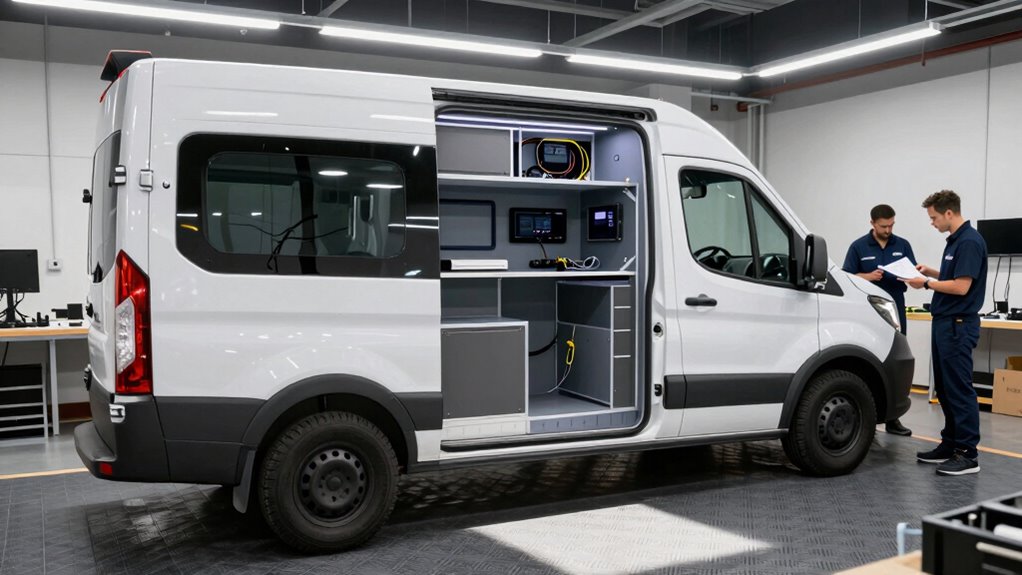
Transit upfitting isn’t just about adding parts; it’s about customizing your vehicle to meet safety, efficiency, and operational demands. You need to evaluate how your vehicles will be used, adhere to safety regulations, and optimize performance. It’s a strategic process that guarantees every element works together seamlessly. If you want to understand how an all-encompassing approach can benefit your fleet and keep operations smooth, there’s more to explore below.
Key Takeaways
- Upfitting involves comprehensive customization focused on safety, efficiency, and operational needs, not just adding individual parts.
- It ensures vehicles meet safety regulations, compliance standards, and are tailored for specific operational environments.
- Expert upfitting integrates vehicle features seamlessly into workflows, enhancing productivity and reducing downtime.
- It is a strategic investment that requires careful planning to create reliable, compliant, and efficient fleet vehicles.
- Upfitting considers the whole vehicle system, including safety, durability, and regulatory adherence, beyond mere part installation.
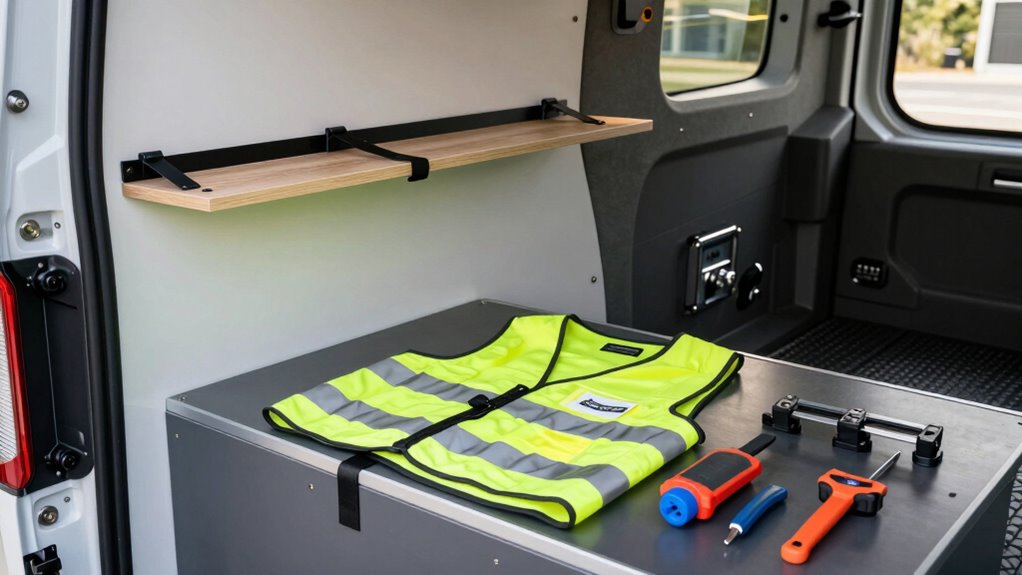
Transit upfitting transforms standard vehicles into tailored solutions that meet specific operational needs, whether for commercial, recreational, or specialized purposes. It’s easy to assume that upfitting is just about adding parts or accessories, but in reality, it’s so much more. When you’re customizing a vehicle, you’re shaping its entire functionality to fit your unique requirements. That means considering how the vehicle will be used, what safety regulations apply, and how to optimize efficiency and safety at every turn. It’s not simply about installing shelves or adding a partition; it’s about creating a cohesive system that enhances performance and guarantees compliance.
Transit upfitting is about more than parts—it’s designing vehicles for safety, efficiency, and tailored operational performance.
One of the main reasons why transit upfitting is never just about parts is because of the importance of fleet customization. Every fleet has different needs—some require secure cargo spaces, others need passenger comfort, and some need specialized equipment for specific tasks. When you opt for a tailored upfit, you’re designing a vehicle that integrates seamlessly into your operations, reducing downtime and increasing productivity. This process involves selecting the right materials, layout, and technology to match your operational goals. It’s about understanding how each element interacts with the whole vehicle, rather than just adding components haphazardly. Additionally, fleet customization involves understanding your operational environment to select features that enhance durability and longevity, which can be influenced by factors like climate and terrain.
Safety regulations are another critical factor that elevates the significance of upfitting beyond mere parts installation. You can’t ignore the rules that govern vehicle safety and compliance. Proper upfitting ensures that your vehicle meets all relevant safety standards, whether those regulations specify crashworthiness, securement of loads, or accessibility features. Failing to adhere to safety regulations can lead to legal issues, fines, or worse—accidents that could have been prevented. That’s why a professional upfit isn’t just about aesthetics or convenience; it’s about embedding safety into the design from the ground up. Additionally, safety regulations often evolve, so working with experts helps ensure ongoing compliance as standards change. Incorporating upfitting standards early in the process can also streamline inspections and certifications down the line. Recognizing the importance of compliance requirements can help prevent costly delays and ensure your fleet remains operational. Moreover, understanding the regulatory landscape is crucial for maintaining continuous compliance and avoiding penalties.
When you work with experts, they consider all these elements—fleet customization, safety regulations, operational efficiency—to craft a vehicle that’s not only functional but also safe and compliant. This holistic approach makes it clear that transit upfitting isn’t just about parts. It’s about creating a reliable, efficient, and safe vehicle that serves your purpose perfectly. So, the next time you think about upfitting, remember it’s a strategic investment, one that demands careful planning and expert execution, rather than just slapping on some new parts. This mindset ensures your fleet remains compliant, efficient, and ready to meet whatever challenges come your way.

USKITS DOT OSHA ANSI Compliant Kit with Shield USA Made 2.5lb 1A10BC Fire Extinguisher – Ideal for Commercial Trucks, Vans, Pickup Trucks, and Delivery Vehicles – USA Made Kit!
- Made in USA 2.5LB Fire Extinguisher: Model 2.5D-ABC, Shield ABC fire extinguisher
- DOT Triangles Included: Set of 3 in a case
- ANSI First Aid Kit: Includes supplies for 10 persons
As an affiliate, we earn on qualifying purchases.
As an affiliate, we earn on qualifying purchases.
Frequently Asked Questions
How Does Upfitting Impact Vehicle Resale Value?
Upfitting can considerably impact your vehicle’s resale value. If you choose quality upgrades that align with your needs, you preserve or even boost resale potential. However, poor choices or extensive modifications might lower value. Budget considerations matter, as overly costly upfits could deter buyers. Also, make sure upgrades don’t void manufacturer warranties, which can protect your vehicle’s resale appeal. Properly managed, upfitting can make your vehicle more attractive when it’s time to sell.
What Are the Latest Trends in Transit Upfitting Design?
Imagine your fleet as a blank canvas, evolving with bold, sleek designs. The latest transit upfitting trends focus on enhancing fleet aesthetics with modern, streamlined layouts and customizable features. Durable materials play a crucial role, ensuring long-lasting quality amid daily wear. You’re creating a mobile statement that balances style and resilience, making your vehicles not just functional but visually compelling — a symbol of innovation and dependability on the move.
How Long Does a Typical Upfitting Process Take?
A typical upfitting process takes anywhere from a few weeks to a couple of months, depending on your vehicle’s complexity. You’ll want to focus on interior aesthetics and material durability, ensuring the design suits your needs while lasting through daily use. During this time, professionals customize the space, install durable materials, and refine the interior to match your vision, making the process efficient yet thorough.
What Safety Regulations Govern Transit Upfitting?
You need to follow strict compliance standards and certification requirements when transit upfitting. These regulations ensure safety and reliability, governing aspects like vehicle structural integrity, accessibility, and emergency systems. You must stay current with federal, state, and local rules, such as those from the FMCSA and ADA. By adhering to these safety regulations, you protect passengers and drivers, and guarantee your upfitting project meets legal standards.
How Can Customization Improve Passenger Experience?
You can greatly enhance passenger experience through customization by prioritizing passenger comfort and aesthetic appeal. When you tailor features like seating, lighting, and interior design, passengers feel more at ease and enjoy a visually appealing environment. This thoughtful approach not only improves satisfaction but also encourages repeat ridership, creating a positive image for your transit service. Ultimately, customizing your transit vehicles makes every journey more enjoyable and inviting for your passengers.

USDOT Number Custom Vinyl Decal Sticker Set – 2" Vehicle Lettering – Made in USA – 849
- Includes Two Decals: One for each vehicle side
- 2-inch Lettering Height: Clear and visible lettering
- Premium Outdoor Vinyl: Resists fading, cracking, peeling
As an affiliate, we earn on qualifying purchases.
As an affiliate, we earn on qualifying purchases.
Conclusion
You see, transit upfitting isn’t just about swapping out parts—it’s about creating a tailored experience that meets your unique needs. Imagine transforming a basic van into a mobile café, where every detail enhances customer comfort and brand identity. That’s the power of thoughtful upfitting. When you approach it with purpose, you turn a simple vehicle into a mobile business that stands out. It’s not just parts; it’s your vision brought to life on the road.

Sure-Lok FE200599 52-Inch Non-Retractable Occupant Securement Webbing | Series L-Track Sidewall Mount | Compatible with FE500 FF600 AL700 Titan Transit Systems | Made in USA
- Crash Tested and Standards Compliant: Meets SAE, CSA, and federal safety standards
- Series L-Track Sidewall Mount: Attaches to vehicle sidewall for flexibility
- Compatible with Multiple Restraint Systems: Works with FE500, FF600, and AL700 systems
As an affiliate, we earn on qualifying purchases.
As an affiliate, we earn on qualifying purchases.

ZEN HON LED Light,Interior Dome Lighting Upgraded Accessory,6000K Pure White Light,Brightness Can Adjust,For Toyota Tacoma(3rd Gen,2016-2023),FJ Cruiser,4Runner,Rav4,Camry,Corolla,Highlander,Prius
- Compatible Vehicles: Toyota Tacoma, FJ Cruiser, RAV4, and more
- Custom Fit Design: Fits original lamp housing perfectly
- High Brightness: 1500% brighter with 30 LED beads
As an affiliate, we earn on qualifying purchases.
As an affiliate, we earn on qualifying purchases.